Gia đình
/Gyah dih/
Meaning
Gia đình is far more than just 'family'; it's the very bedrock of Vietnamese society, embodying a profound collective identity where individual desires often yield to familial harmony and honor. This concept extends beyond immediate relatives to embrace a vast network of kinship, ancestors, and even future generations, demanding unwavering mutual support, respect for elders, and the preservation of the family's reputation. It serves as an unyielding anchor, shaping every life decision and providing an enduring sense of belonging and responsibility from birth to death.
Literal Translation
Family
The Story Behind the Word
The deep significance of "gia đình" in Vietnam is rooted in centuries of Confucian influence, which emphasizes filial piety (hiếu thảo), ancestral worship, and the hierarchical structure of the family. Historically, the family unit was the primary social, economic, and even political entity, responsible for education, welfare, and maintaining social order. This collective ethos was further reinforced by a history of communal living and shared struggle, where survival often depended on strong family bonds. The concept also reflects a cyclical view of time, where the past (ancestors) and future (descendants) are intrinsically linked to the present, making the family an eternal chain of responsibility and legacy. It reveals a worldview where identity is primarily relational, not individualistic, and where personal well-being is inextricably tied to the well-being and honor of the larger family unit.
Experience It
Family Decision-Making
Mai receives a job offer in a distant city, but before accepting, she convenes a formal family meeting. Her parents, elder siblings, and even an influential aunt weigh in, discussing the implications for her younger siblings, the family's reputation, and her ability to care for her aging parents. Her personal ambition is balanced against the collective 'gia đình' needs.
Ancestral Altar Care
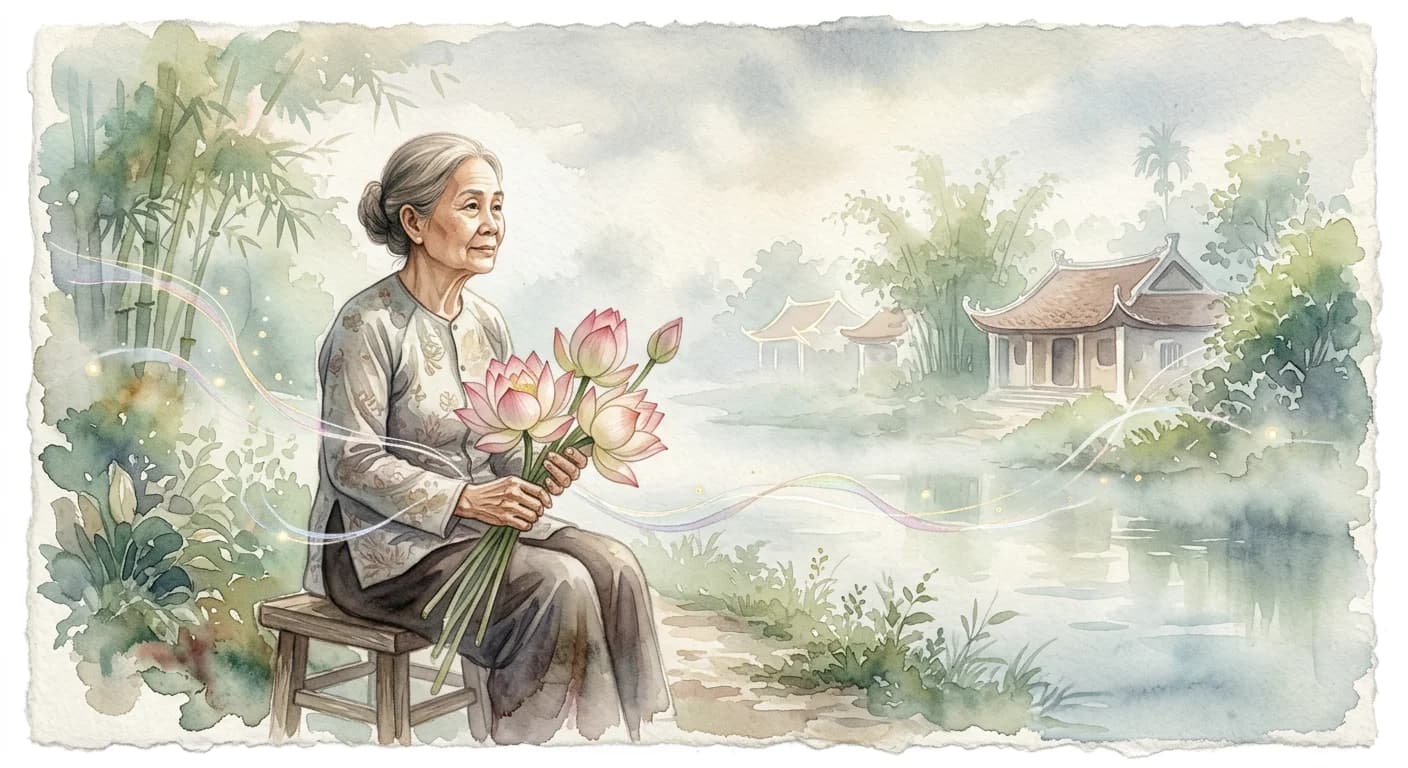
Every weekend, Mrs. Tran meticulously cleans the ancestral altar, placing fresh flowers and fruit. She lights incense, offering silent prayers and updates to her deceased parents and grandparents. This ritual is not just personal devotion; it's a vital duty to her 'gia đình,' ensuring the continuation of blessings and maintaining the spiritual connection that binds generations.
The Deeper Meaning
The word "gia đình" encapsulates a profound philosophy of interconnectedness and intergenerational responsibility. It posits that an individual's life is not a solitary journey but an integral thread within the larger tapestry of their lineage. Personal honor and shame are shared, and one's actions ripple through past, present, and future generations, emphasizing a collective destiny and the enduring power of ancestral ties and filial duty.
Did You Know?
The Vietnamese language uses specific terms for family members depending on their age and relation to the speaker, reflecting the highly structured and respectful nature of 'gia đình' hierarchy.
How It's Used
Used to refer to one's family, often with a strong emphasis on the collective bond and responsibilities inherent within it.