U.
HomeRegionsLanguagesEmotionsCollections
Find Your Word

“The limits of my language mean the limits of my world.”

— Ludwig Wittgenstein, Philosopher

Untranslatable

A curated collection of the world's most beautiful expressions—words that remind us language is humanity's greatest invention.

  • Home
  • Collections
  • Regions
  • Countries
  • Emotions
  • Tags
  • Contexts
  • Finder
  • Europe
  • Asia
  • Americas
  • Africa
  • Middle East
  • About
  • Contact
  • Privacy Policy
  • Terms of Service

2026 © Untranslatable. All rights reserved.

    /
    /
    1. Home
    2. /
    3. Asia
    4. /
    5. An phận
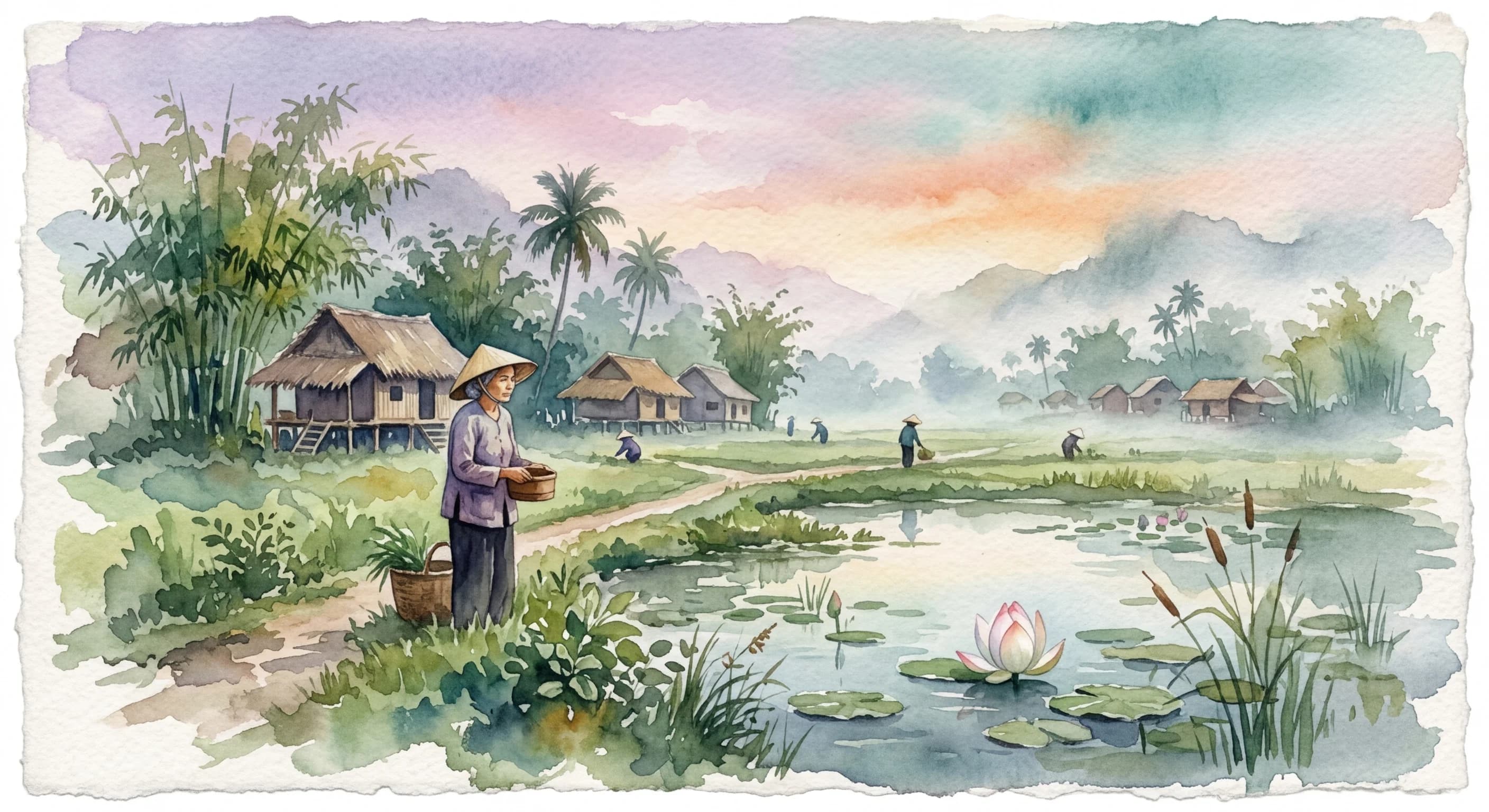
    Artistic representation of An phận
    Vietnamese•
    🇻🇳Vietnam

    An phận

    /ahn-fuhn/

    Meaning

    An phận describes a profound acceptance of one's given lot in life, particularly when it's humble or challenging. It's not a passive surrender to despair, but a quiet, dignified understanding and stoic endurance of circumstances without complaint or excessive ambition. This concept reflects a deep cultural value placed on humility and the wisdom of finding contentment within one's perceived limitations, fostering an inner peace that transcends external conditions.

    Literal Translation

    an (a/one) + phận (fate/lot/station)

    The Story Behind the Word

    The concept of "an phận" is deeply rooted in Vietnamese culture, influenced by a blend of Confucianism, Buddhism, and folk traditions. Confucian ideals emphasize social harmony, filial piety, and knowing one's place within a hierarchical structure. Buddhism contributes the notion of karma and the acceptance of one's present state as a result of past actions, encouraging detachment from worldly desires. Historically, Vietnamese society, marked by long periods of feudalism, war, and agricultural life, often presented limited upward mobility. Embracing "an phận" allowed individuals to navigate hardship with resilience, finding dignity in their roles and fostering community stability. It reveals a worldview where individual ambition is balanced by collective harmony and an understanding of life's inherent impermanence and challenges.

    Experience It

    The Humble Farmer

    Despite years of back-breaking labor yielding modest harvests, Ông Ba never complained about his simple life. He tended his rice paddies with care, found joy in his family, and, with a knowing smile, often said, "One must an phận, accept what the earth gives."

    A Quiet Employee

    Cô Lan worked diligently as a clerk for decades, never seeking promotions or recognition. She performed her duties meticulously, found satisfaction in her routine, and embodied an phận, content with her steady contribution and a life free from the stresses of ambition.

    The Deeper Meaning

    This word encapsulates a core Vietnamese philosophical perspective: that true peace and contentment are not found in relentless striving or external achievements, but in an internal alignment with one's circumstances. It suggests a wisdom in understanding and accepting the boundaries of one's fate, transforming potential frustration into a source of quiet strength and resilience, and prioritizing inner harmony over external success.

    Did You Know?

    While often associated with humility, 'an phận' can also be a subtle critique, implying someone lacks ambition or is too easily satisfied with mediocrity.

    How It's Used

    Used to describe a person's acceptance of their humble status, a quiet resignation to circumstances, or a lack of ambition beyond one's current situation.

    Emotions
    acceptance,contentment,peace
    Contexts
    family,solitude,work
    🇻🇳Vietnam

    by Annelise Dubois·Written Mar 10, 2026·Updated Apr 3, 2026

    Related Words

    Explore more
    HyggeDanish

    Hygge is more than mere coziness; it's a holistic embrace of comfort, warmth, and belonging that nourishes the soul. It describes the intentional creation of an intimate atmosphere where simple pleasures, genuine connection, and mindful presence converge, fostering a profound sense of contentment and well-being. It's about finding joy and peace in the small, everyday moments, often shared with loved ones.

    Dolce far nienteItalian

    Dolce far niente captures the profound joy and effortless pleasure derived from simply existing without obligation or purpose. It's the art of savoring moments of pure, unadulterated idleness – lying in the sun, watching the clouds drift, or enjoying a leisurely coffee – not as a break from work, but as a valuable state in itself. This 'sweetness of doing nothing' is a conscious embrace of stillness and contentment, allowing the soul to breathe and the senses to fully engage with the present.

    Wabi-sabiJapanese

    Wabi-sabi is the profound appreciation for the ephemeral, the imperfect, and the incomplete aspects of existence. It is about discovering beauty in the subtle textures of age, the unique character of flaws, and the gentle decay that marks the passage of time. This philosophy encourages a quiet acceptance of impermanence and a mindful connection to the natural world, finding elegance in simplicity and authenticity.

    IkigaiJapanese

    Ikigai is more than just a reason to get out of bed; it's a deeply personal and evolving sense of purpose that brings genuine fulfillment and joy to one's life. It represents the sweet spot where your passions, talents, needs of the world, and what you can be paid for beautifully converge. Discovering your ikigai often leads to a life lived with intentionality, resilience, and a profound connection to one's contributions. It's the intrinsic motivation that fuels a meaningful existence, regardless of external circumstances.