Cơm nước
/gum nuhk/
Meaning
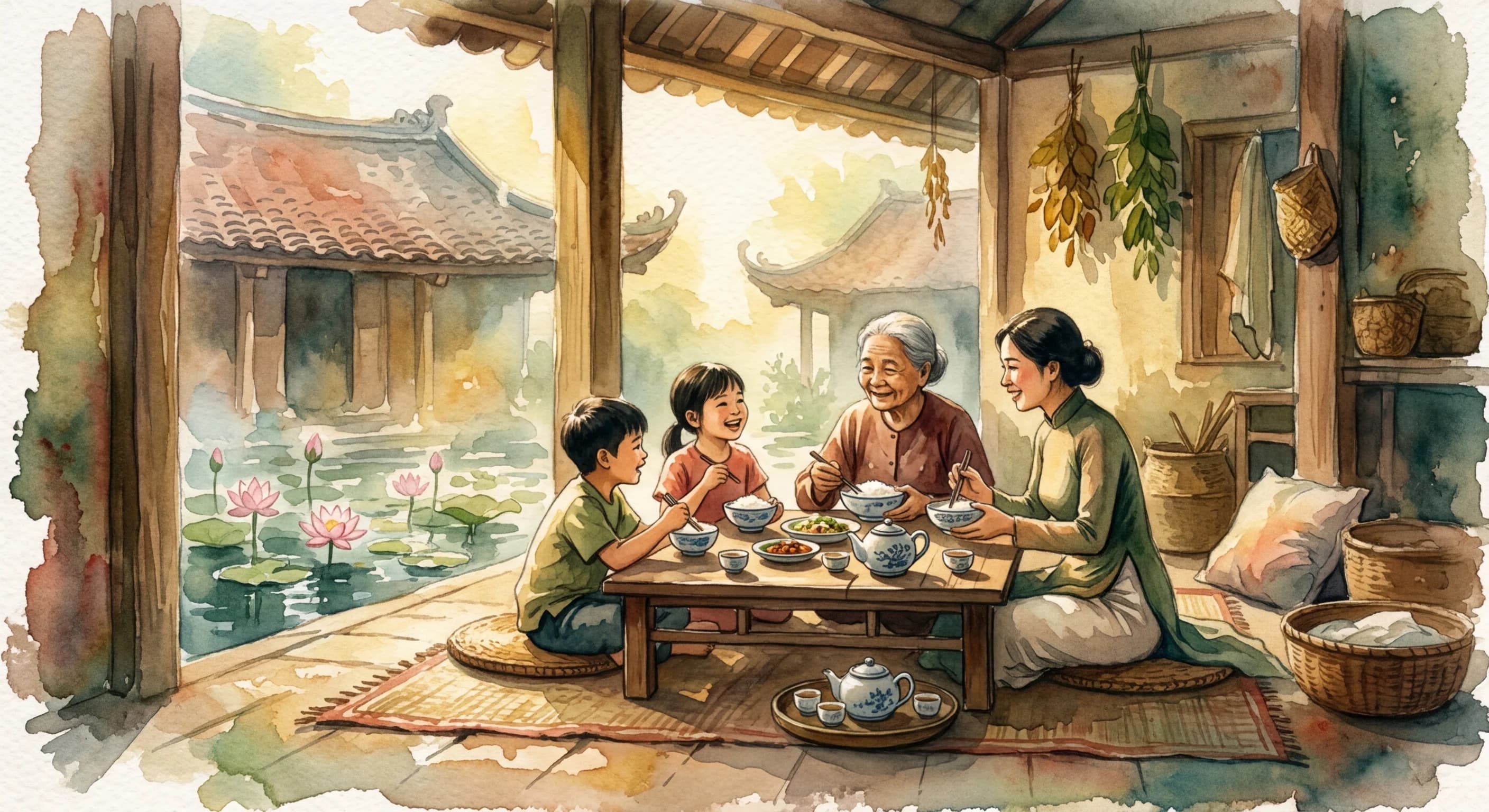
Cơm nước, literally 'rice water,' transcends its simple translation to encapsulate the entire ritual of daily sustenance and domestic harmony in Vietnamese culture. It refers not only to the physical preparation and consumption of meals but also to the profound sense of familial care, shared responsibility, and the grounding rhythm of life centered around nourishment. This concept evokes the continuous cycle of providing, preparing, and partaking in food, forming the very bedrock of household well-being and communal bonds.
Literal Translation
Rice water
The Story Behind the Word
The deep significance of 'cơm nước' stems from Vietnam's history as an agrarian society where rice was, and remains, the staple food and lifeblood. The act of growing, harvesting, preparing, and sharing rice has fostered a culture where food is inextricably linked to family, survival, and social cohesion. This word exists because it reflects a worldview where the household's stability and the family's health are directly tied to the consistent provision of meals. It embodies the dedication of homemakers, traditionally women, whose diligent 'cơm nước' ensures the family's prosperity and continuity, highlighting a culture that values steadfastness, care, and the simple yet profound acts of daily living.
Experience It
A Mother's Daily Task
After a long day, a mother sighs, 'Giờ là phải lo cơm nước cho cả nhà.' (Now I have to take care of cơm nước for the whole family.) This implies not just cooking dinner, but also ensuring everything is prepared, served, and cleaned up, reflecting her ongoing domestic responsibilities.
Checking on Family
Calling her sister, an older woman asks, 'Dạo này cơm nước thế nào rồi em?' (How's the cơm nước lately, dear sister?) This isn't just asking about meals, but subtly inquiring about her sister's general well-being, her ability to manage household affairs, and the overall stability of her family life.
The Deeper Meaning
This word reveals a philosophy deeply rooted in the interconnectedness of food, family, and daily life. It suggests that true well-being isn't found in grand gestures but in the consistent, loving provision of basic necessities. 'Cơm nước' underscores a collectivist ethos where individual sustenance is inherently tied to the health and harmony of the entire household, emphasizing responsibility, care, and the enduring power of shared meals to bind a family together.
Did You Know?
While 'cơm nước' literally means 'rice water,' the 'water' component often refers to the cooking water for rice or the general liquid elements of a meal, emphasizing the holistic nature of sustenance beyond just solid food.
How It's Used
Used to refer to the preparation and consumption of meals, often implying the domestic duties associated with it. It can also be used more broadly to talk about the general state of household affairs related to food and daily living.