Cangkruk
/CHANG-kruk/
Meaning
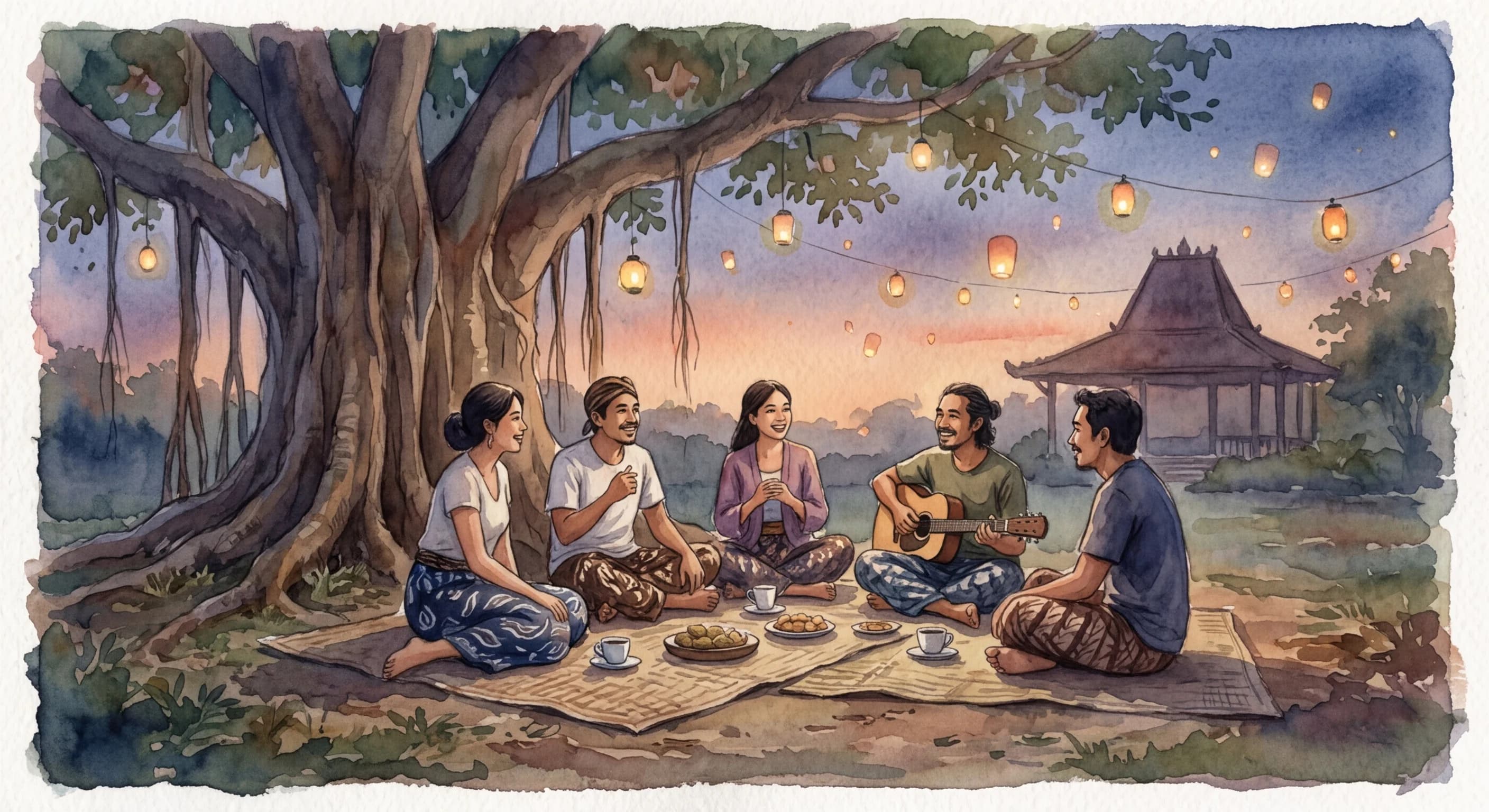
Cangkruk encapsulates the cherished Javanese tradition of leisurely gathering with loved ones in an informal setting, often under the open sky. It transcends mere 'hanging out,' embodying a deliberate embrace of slowness and connection, where laughter, stories, and simple refreshments flow freely. This practice cultivates a profound sense of community and belonging, offering a vital sanctuary from life's daily pressures. At its heart, cangkruk is about savoring shared moments of peace, a cultural balm against the relentless pace of modern existence and the isolation it can bring.
Literal Translation
To sit around or loiter
The Story Behind the Word
The concept of 'cangkruk' is deeply rooted in Javanese agrarian society, where community bonds were paramount and life rhythms were dictated by nature's pace. It reflects a core Javanese philosophy of *rukun* (harmony) and *gotong royong* (mutual cooperation), emphasizing collective well-being over individualistic pursuits. In a culture that values subtle communication and non-confrontation, cangkruk provides a relaxed space for social cohesion to naturally reinforce itself, allowing for the gentle exchange of ideas and the strengthening of relationships without formal pressure. It reveals a worldview that prioritizes human connection, communal support, and the appreciation of simple, unhurried moments as essential components of a fulfilling life, contrasting sharply with the efficiency-driven ethos of many Western societies. The existence of a specific word for this activity underscores its cultural importance and prevalence.
Experience It
Evening Pond Cangkruk
As dusk settles, Pak Budi and his neighbors pull out their bamboo mats by the village pond. They share a pot of hot tea and fried bananas, their voices a soft murmur against the chirping crickets. No agenda, just easy conversation about the day's harvest, family anecdotes, and gentle jokes, strengthening their bonds until the moon is high.
Weekend Terrace Cangkruk
On a Sunday afternoon, Mbak Dewi’s family gathers on their front porch. Children play nearby while the adults sip coffee, discussing local news and sharing memories. The air is filled with comfortable silence interspersed with bursts of laughter, a testament to the quiet joy of simply being together without obligation.
The Deeper Meaning
Cangkruk embodies the Javanese philosophical ideal of *alon-alon asal kelakon* (slowly but surely achieving the goal) and *urip iku urup* (life is about being beneficial to others). It's a rejection of hurried existence, promoting a mindful presence where the journey and shared experience are as valuable as any destination. It underscores that true wealth lies not in material possessions, but in strong communal ties, inner peace, and the ability to find joy in everyday simplicity.
Did You Know?
Many traditional Javanese homes feature a *pendopo* or *teras* (front porch) specifically designed for cangkruk, highlighting its integral role in daily social life and community interaction.
How It's Used
Typically used to describe casual, relaxed gatherings with friends or family, often in the evenings or on weekends. It implies a lack of formal agenda, focusing on conversation and companionship.