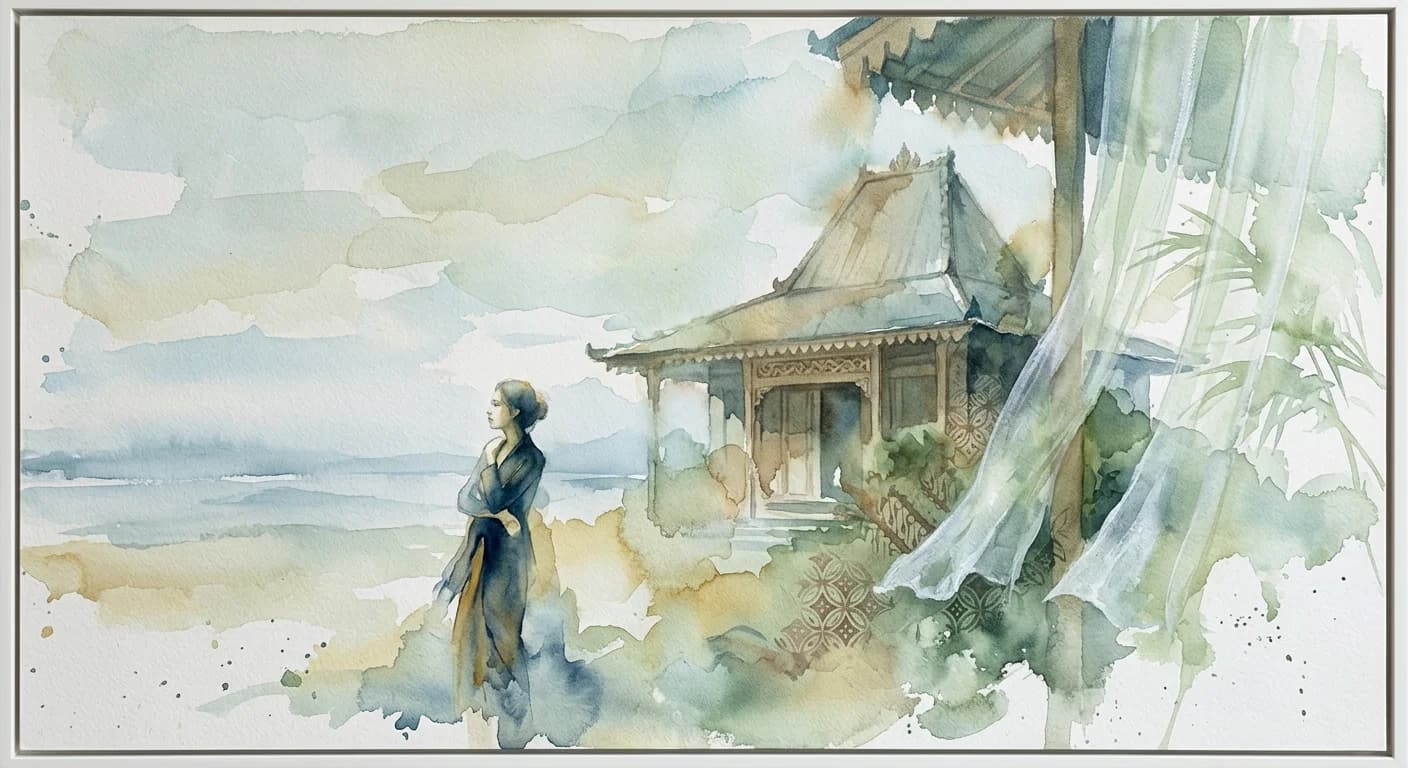
Kampungan
/kam-POONG-ahn/
Meaning
While literally translating to 'village' or 'rural', 'kampungan' in Indonesian carries a potent negative connotation, implying something unsophisticated, crude, or low-class. It's frequently deployed to describe behavior, taste, or possessions considered unfashionable, lacking refinement, or even tacky, often evoking a sense of disdain. This term highlights a cultural aspiration towards cosmopolitanism and a subtle judgment of those perceived as provincial or out of touch with modern, urban sensibilities, reflecting a complex social hierarchy.
Literal Translation
village
The Story Behind the Word
The word 'kampungan' is deeply rooted in Indonesia's rapid urbanization and the historical social stratification between rural and urban life. Historically, villages (kampung) were the bedrock of Indonesian society, but with the advent of modernity and the rise of bustling cities like Jakarta, a perceived gap emerged. Urban dwellers, often exposed to global trends and education, began to view certain rural characteristics as backward or unrefined. This term encapsulates the tension between traditional village values and modern, often Western-influenced, urban ideals, revealing a society grappling with its identity amidst development and globalization. It reflects an aspiration for progress and sophistication, but also an underlying class consciousness that can be both aspirational and disparaging.
Experience It
Fashion Faux Pas
At a high-end fashion event, someone arrives in a brightly colored, ill-fitting outfit with excessive, clashing accessories. Whispers ripple through the crowd, 'Aduh, bajunya kampungan sekali!' (Oh, her outfit is so kampungan!) pointing to her perceived lack of style and refinement.
Boisterous Behavior
During a formal dinner, a guest loudly slurps his soup, talks with his mouth full, and tells off-color jokes. The host's eyes narrow as she thinks, 'Tingkahnya benar-benar kampungan,' (His behavior is truly kampungan) signaling his crude manners unsuitable for the sophisticated setting.
The Deeper Meaning
This word reveals a societal preoccupation with 'face' and social standing, where outward expressions of taste and behavior are critical markers of one's place in the social hierarchy. It underscores a collective aspiration for modernity and refinement, often at the expense of traditional or less urbanized ways of life, highlighting the psychological impact of rapid social change and the constant negotiation of identity within a diverse nation.
Did You Know?
Despite its negative connotation, some Indonesian designers and artists are now reclaiming 'kampungan' aesthetics, incorporating traditional or rural elements into modern, high-fashion styles as a form of cultural pride.
How It's Used
Used to describe people, behavior, objects, or styles that are considered unsophisticated, crude, unfashionable, or lacking in taste.