U.
HomeRegionsLanguagesEmotionsCollections
Find Your Word

“The limits of my language mean the limits of my world.”

— Ludwig Wittgenstein, Philosopher

Untranslatable

A curated collection of the world's most beautiful expressions—words that remind us language is humanity's greatest invention.

  • Home
  • Collections
  • Regions
  • Countries
  • Emotions
  • Tags
  • Contexts
  • Finder
  • Europe
  • Asia
  • Americas
  • Africa
  • Middle East
  • About
  • Contact
  • Privacy Policy
  • Terms of Service

2026 © Untranslatable. All rights reserved.

    /
    /
    1. Home
    2. /
    3. Asia
    4. /
    5. Kepo
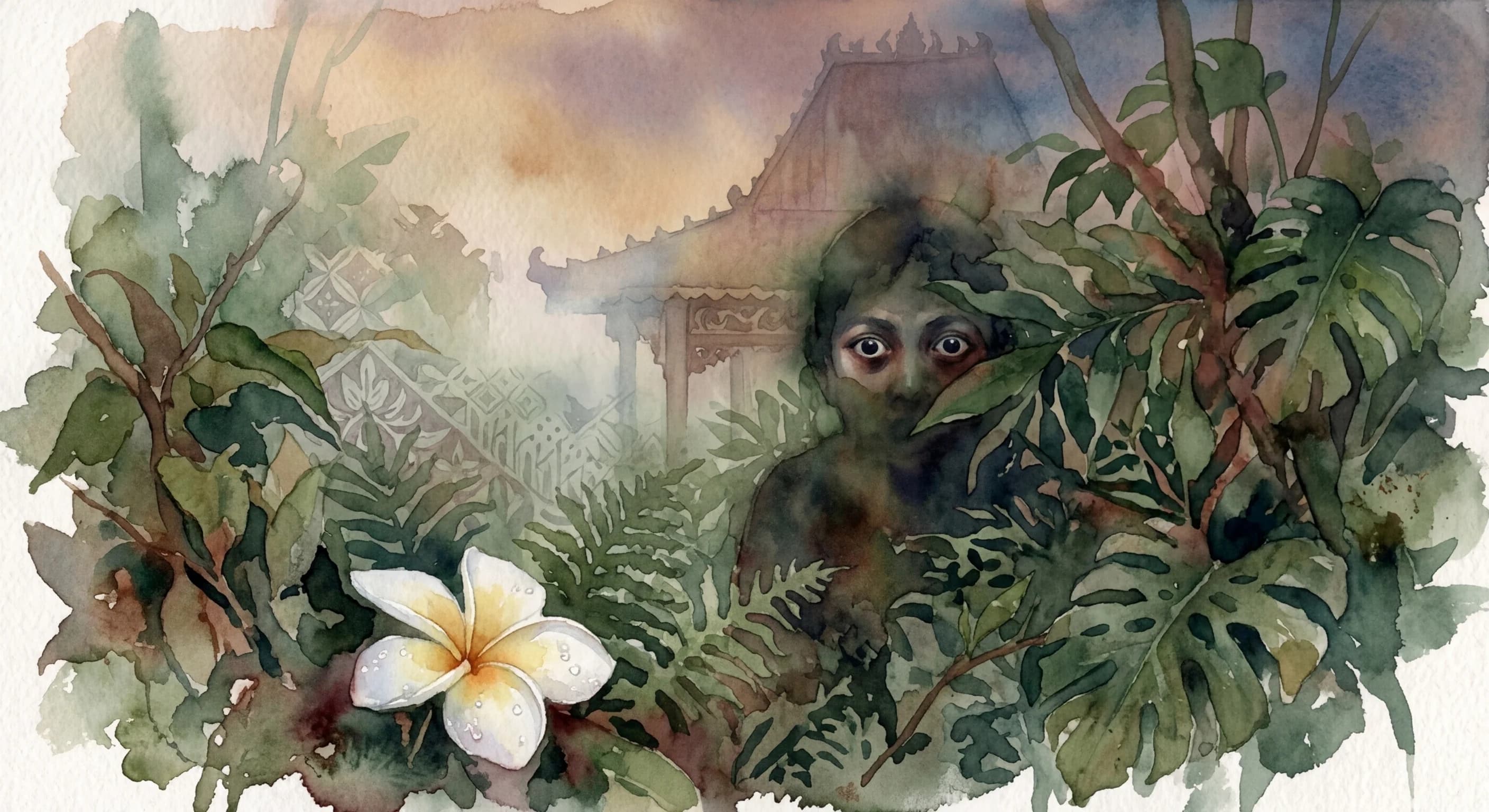
    Artistic representation of Kepo
    Indonesian•
    🇮🇩Indonesia🇲🇾Malaysia

    Kepo

    /KEH-poh/

    Meaning

    Kepo describes an individual whose curiosity about others' private lives borders on an insatiable obsession, often leading to intrusive behaviors. It's more than mere nosiness; it signifies a persistent, almost compulsive drive to uncover intimate details about relationships, personal affairs, or local gossip. This relentless prying isn't typically malicious but stems from an overwhelming desire to be deeply involved and informed, positioning them as privy to information that arguably falls outside their rightful domain. The word perfectly encapsulates a distinct social dynamic of pervasive, yet often tolerated, prying within Indonesian and Malay communities.

    Literal Translation

    Nosey

    The Story Behind the Word

    The existence of 'kepo' in Indonesian culture reflects a societal landscape where communal living and strong social bonds are highly valued. In many Indonesian communities, individual privacy, as understood in Western contexts, is often secondary to the collective's knowledge and involvement. This isn't necessarily seen as negative; knowing about others' lives can be a way of showing care and maintaining social cohesion, though 'kepo' highlights the extreme end of this spectrum. It also speaks to a culture where information, especially personal news, travels quickly through informal networks, making the 'kepo' individual a key, albeit sometimes annoying, player in the social fabric. The word acts as a lighthearted admonishment, acknowledging this pervasive trait without necessarily condemning it outright, revealing a cultural acceptance of close-knit, interlinked lives.

    Experience It

    The Office Detective

    Every time someone new joins the team, Budi becomes instantly kepo. He's not just asking about their role; he wants to know where they live, if they're married, and even their star sign, all within the first hour of meeting them, much to their discomfort.

    Neighborhood Watch

    A new family moved in next door, and Ibu Siti is incredibly kepo. She constantly peeks through her curtains, asks her children to gather information, and subtly tries to pump the household help for details about the newcomers' routines and visitors.

    The Deeper Meaning

    The concept of 'kepo' highlights a fundamental tension between individual privacy and communal interconnectedness in Indonesian society. It reveals a worldview where personal boundaries are often permeable, and a certain degree of shared knowledge about others' lives is both expected and, at times, even seen as a form of social engagement. This suggests a collective orientation where the individual's story is often intertwined with, and accessible to, the broader community narrative.

    Did You Know?

    While 'kepo' is widely used, its etymology is debated; some believe it's an acronym for 'Knowing Every Particular Object' (English) or 'Kay Pao' (Hokkien for 'to ask until you break').

    How It's Used

    Used colloquially to describe someone who is overly inquisitive about others' business, often asking personal questions or spreading gossip.

    Emotions
    anger,curiosity
    Contexts
    daily life,social interaction
    🇮🇩Indonesia🇲🇾Malaysia

    by Dr. Kenji Tanaka·Written Mar 10, 2026·Updated Apr 3, 2026

    Related Words

    Explore more
    Wabi-sabiJapanese

    Wabi-sabi is the profound appreciation for the ephemeral, the imperfect, and the incomplete aspects of existence. It is about discovering beauty in the subtle textures of age, the unique character of flaws, and the gentle decay that marks the passage of time. This philosophy encourages a quiet acceptance of impermanence and a mindful connection to the natural world, finding elegance in simplicity and authenticity.

    IkigaiJapanese

    Ikigai is more than just a reason to get out of bed; it's a deeply personal and evolving sense of purpose that brings genuine fulfillment and joy to one's life. It represents the sweet spot where your passions, talents, needs of the world, and what you can be paid for beautifully converge. Discovering your ikigai often leads to a life lived with intentionality, resilience, and a profound connection to one's contributions. It's the intrinsic motivation that fuels a meaningful existence, regardless of external circumstances.

    NunchiKorean

    Nunchi is the sophisticated, almost telepathic, ability to instantly grasp the unspoken dynamics of any social situation, anticipating others' thoughts and feelings, and then responding with impeccable grace and timing. It's an acute form of social intuition, allowing one to navigate complex interpersonal landscapes by reading subtle cues like body language, tone, and context. Possessing good nunchi means effortlessly understanding the underlying emotional currents and adjusting one's behavior to maintain harmony and effectiveness, often without a single word exchanged.

    JugaadHindi

    Jugaad is more than just a quick fix; it embodies the spirit of resourceful, ingenious improvisation in the face of scarcity or systemic challenges. It's the art of bending rules, repurposing materials, and thinking outside the box to achieve a desired outcome, often with limited financial or technological resources. This approach celebrates clever workarounds and innovative adaptations, turning constraints into catalysts for creative problem-solving. It's about making do and making something work, brilliantly.