Ngabuburit
/nga-BOO-boo-reet/
Meaning
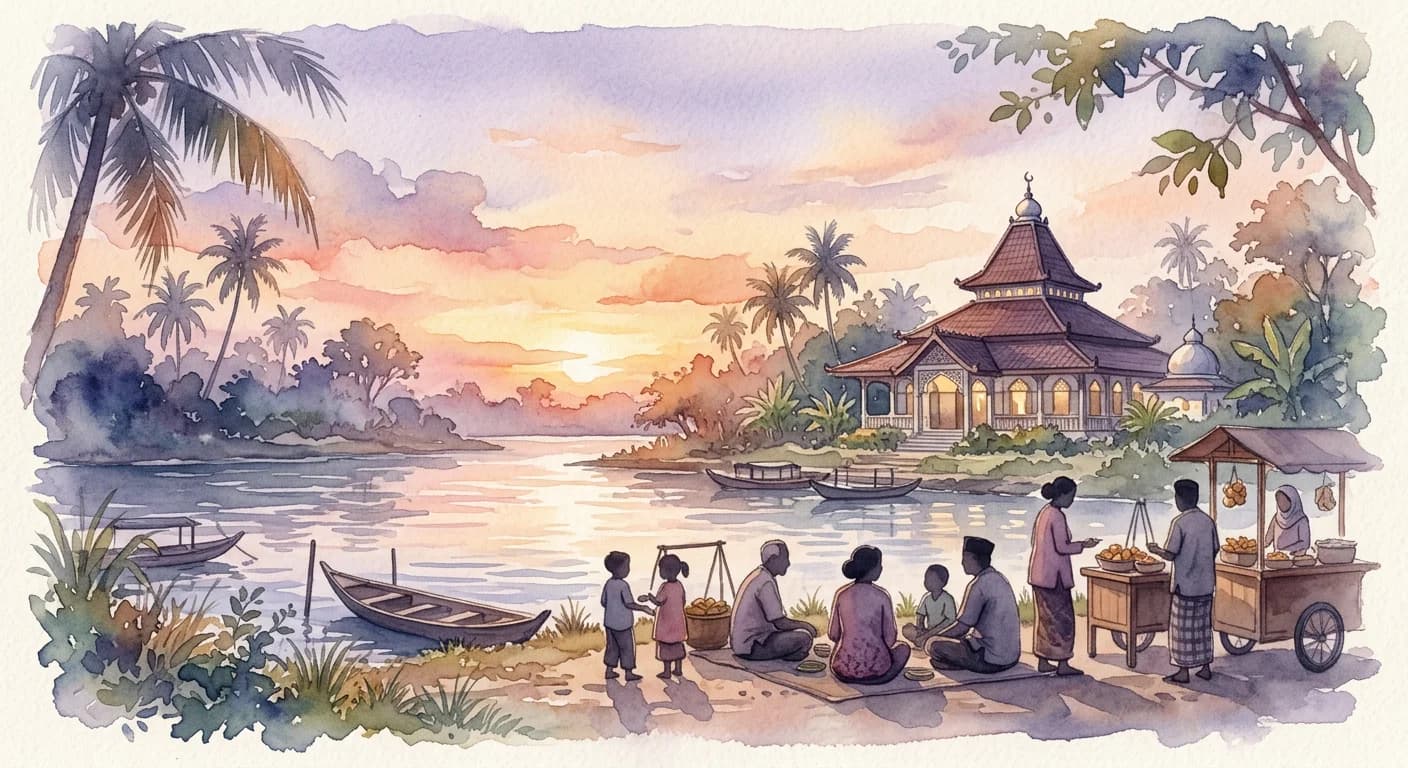
Ngabuburit is the cherished Indonesian tradition of whiling away the late afternoon hours, especially during Ramadan, in a state of joyful anticipation before the breaking of the fast. It's a period dedicated to leisurely pursuits, from animated conversations with loved ones to tranquil strolls, all imbued with a sense of communal patience and shared expectation. This practice beautifully encapsulates the cultural rhythm of awaiting sustenance and spiritual reflection together, transforming mere waiting into a meaningful, social ritual.
Literal Translation
to spend time in the afternoon
The Story Behind the Word
The existence of "Ngabuburit" is deeply rooted in Indonesian Islamic culture, particularly during the holy month of Ramadan. It reflects a societal value placed on patience (sabar), community (gotong royong), and the transformation of a religious obligation into a collective, enjoyable experience. While fasting can be challenging, ngabuburit turns the final stretch of the day into a time of shared joy and solidarity, reinforcing social bonds. It highlights a worldview where even moments of waiting are imbued with purpose and social connection, rather than being seen as mere खाली time. This tradition underscores the importance of communal support and shared experience in navigating spiritual observances.
Experience It
Park Gathering
A group of friends sits on a park bench, laughing and sharing stories as the sun begins its descent. They're "ngabuburit-ing," enjoying each other's company and the cool breeze, patiently awaiting the call to prayer that signals Iftar.
Market Stroll
A family ambles through a bustling Ramadan market, admiring the colorful array of snacks and drinks. They're not buying yet, but the sights and sounds are part of their "ngabuburit" ritual, building excitement for the evening meal at home.
The Deeper Meaning
Ngabuburit reveals a profound cultural understanding of time and anticipation. It transforms the often-tedious act of waiting into an active, communal, and enjoyable experience. This practice suggests that even moments of constraint or delayed gratification can be reframed as opportunities for connection, reflection, and the cultivation of patience, reflecting a holistic approach to life's rhythms.
Did You Know?
Did you know that 'ngabuburit' is actually a Sundanese word (from West Java) that has been widely adopted into the Indonesian national vocabulary due to its apt description of this popular Ramadan activity?
How It's Used
Used to describe the period of waiting between the Asr and Maghrib prayers during Ramadan, often spent engaging in relaxing activities or socializing.