U.
HomeRegionsLanguagesEmotionsCollections
Find Your Word

“The limits of my language mean the limits of my world.”

— Ludwig Wittgenstein, Philosopher

Untranslatable

A curated collection of the world's most beautiful expressions—words that remind us language is humanity's greatest invention.

  • Home
  • Collections
  • Regions
  • Countries
  • Emotions
  • Tags
  • Contexts
  • Finder
  • Europe
  • Asia
  • Americas
  • Africa
  • Middle East
  • About
  • Contact
  • Privacy Policy
  • Terms of Service

2026 © Untranslatable. All rights reserved.

    /
    /
    1. Home
    2. /
    3. Asia
    4. /
    5. Sok
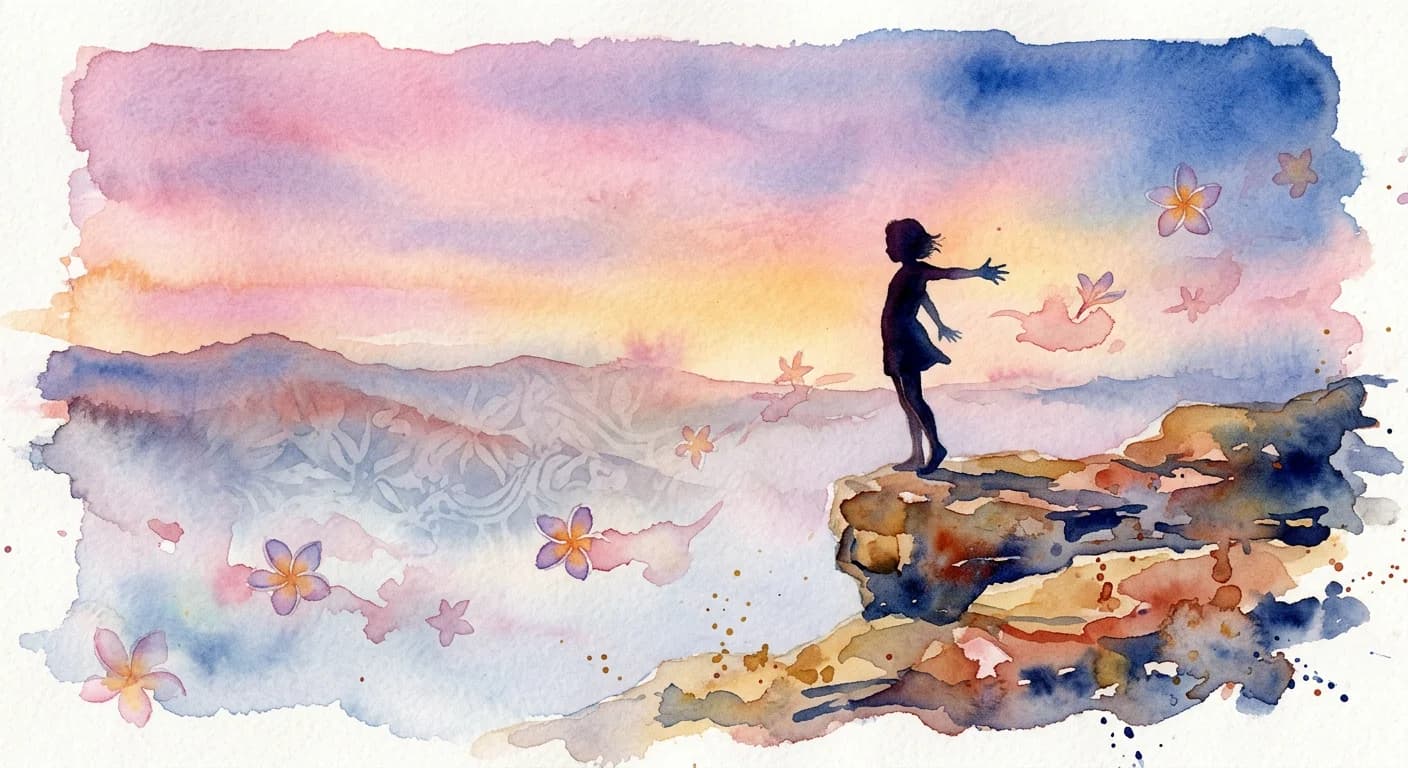
    Artistic representation of Sok
    Indonesian•
    🇮🇩Indonesia

    Sok

    /SOCK/

    Meaning

    Sok encapsulates the spirit of deliberate, often playful, provocation and attention-seeking, a conscious act to disrupt norms or assert presence. It describes a person who 'acts as if' they are more daring, knowledgeable, or significant than their immediate context suggests, not necessarily out of malice, but to elicit a reaction or test boundaries. This behavior is a complex performance, blending defiance with a desire for amusement or self-affirmation, making it distinct from simple showing off or outright aggression.

    Literal Translation

    Can mean 'to be' or 'to act as', but in this context, it's idiomatic.

    The Story Behind the Word

    The existence of 'sok' in Indonesian culture is deeply rooted in a societal fabric that often values harmony and indirect communication. When someone acts 'sok,' they are subtly, or sometimes overtly, challenging these norms. It reflects a cultural understanding of social hierarchy and the playful subversion of it, often by younger generations or those seeking to establish their identity within a group. This word highlights a dynamic tension between communal cohesion and individual expression, where 'sok' behavior, while potentially disruptive, can also be seen as a vibrant, if sometimes cheeky, way to engage with the world and assert one's individuality without necessarily breaking fundamental social bonds. It reveals a society that acknowledges and even sometimes tolerates a degree of performative defiance.

    Experience It

    Challenging the Elder

    At a family gathering, a young nephew, fresh from university, loudly debates a traditional custom with his much older uncle. He speaks with an air of authority he doesn't quite possess yet, clearly trying to appear more progressive and knowledgeable. His aunt shakes her head, muttering, 'Dia sok pintar sekali' (He's being so 'sok' smart).

    The New Fashion

    A teenager arrives at school wearing an outlandish, brightly colored outfit that clearly flouts the informal dress code. She struts confidently, making sure everyone notices her. Her friends whisper, 'Dasar sok gaya!' (She's so 'sok' stylish!), a mix of exasperation and admiration for her bold statement.

    The Deeper Meaning

    The concept of 'sok' reveals a worldview that recognizes the performative aspect of social interaction and the constant negotiation between individual desire and collective expectation. It underscores the idea that identity is not just inherent but also constructed and asserted through actions. This word highlights a cultural awareness of the 'as if' nature of some behaviors, where individuals consciously choose to project an image or attitude, prompting others to react and thus shaping social dynamics.

    Did You Know?

    While 'sok' often has a slightly negative connotation, it can also be used affectionately, implying a playful chiding rather than genuine criticism, especially among close friends.

    How It's Used

    Used to describe someone's behavior that is intentionally attention-grabbing or challenging.

    Emotions
    joy,pride
    Contexts
    performance,social interaction
    🇮🇩Indonesia

    by Kwame Nkrumah·Written Mar 10, 2026·Updated Apr 3, 2026

    Related Words

    Explore more
    Wabi-sabiJapanese

    Wabi-sabi is the profound appreciation for the ephemeral, the imperfect, and the incomplete aspects of existence. It is about discovering beauty in the subtle textures of age, the unique character of flaws, and the gentle decay that marks the passage of time. This philosophy encourages a quiet acceptance of impermanence and a mindful connection to the natural world, finding elegance in simplicity and authenticity.

    IkigaiJapanese

    Ikigai is more than just a reason to get out of bed; it's a deeply personal and evolving sense of purpose that brings genuine fulfillment and joy to one's life. It represents the sweet spot where your passions, talents, needs of the world, and what you can be paid for beautifully converge. Discovering your ikigai often leads to a life lived with intentionality, resilience, and a profound connection to one's contributions. It's the intrinsic motivation that fuels a meaningful existence, regardless of external circumstances.

    NunchiKorean

    Nunchi is the sophisticated, almost telepathic, ability to instantly grasp the unspoken dynamics of any social situation, anticipating others' thoughts and feelings, and then responding with impeccable grace and timing. It's an acute form of social intuition, allowing one to navigate complex interpersonal landscapes by reading subtle cues like body language, tone, and context. Possessing good nunchi means effortlessly understanding the underlying emotional currents and adjusting one's behavior to maintain harmony and effectiveness, often without a single word exchanged.

    JugaadHindi

    Jugaad is more than just a quick fix; it embodies the spirit of resourceful, ingenious improvisation in the face of scarcity or systemic challenges. It's the art of bending rules, repurposing materials, and thinking outside the box to achieve a desired outcome, often with limited financial or technological resources. This approach celebrates clever workarounds and innovative adaptations, turning constraints into catalysts for creative problem-solving. It's about making do and making something work, brilliantly.