Nyingje
/NING-cheh/
Meaning
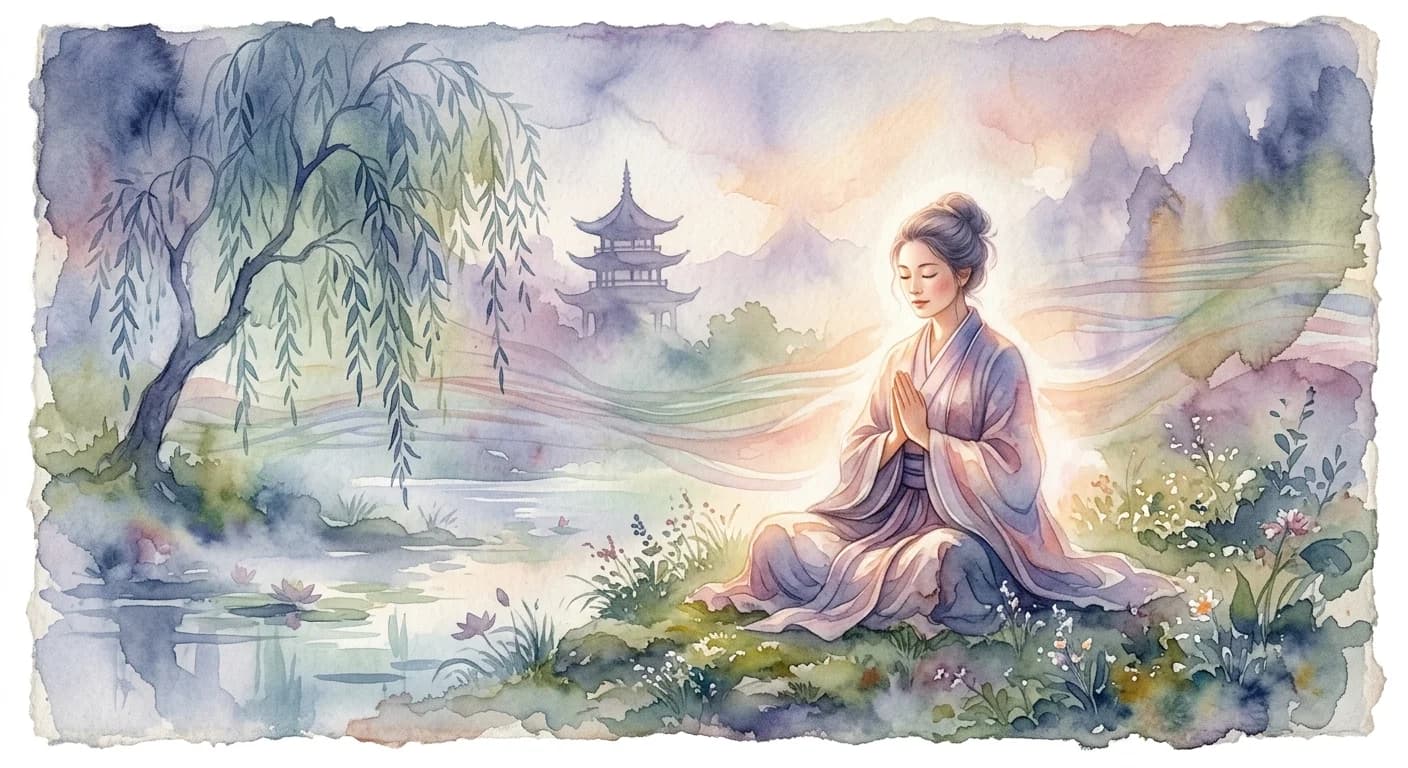
Nyingje transcends mere sympathy, representing a profound, active compassion that impels one to alleviate the suffering of all beings. It's a fundamental state of being, a conscious cultivation of unconditional love and kindness, deeply rooted in the understanding of universal interconnectedness. This isn't just an emotional response but a guiding principle for action, a selfless yearning for the happiness and freedom from pain for everyone, permeating all aspects of Tibetan life and spiritual practice.
Literal Translation
compassion / loving-kindness
The Story Behind the Word
Nyingje is the very bedrock of Tibetan Buddhist philosophy and culture. Its prominence stems from the teachings of the Buddha, particularly the emphasis on the Bodhisattva ideal – an enlightened being who postpones their own nirvana to help all sentient beings achieve liberation. This concept reveals a worldview where individual well-being is inextricably linked to the well-being of all others, fostering a society built on mutual support and ethical conduct. It's why figures like the Dalai Lama are revered, embodying this ideal. The practice of nyingje is seen as a path to spiritual development, purifying the mind and generating positive karma, reflecting a culture that values altruism above all else.
Experience It
A Monk's Gentle Hand
A young monk encounters an elderly woman struggling to carry a heavy basket of firewood up a steep path. Without a word, he gently takes the basket from her, his eyes reflecting genuine concern and a quiet determination to ease her burden, embodying nyingje in his selfless act.
Community's Warm Embrace
After a harsh winter storm, a family's home is damaged. Neighbors, moved by nyingje, gather to help repair the roof and share their meager food supplies, ensuring no one in their community suffers alone. Their collective action stems from a deep-seated desire to see everyone thrive.
The Deeper Meaning
Nyingje underpins a philosophy of radical interconnectedness, asserting that the well-being of the individual is inseparable from the well-being of all life. It challenges ego-centric perspectives, promoting a universal responsibility where one's actions are guided by the aspiration to benefit others. This worldview fosters a society that prioritizes collective harmony and compassion as the ultimate path to true fulfillment and liberation.
Did You Know?
The Dalai Lama frequently emphasizes nyingje as the most important quality for both individual happiness and global peace, often suggesting it's the 'real religion' of humanity.
How It's Used
Used to describe a compassionate attitude and action, often in a spiritual or philosophical context, reflecting a core value in Tibetan Buddhism.