U.
HomeRegionsLanguagesEmotionsCollections
Find Your Word

“The limits of my language mean the limits of my world.”

— Ludwig Wittgenstein, Philosopher

Untranslatable

A curated collection of the world's most beautiful expressions—words that remind us language is humanity's greatest invention.

  • Home
  • Collections
  • Regions
  • Countries
  • Emotions
  • Tags
  • Contexts
  • Finder
  • Europe
  • Asia
  • Americas
  • Africa
  • Middle East
  • About
  • Contact
  • Privacy Policy
  • Terms of Service

2026 © Untranslatable. All rights reserved.

    /
    /
    1. Home
    2. /
    3. Asia
    4. /
    5. Chöd
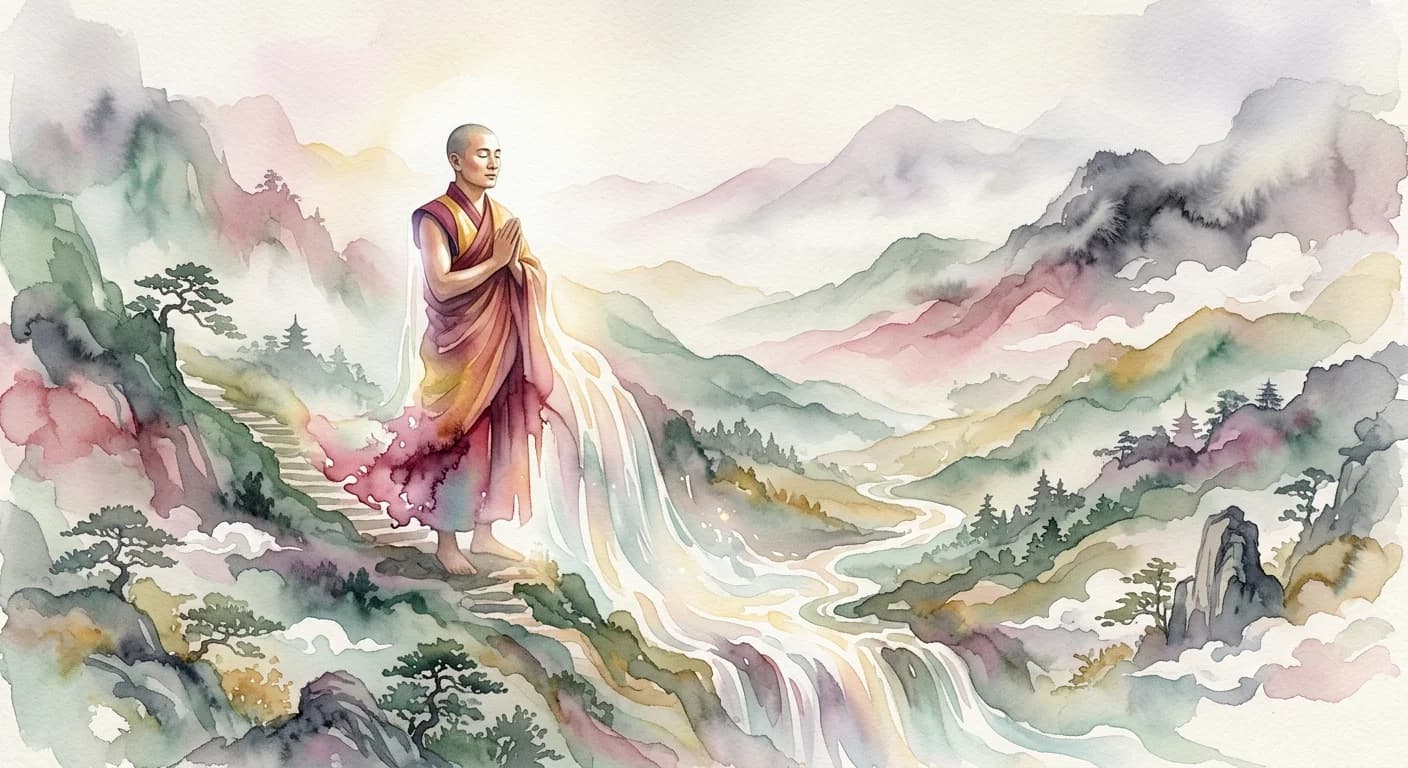
    Artistic representation of chöd
    Tibetan•
    🇨🇳China

    Chöd

    /chö/

    Meaning

    Chöd, literally "cutting," is a radical Tibetan Buddhist practice where practitioners ceremonially offer their own body as a feast to all hungry spirits and demons. This profound ritual transcends mere generosity, symbolizing the ultimate severance of ego, attachment, and the illusion of a separate self. Through intense visualization, one's physical form transforms into boundless nectar, nourishing all beings, purifying negative karma, and cultivating an unshakeable compassion born from the deep understanding of emptiness.

    Literal Translation

    offering

    The Story Behind the Word

    Chöd emerged in the 11th century through the female Tibetan yogini Machig Labdrön, making it unique as a practice founded by a woman in a largely patriarchal religious landscape. It embodies the pinnacle of selfless giving and fearlessness, directly confronting the deeply ingrained human fears of death, decay, and non-existence. This practice reveals a worldview where suffering is not to be avoided but engaged with and transformed, and where the most formidable "demons" are often internal – the attachments and delusions of the mind. Performing Chöd, often in solitary, frightening places like charnel grounds, underscores the Tibetan emphasis on direct experiential realization over mere intellectual understanding, pushing practitioners to transcend conventional boundaries of self and other.

    Experience It

    Midnight Mountain Chöd

    Under the vast, star-strewn Tibetan sky, a lone nun sits on a rocky outcrop, her damaru drum echoing through the frigid air. As she chants the Chöd liturgy, she visualizes her body dissolving into a boundless feast, offering every part to the unseen hungry spirits of the mountain, transforming fear into profound compassion.

    Hospital Bed Offering

    Facing a serious illness, an elderly practitioner performs Chöd mentally from his hospital bed. He offers his ailing body, not as a victim, but as a generous gift, releasing attachment to health and form, finding peace in the ultimate act of letting go and cultivating boundless love for all who suffer.

    The Deeper Meaning

    Chöd embodies the Mahayana Buddhist philosophy of emptiness (shunyata) and radical compassion. It teaches that the self is not inherently existent and that true liberation comes from severing attachment to this illusion. By offering one's body, practitioners confront and transcend the deepest fears of ego-preservation and mortality, realizing the interconnectedness of all beings and the transformative power of selfless giving.

    Did You Know?

    Chöd is one of the few Buddhist practices historically founded and primarily propagated by a woman, the great 11th-century Tibetan yogini Machig Labdrön, whose teachings continue to inspire fearlessness and radical compassion.

    How It's Used

    Chöd is typically performed by a practitioner, often a yogi or nun, alone in a solitary place, such as a charnel ground or mountain hermitage, usually at night. It involves chanting, drumming, and visualization, and is considered a powerful method for subduing negative forces and pacifying obstacles.

    Emotions
    compassion,gratitude,peace,serenity
    Contexts
    relaxation,solitude,travel
    🇨🇳China

    by Anya Petrova·Written Mar 10, 2026·Updated Apr 3, 2026

    Related Words

    Explore more
    Dolce far nienteItalian

    Dolce far niente captures the profound joy and effortless pleasure derived from simply existing without obligation or purpose. It's the art of savoring moments of pure, unadulterated idleness – lying in the sun, watching the clouds drift, or enjoying a leisurely coffee – not as a break from work, but as a valuable state in itself. This 'sweetness of doing nothing' is a conscious embrace of stillness and contentment, allowing the soul to breathe and the senses to fully engage with the present.

    Wabi-sabiJapanese

    Wabi-sabi is the profound appreciation for the ephemeral, the imperfect, and the incomplete aspects of existence. It is about discovering beauty in the subtle textures of age, the unique character of flaws, and the gentle decay that marks the passage of time. This philosophy encourages a quiet acceptance of impermanence and a mindful connection to the natural world, finding elegance in simplicity and authenticity.

    IkigaiJapanese

    Ikigai is more than just a reason to get out of bed; it's a deeply personal and evolving sense of purpose that brings genuine fulfillment and joy to one's life. It represents the sweet spot where your passions, talents, needs of the world, and what you can be paid for beautifully converge. Discovering your ikigai often leads to a life lived with intentionality, resilience, and a profound connection to one's contributions. It's the intrinsic motivation that fuels a meaningful existence, regardless of external circumstances.

    NunchiKorean

    Nunchi is the sophisticated, almost telepathic, ability to instantly grasp the unspoken dynamics of any social situation, anticipating others' thoughts and feelings, and then responding with impeccable grace and timing. It's an acute form of social intuition, allowing one to navigate complex interpersonal landscapes by reading subtle cues like body language, tone, and context. Possessing good nunchi means effortlessly understanding the underlying emotional currents and adjusting one's behavior to maintain harmony and effectiveness, often without a single word exchanged.