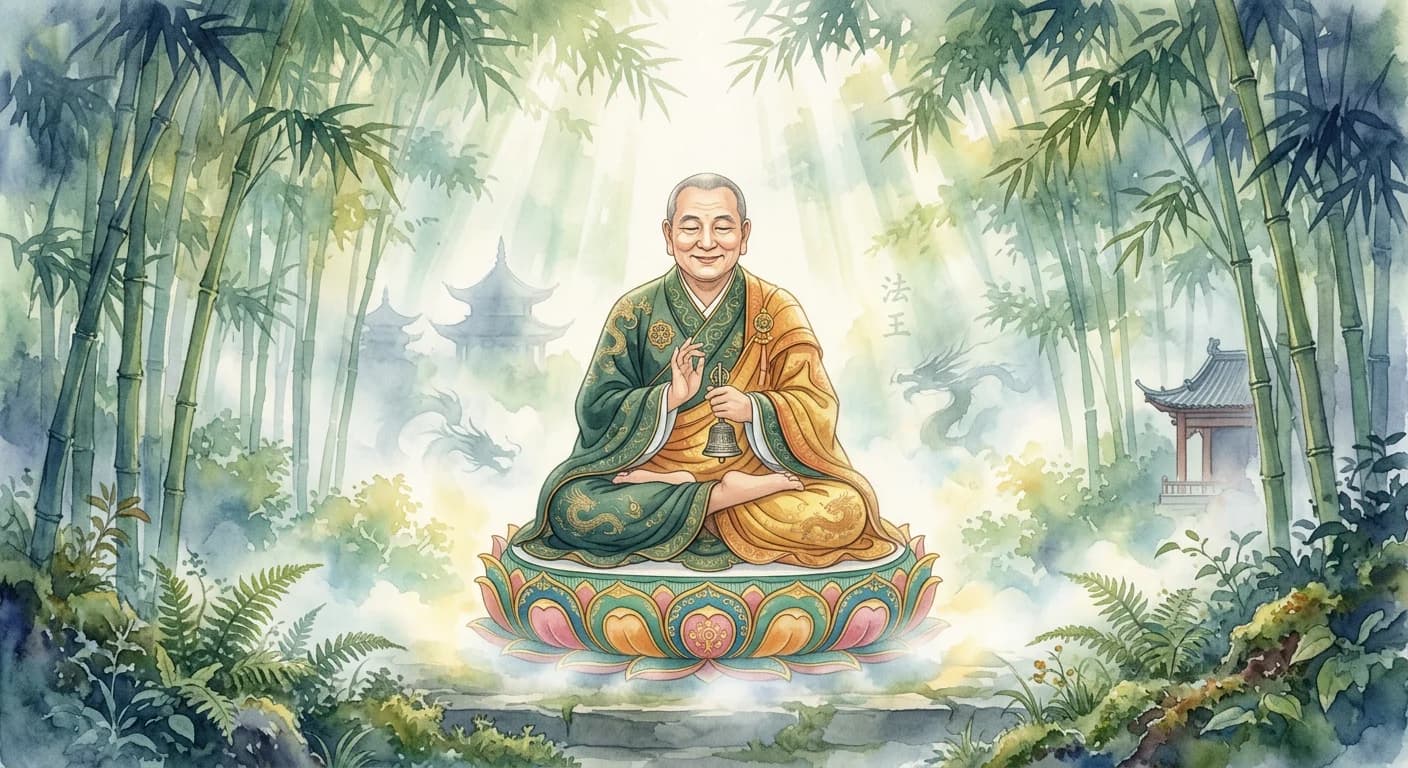
Chö-kyi-gyalpo
/CHOH-kee-GYAL-poh/
Meaning
The 'chö-kyi-gyalpo' is more than a mere monarch; it embodies the ideal of a spiritual sovereign whose reign is guided by the profound wisdom and boundless compassion of the Dharma. This enlightened ruler prioritizes the collective well-being and spiritual advancement of all sentient beings within their domain, fostering peace, ethical conduct, and genuine happiness. Their authority flows not from inherited power or military might, but from an unwavering commitment to Buddhist principles, making their rule a beacon of justice and spiritual flourishing.
Literal Translation
Dharma (chö) King (kyi gyalpo)
The Story Behind the Word
The concept of 'chö-kyi-gyalpo' is deeply ingrained in Tibetan Buddhist civilization, reflecting a worldview where spiritual and temporal powers are ideally intertwined for the benefit of all. Its origins can be traced to ancient Indian Buddhist traditions, particularly the ideal of the 'chakravartin' (wheel-turning monarch), which was enthusiastically adopted and adapted in Tibet. This term reveals a profound belief that true governance is not about control, but about creating conditions conducive to spiritual liberation and societal harmony. It underscores the Tibetan aspiration for leaders who are not just politically astute, but also spiritually evolved, acting as guardians of the Dharma and exemplars of enlightened conduct. This ideal has shaped Tibetan history, influencing the perception of both legendary figures like King Songtsen Gampo and historical rulers, whose legitimacy was often tied to their perceived adherence to Dharmic principles.
Experience It
A King's Wise Decree
The old king, known throughout the land as a 'chö-kyi-gyalpo', contemplated the ongoing dispute between two villages over water rights. Instead of asserting his power, he consulted with wise lamas and meditated on the principles of interdependence, ultimately decreeing a solution that ensured equitable access for both communities, fostering reconciliation and long-term peace.
Building a Monastery
A young ruler, aspiring to be a true 'chö-kyi-gyalpo', dedicated a significant portion of his treasury not to warfare or personal luxury, but to the construction of a grand monastery. His intention was to create a center for learning and spiritual practice, believing that fostering wisdom and compassion among his people was the highest form of governance and protection.
The Deeper Meaning
This word encapsulates a profound Buddhist philosophy of governance, asserting that true leadership is rooted in ethical wisdom and compassion, not coercive power. It highlights the belief that societal well-being is inextricably linked to spiritual development, and that a just society is one where the ruler acts as a moral compass, guiding their people towards enlightenment and collective flourishing. It challenges the purely secular view of power, suggesting a higher purpose for leadership.
Did You Know?
The Dalai Lamas, as both spiritual and temporal leaders of Tibet, are often regarded as living embodiments of the 'chö-kyi-gyalpo' ideal, striving to govern with wisdom and compassion.
How It's Used
Used in Tibetan Buddhism to refer to a benevolent and spiritually enlightened ruler, often a historical or legendary figure, who governs justly and promotes Buddhist teachings.