U.
HomeRegionsLanguagesEmotionsCollections
Find Your Word

“The limits of my language mean the limits of my world.”

— Ludwig Wittgenstein, Philosopher

Untranslatable

A curated collection of the world's most beautiful expressions—words that remind us language is humanity's greatest invention.

  • Home
  • Collections
  • Regions
  • Countries
  • Emotions
  • Tags
  • Contexts
  • Finder
  • Europe
  • Asia
  • Americas
  • Africa
  • Middle East
  • About
  • Contact
  • Privacy Policy
  • Terms of Service

2026 © Untranslatable. All rights reserved.

    /
    /
    1. Home
    2. /
    3. Asia
    4. /
    5. Khorlo
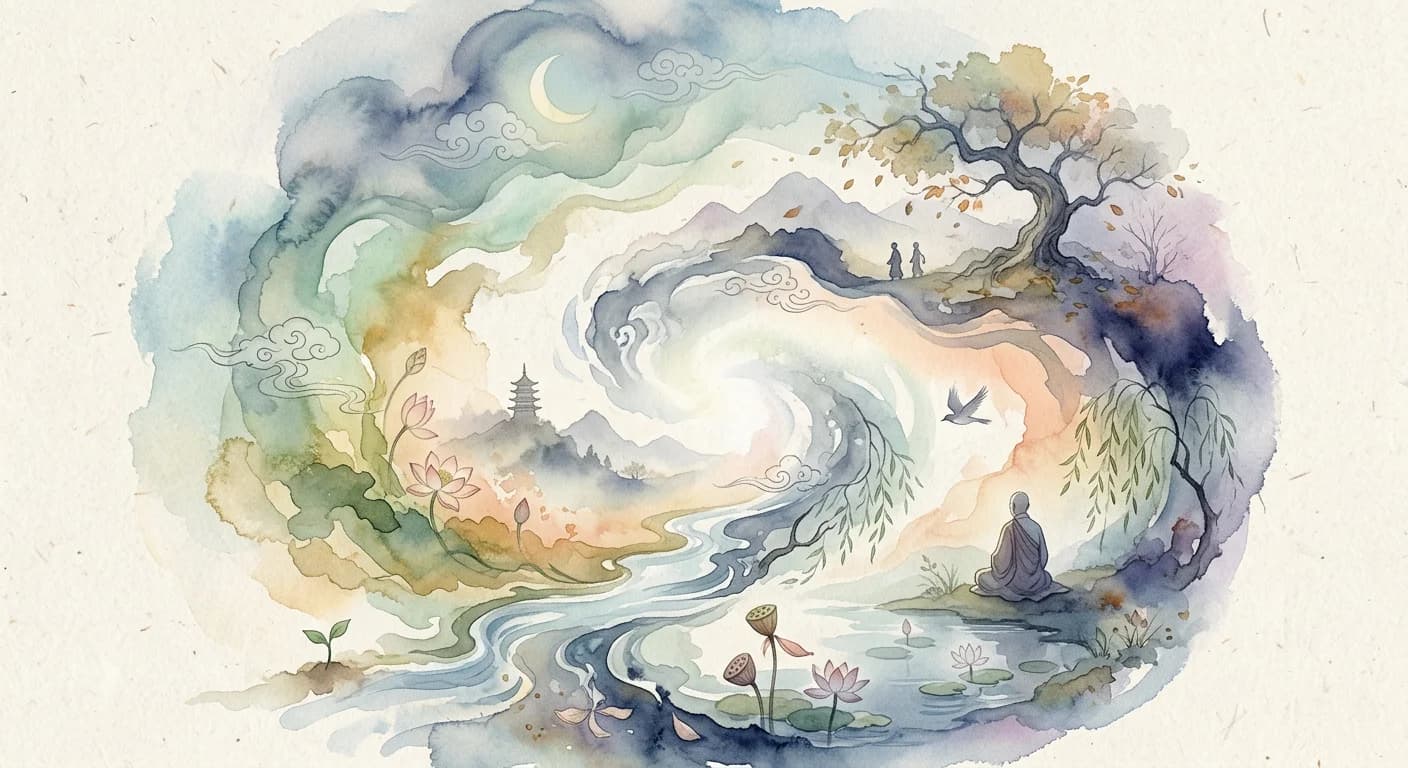
    Artistic representation of khorlo
    Tibetan•
    🇨🇳China

    Khorlo

    /KOR-loh/

    Meaning

    The Tibetan word 'khorlo' vividly portrays the cyclical nature of existence, a core tenet of Buddhist philosophy. It represents the perpetual, often suffering-laden, journey through birth, death, and rebirth, driven by karmic actions and the veil of ignorance. This 'wheel' encompasses not only the individual's endless cycle but also the constant arising and passing of all phenomena in the universe, emphasizing impermanence and interconnectedness. Understanding 'khorlo' is central to the path of liberation, urging an escape from its unending revolutions.

    Literal Translation

    wheel

    The Story Behind the Word

    The concept of 'khorlo' is deeply embedded in Tibetan Buddhist cosmology and daily life, reflecting a worldview where suffering is inherent in existence and liberation is the ultimate goal. Its existence reveals a culture profoundly shaped by the teachings of the Buddha, where the understanding of impermanence and the interconnectedness of all beings is paramount. The 'Wheel of Life' (Bhavachakra) is a common visual representation in monasteries and homes, depicting the various realms of existence within this cycle and serving as a constant reminder of the path to enlightenment. This word doesn't just describe a philosophical concept; it underpins ethical conduct, meditation practices, and the entire spiritual journey, influencing everything from daily rituals to the aspiration for future lives.

    Experience It

    A Monk's Reflection

    During morning meditation, a young monk contemplates the 'khorlo'. He visualizes the endless turning of the wheel, understanding that his present actions are threads woven into its fabric, shaping his future existence within this cycle.

    Explaining Suffering

    A grandmother explains to her grandchild why there is suffering in the world. 'It is all part of the khorlo,' she says gently, 'the turning wheel of existence. But with compassion and wisdom, we can find our way off it.'

    The Deeper Meaning

    The word 'khorlo' encapsulates a profound philosophy of dependent origination and impermanence. It underscores the idea that nothing is static or truly independent, but rather everything is in a constant state of flux, arising and ceasing in an endless chain of cause and effect. This worldview compels introspection on one's actions and intentions, as they are seen as the very fuel that propels the wheel of existence, either binding one further or leading towards release.

    Did You Know?

    The 'Dharma Wheel' (Dharmachakra), a prominent symbol of Buddhism, is a direct visual representation of 'khorlo', symbolizing the Buddha's teachings turning the wheel of existence towards liberation.

    How It's Used

    Used in philosophical and religious discussions, particularly within Tibetan Buddhism, to describe the nature of reality and the cycle of existence.

    Emotions
    melancholy,serenity,wonder
    Contexts
    nature,philosophy
    🇨🇳China

    by Dr. Kenji Tanaka·Written Mar 10, 2026·Updated Mar 27, 2026

    Related Words

    Explore more
    SaudadePortuguese

    Saudade encapsulates a profound, melancholic longing for something or someone cherished that is absent, often with the bittersweet knowledge that it may never return. It's a deep emotional state tinged with nostalgia, evoking a sense of loss for past experiences, places, or people, yet also holding a tender appreciation for the beauty of what once was. This yearning is not merely sadness, but a complex tapestry of desire, memory, and a poignant acceptance of absence, holding the beloved in a warm, persistent embrace within the heart.

    Wabi-sabiJapanese

    Wabi-sabi is the profound appreciation for the ephemeral, the imperfect, and the incomplete aspects of existence. It is about discovering beauty in the subtle textures of age, the unique character of flaws, and the gentle decay that marks the passage of time. This philosophy encourages a quiet acceptance of impermanence and a mindful connection to the natural world, finding elegance in simplicity and authenticity.

    IkigaiJapanese

    Ikigai is more than just a reason to get out of bed; it's a deeply personal and evolving sense of purpose that brings genuine fulfillment and joy to one's life. It represents the sweet spot where your passions, talents, needs of the world, and what you can be paid for beautifully converge. Discovering your ikigai often leads to a life lived with intentionality, resilience, and a profound connection to one's contributions. It's the intrinsic motivation that fuels a meaningful existence, regardless of external circumstances.

    NunchiKorean

    Nunchi is the sophisticated, almost telepathic, ability to instantly grasp the unspoken dynamics of any social situation, anticipating others' thoughts and feelings, and then responding with impeccable grace and timing. It's an acute form of social intuition, allowing one to navigate complex interpersonal landscapes by reading subtle cues like body language, tone, and context. Possessing good nunchi means effortlessly understanding the underlying emotional currents and adjusting one's behavior to maintain harmony and effectiveness, often without a single word exchanged.