Kolam
/koh-lahm/
Meaning
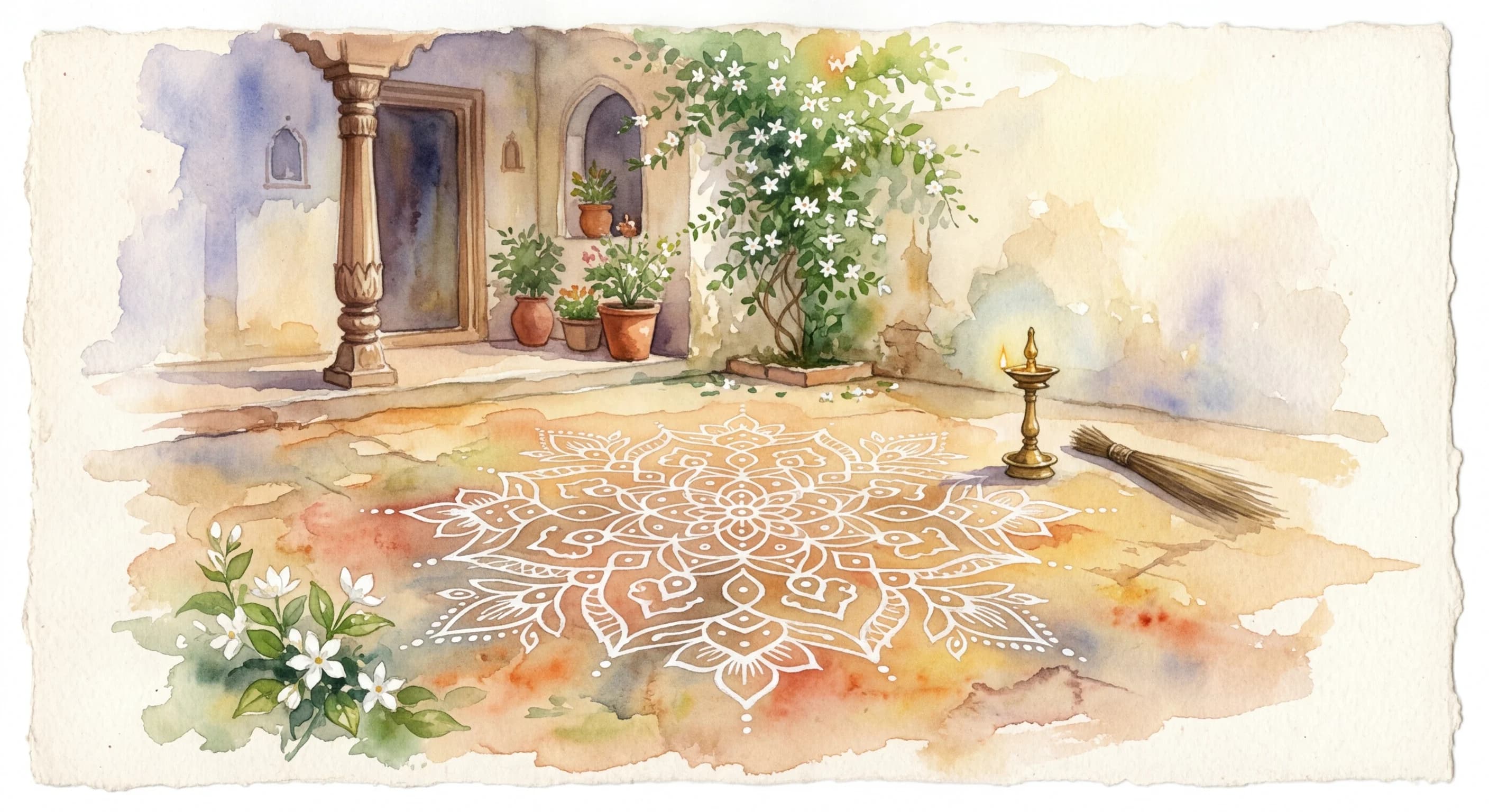
Kolam is a vibrant, ephemeral art form from South India, primarily Tamil Nadu, where women meticulously craft intricate geometric patterns on the ground using rice flour, chalk, or stone powder. Far more than mere decoration, these designs are sacred offerings to deities, invitations for prosperity, and welcoming gestures for guests. Each kolam is a meditative act of devotion, its transient beauty, often swept away by the day's activities, subtly mirroring the impermanence of existence and the cyclical nature of life.
Literal Translation
pattern, design, or shape
The Story Behind the Word
The practice of drawing a kolam is deeply intertwined with Hindu spiritual beliefs and daily life in Tamil culture, dating back centuries. It embodies the concept of 'athithi devo bhava' – 'the guest is God' – as a welcoming gesture at the threshold. Philosophically, the act of drawing with rice flour also serves as an offering to smaller creatures like ants and birds, symbolizing a connection to nature and a commitment to universal sustenance, known as 'jeeva karunyam'. The geometric patterns often contain symbolic motifs representing cosmic order, fertility, and divinity, reflecting a worldview where art, devotion, and daily ritual are inseparable. Its daily creation and eventual disappearance reinforce themes of renewal, detachment, and the cyclical rhythm of life.
Experience It
Morning Ritual
As the first rays of dawn touch the sleepy village, Kamala emerges from her home, a small brass pot of rice flour in hand. With practiced grace, her fingers dance across the damp earth, a complex star-shaped kolam materializing effortlessly, ready to welcome the new day and its blessings.
Festival Celebration
For Diwali, the entire street is a riot of color and light. Lakshmi, with her daughters, meticulously fills a large, elaborate kolam with vibrant colored powders, the intricate peacock design symbolizing prosperity and joy, a festive greeting to all who pass by.
The Deeper Meaning
Kolam profoundly illustrates a philosophy of 'beauty in impermanence' and 'mindfulness in daily ritual'. Its creation is an act of devotion and aesthetic expression, yet its deliberate transient nature reminds practitioners of the fleeting beauty of life, encouraging presence, detachment, and the acceptance of cycles, rather than clinging to material forms.
Did You Know?
Many traditional kolam designs are based on mathematical principles, featuring fractals and knot theory, making them not just art but also ancient geometric puzzles and algorithms.
How It's Used
Kolam is typically drawn in front of homes, courtyards, and temples, especially during festivals, auspicious occasions, and daily rituals. The patterns are often passed down through generations, with variations in complexity and style.