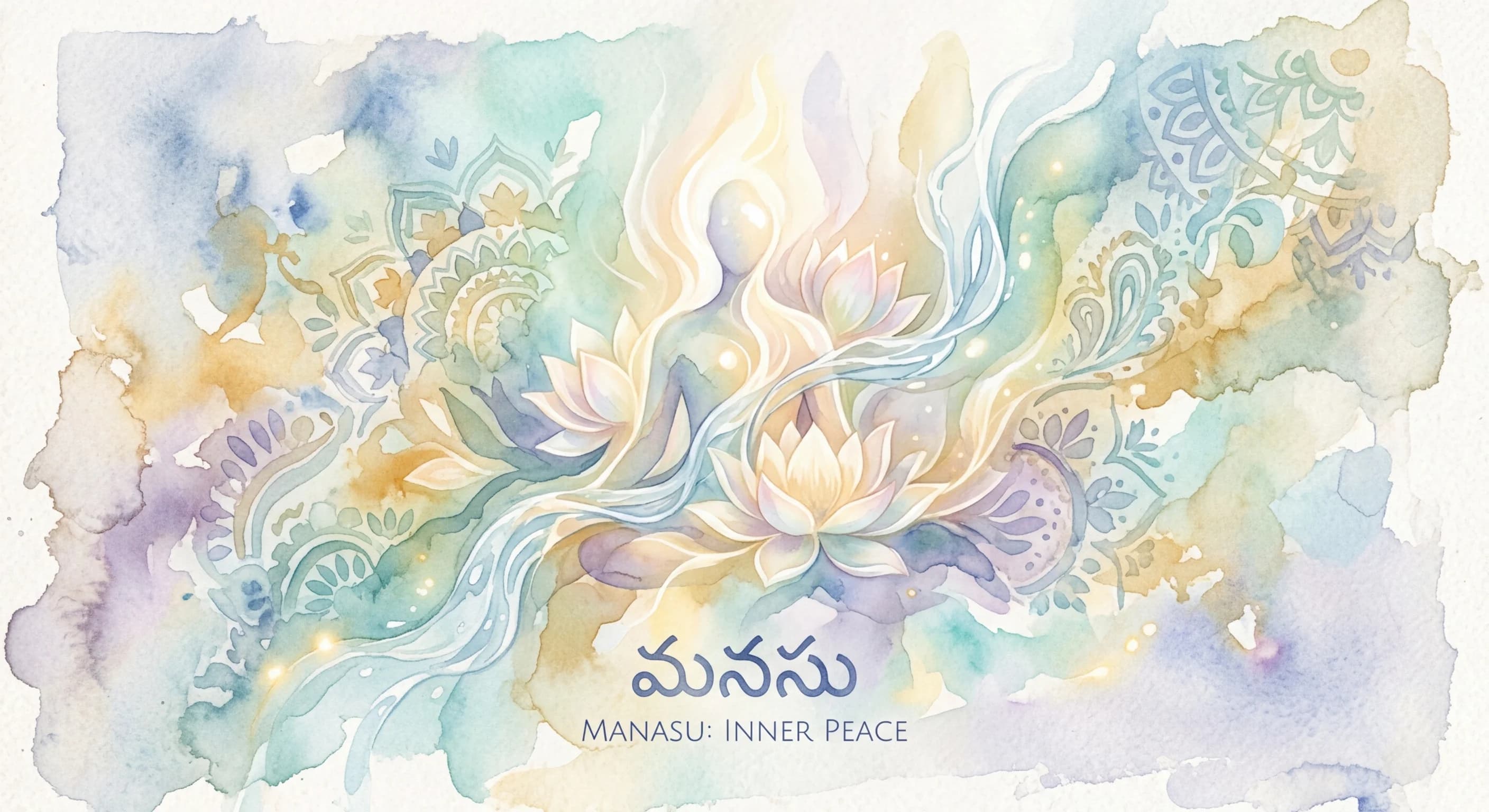
Manasu
/MAH-nah-soo/
Meaning
Manasu is the vibrant inner landscape of a person, encompassing not just thoughts and intellect, but also the full spectrum of emotions, intentions, desires, and spiritual consciousness. It is the very core of one's being, a holistic entity where mind, heart, and soul converge seamlessly. This concept reflects a profound Tamil understanding of human experience, where feelings and intellect are not separate but interwoven, shaping an individual's perception and actions in the world.
Literal Translation
mind / heart / soul
The Story Behind the Word
The concept of Manasu is deeply ingrained in Tamil philosophical traditions, particularly in Bhakti literature and ancient Sangam poetry. It reflects a worldview where the inner self is paramount, the true driver of human destiny and moral conduct. Unlike Western dualistic thought that often separates mind and body, or even mind and heart, Manasu represents a unitary, integrated self. This holistic view emphasizes that true understanding and spiritual growth come from nurturing and purifying one's Manasu, as it is seen as the seat of both divine connection and human fallibility. It reveals a culture that values introspection, emotional depth, and the ethical implications of one's innermost state.
Experience It
A Mother's Concern
A mother notices her son is unusually quiet and withdrawn. She gently asks, 'Enna un Manasula?' (What is in your Manasu?), seeking to understand not just his thoughts, but the deeper feelings and worries stirring within his heart.
Purity of Intent
During a community service project, a volunteer works tirelessly without seeking recognition. An elder remarks, 'Avan Manasu romba sutham' (His Manasu is very pure), acknowledging the genuine, selfless intention behind his actions rather than just the physical effort.
The Deeper Meaning
Manasu reveals a non-dualistic philosophical perspective that views the human being as an integrated whole, where intellectual processes, emotional experiences, and spiritual inclinations are inseparable. It suggests that true wisdom and a meaningful life stem from understanding and aligning this inner core. This concept underpins a worldview where ethical action and personal well-being are intrinsically linked to the state and purity of one's inner self, rather than merely external circumstances or rational thought.
Did You Know?
The term 'Manas' also appears in Sanskrit, a cognate from which the Tamil 'Manasu' likely derives, highlighting ancient linguistic and philosophical connections across South Asia regarding the inner self.
How It's Used
Used in everyday conversation to refer to someone's inner state, feelings, or intentions. For example, 'What is in your Manasu?' or 'His Manasu is pure.'