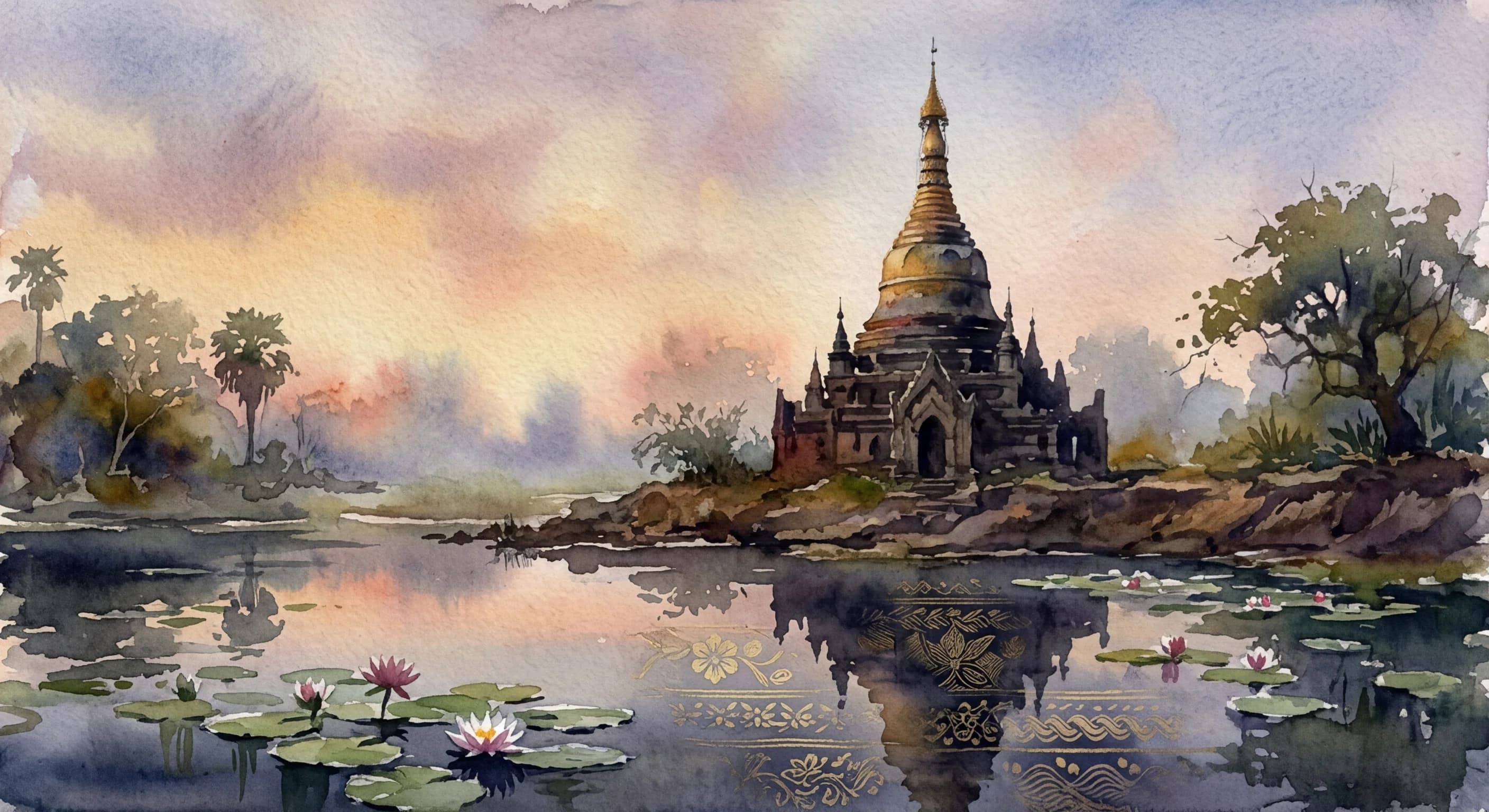
Lwan-hmu
/LWahn-hmoo/
Meaning
Lwan-hmu encapsulates the profound, wistful beauty inherent in objects, places, or even memories that are aged, worn, and gradually fading. It's an aesthetic appreciation for the gentle decay of time, evoking a deep sense of nostalgia for a cherished past that is simultaneously gone forever. This concept finds a quiet, almost spiritual satisfaction in impermanence, recognizing the inherent grace in things that bear the marks of a long existence. It's about seeing the soul and story etched into the venerable patina of age.
Literal Translation
The term doesn't have a direct literal translation that captures its full essence, but it combines elements related to 'old' and 'beautiful/pleasing'.
The Story Behind the Word
Lwan-hmu is deeply rooted in Burmese Buddhist philosophy, particularly the concept of Anicca (impermanence). The understanding that all phenomena are in a constant state of flux and will eventually cease to exist is not a cause for despair, but rather a foundation for appreciation. By recognizing the transient nature of beauty and existence, one can find a heightened sense of value and meaning in the present moment and in the quiet dignity of things that have lived through many moments. This worldview fosters a reverence for history, tradition, and the passage of time, seeing wisdom and character in age rather than solely focusing on newness or perfection. It reveals a culture that finds peace and profound beauty in acceptance of life's natural cycles, including decay and loss.
Experience It
The Ancient Monastery
Walking through the crumbling stupas of an ancient Bagan monastery, with its weather-beaten bricks and fading murals, one feels a powerful sense of lwan-hmu. The silence, broken only by the wind, speaks of centuries of devotion and forgotten prayers, creating a melancholic yet deeply moving experience.
Grandmother's Silk Shawl
The old silk shawl, passed down through generations, is frayed at the edges and its once vibrant colors have softened with time. Holding it, one feels the lwan-hmu – a tenderness for the countless stories it has witnessed, the warmth it has provided, and the hands that have worn it, now long gone.
The Deeper Meaning
Lwan-hmu offers a profound philosophical insight into the acceptance of impermanence (Anicca) as a source of beauty and contentment, rather than sorrow. It suggests that true appreciation comes from understanding the transient nature of all things, allowing one to find spiritual satisfaction in the quiet dignity of decay and the rich tapestry of time's passage.
Did You Know?
Lwan-hmu doesn't just apply to physical objects; it can also describe the poignant beauty of a fading memory or a cherished tradition that is slowly being lost to time.
How It's Used
Used to describe objects, places, or even people that have a venerable patina of age and wear, suggesting a deep history and character.