Thar-thar-lu-lu
/THAR-thar-LOO-loo/
Meaning
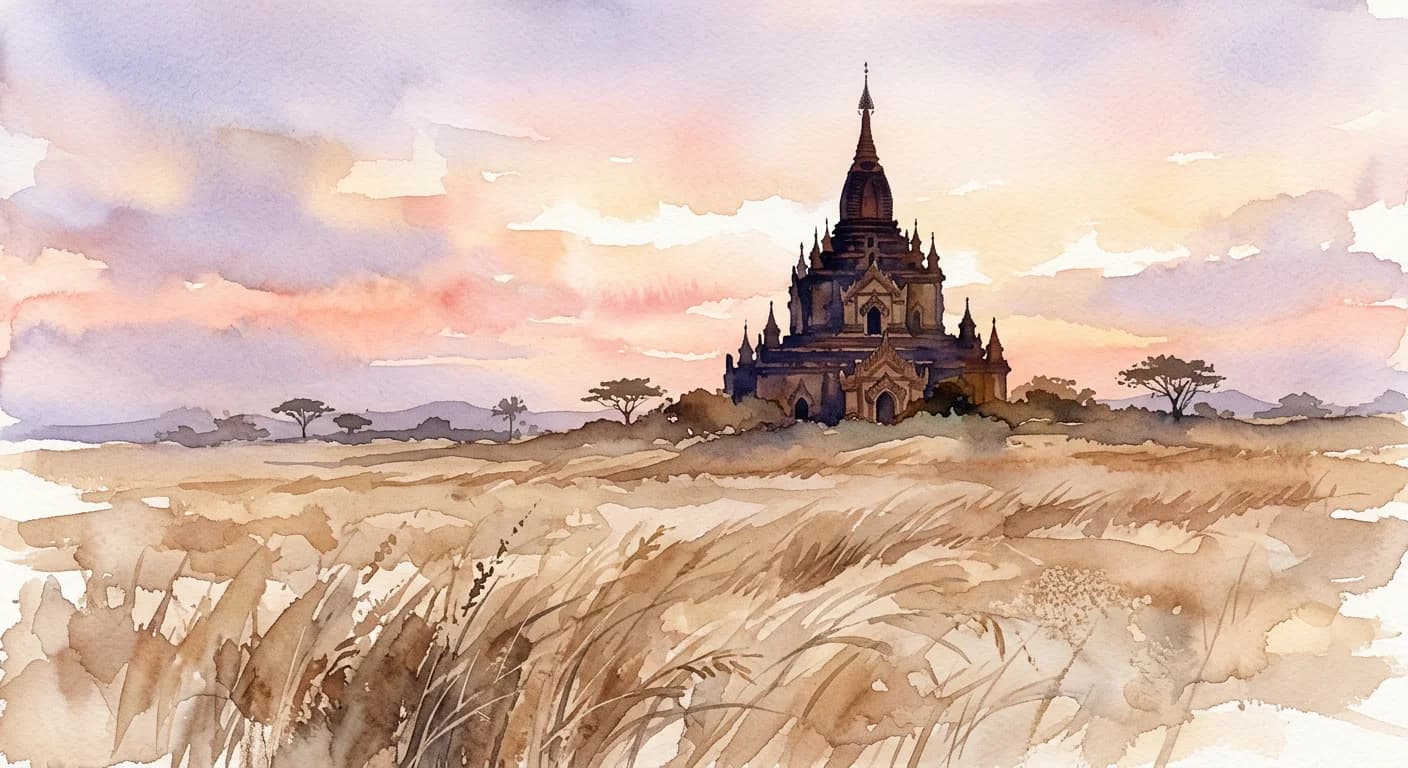
Thar-thar-lu-lu is a beautifully onomatopoeic Burmese phrase that encapsulates the delicate, rhythmic rustling of dry leaves or straw, often stirred by a gentle breeze. It evokes a specific auditory texture – a soft, whispering commotion that speaks of natural tranquility and subtle movement. The inherent repetition within the word itself emphasizes the continuous, almost hypnotic quality of this sound, creating a sensory experience that is both peaceful and faintly melancholic. It's the sound of quiet moments in rural landscapes, inviting contemplation and a deep connection with nature's subtle harmonies.
Literal Translation
This phrase is onomatopoeic and does not have a direct literal meaning beyond the sound it represents.
The Story Behind the Word
The existence of a word like "thar-thar-lu-lu" in Burmese culture speaks volumes about a deep attunement to the natural world and a reverence for its subtle sounds. In a predominantly agrarian society like Myanmar, where life is intimately connected to the cycles of nature, such specific auditory details are not just background noise but integral parts of daily experience and memory. This word reflects a cultural sensibility that values mindfulness and an appreciation for the ephemeral beauty found in everyday phenomena. It suggests a philosophy where even the rustling of dry leaves holds a certain charm and significance, contributing to the rich tapestry of life. This linguistic precision for natural sounds is a hallmark of cultures that live in close harmony with their environment, fostering a unique sensitivity to their surroundings.
Experience It
Village Morning
As the sun began to warm the thatched roofs, a light wind stirred through the drying rice stalks in the fields. The old woman sipping tea on her porch heard the distinct thar-thar-lu-lu, a comforting melody signaling the start of another day.
Autumn Path
Walking through the ancient temple grounds, the dry, fallen Bodhi leaves crunched softly underfoot, a gentle thar-thar-lu-lu accompanying each step. It was a sound that made the air feel crisp and the history palpable.
What Gets Lost in Translation
English speakers might gloss over 'thar-thar-lu-lu' as simply 'rustling,' but this misses the particular nuance of 'dry leaves or straw' and the 'gentle, rhythmic' quality. It's not the harsh crackle of dry twigs underfoot, nor the violent thrashing of leaves in a storm, but a softer, more continuous and almost musical sound that evokes a specific, peaceful atmosphere.
Across Cultures
While no single English word perfectly captures 'thar-thar-lu-lu,' similar concepts exist. Japanese has 'sara-sara' for light rustling or flowing, often used for leaves or silk. In some indigenous languages, a single word might describe a specific natural sound and its associated feeling, reflecting a similar deep connection to the environment and its auditory nuances. However, the specific combination of 'dry leaves/straw' and 'gentle, rhythmic rustling' is quite precise.
The Deeper Meaning
This word reveals a Burmese worldview that embraces the subtle, transient beauty of nature, finding meaning and even solace in its quiet expressions. It suggests a cultural emphasis on mindful observation and an appreciation for the ephemeral. The very act of naming such a specific sound elevates it from mere noise to an acknowledged part of the sensory landscape, hinting at a deep reverence for the interconnectedness of life and environment.
Did You Know?
The repetitive structure of 'thar-thar-lu-lu' is a common feature in Burmese onomatopoeia, enhancing the rhythmic and continuous nature of the sound it describes, making it almost an auditory echo of the rustling itself.
How It's Used
Used to describe the sound of dry leaves or straw rustling, typically in a natural or rural setting.