Poya
/POY-ah/
Meaning
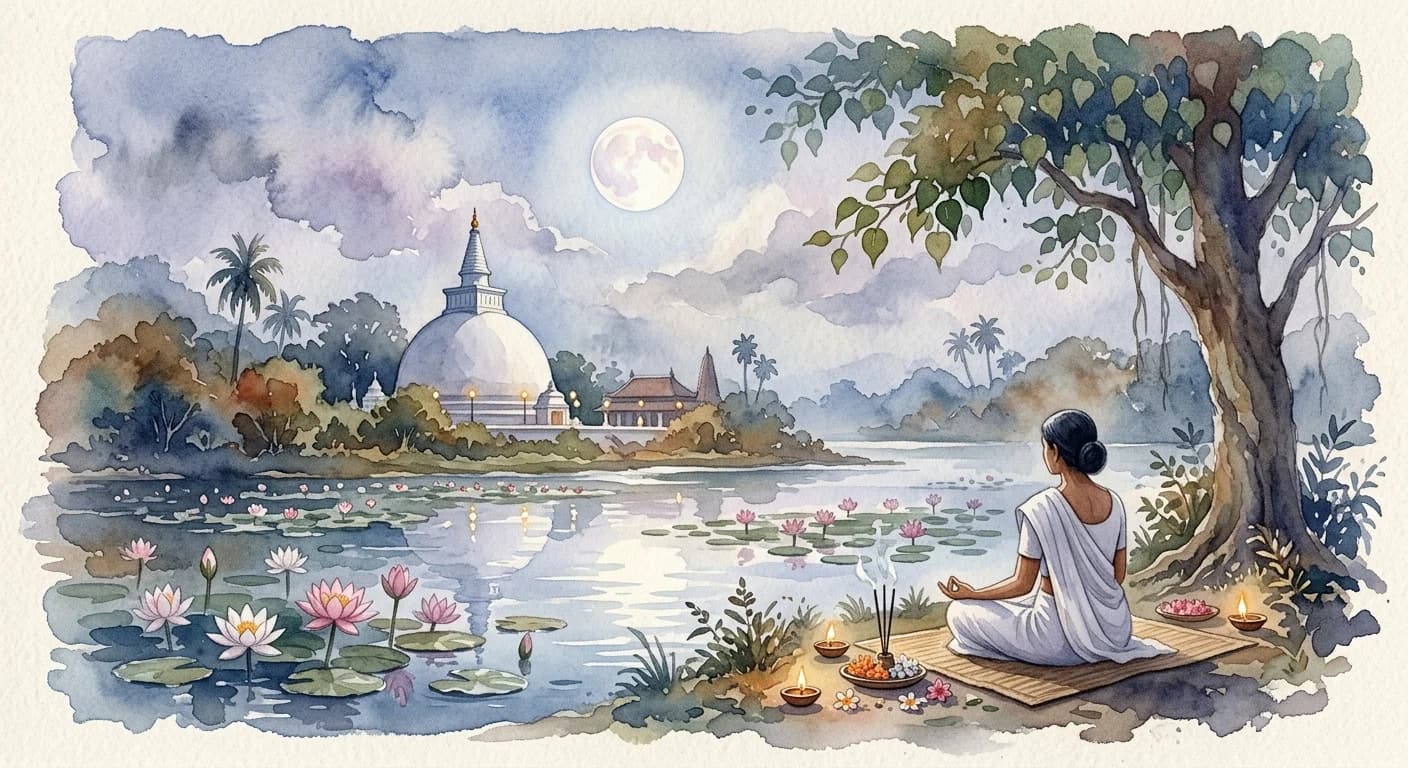
Poya transcends the simple translation of 'full moon'; it signifies a sacred monthly observance in Sri Lanka, a day when the island pauses to embrace its deep Buddhist heritage. These auspicious full moon days are dedicated to spiritual reflection, temple visits, and the practice of 'sil' – a commitment to moral precepts. Families gather, dressed in white, to engage in acts of merit, fostering a profound sense of community, devotion, and a collective aspiration for spiritual growth and inner peace.
Literal Translation
Full moon
The Story Behind the Word
The concept of Poya is deeply intertwined with the lunar calendar, which has historically guided Buddhist practices for millennia. Each Poya day commemorates a significant event in the life of the Buddha or the history of Buddhism in Sri Lanka, such as the arrival of Buddhism to the island on Poson Poya. This makes Poya not just a day of worship, but a living historical narrative, reinforcing the cultural identity and spiritual lineage of the Sinhala people. The emphasis on 'dana' (giving), 'sila' (morality), and 'bhavana' (meditation) on these days reflects a worldview centered on the accumulation of merit, the cultivation of compassion, and the pursuit of enlightenment, shaping daily life and societal values around Buddhist principles of non-violence and mindfulness.
Experience It
A Quiet Poya Morning
The aroma of incense filled the air as Amara, dressed in a pristine white sari, meticulously prepared a vegetarian meal. Her children, also in white, helped arrange offerings of fresh flowers and fruits, ready for their early morning visit to the temple to observe 'sil' and listen to the Dhamma sermon.
Community Poya Celebration
At the village temple, the 'Poya Gee' (Poya songs) resonated through the crowd. Elders sat in quiet meditation, while younger generations participated in 'dana' by distributing food to monks and fellow devotees, embodying the spirit of generosity and collective devotion that defines the day.
The Deeper Meaning
Poya days embody the Buddhist philosophy of impermanence and the cyclical nature of existence. By regularly dedicating these days to spiritual practice, individuals are encouraged to step away from worldly concerns, reflect on their actions, and consciously strive for moral purity and mental cultivation, reinforcing the path towards liberation from suffering.
Did You Know?
Each of the 12 Poya days has a unique name and commemorates a specific event in Buddhist history, making every full moon a distinct spiritual observance.
How It's Used
Poya is used to refer to the Buddhist full moon holidays in Sri Lanka. It marks specific days throughout the lunar calendar designated for religious activities and reflection.