U.
HomeRegionsLanguagesEmotionsCollections
Find Your Word

“The limits of my language mean the limits of my world.”

— Ludwig Wittgenstein, Philosopher

Untranslatable

A curated collection of the world's most beautiful expressions—words that remind us language is humanity's greatest invention.

  • Home
  • Collections
  • Regions
  • Countries
  • Emotions
  • Tags
  • Contexts
  • Finder
  • Europe
  • Asia
  • Americas
  • Africa
  • Middle East
  • About
  • Contact
  • Privacy Policy
  • Terms of Service

2026 © Untranslatable. All rights reserved.

    /
    /
    1. Home
    2. /
    3. Asia
    4. /
    5. Pirith
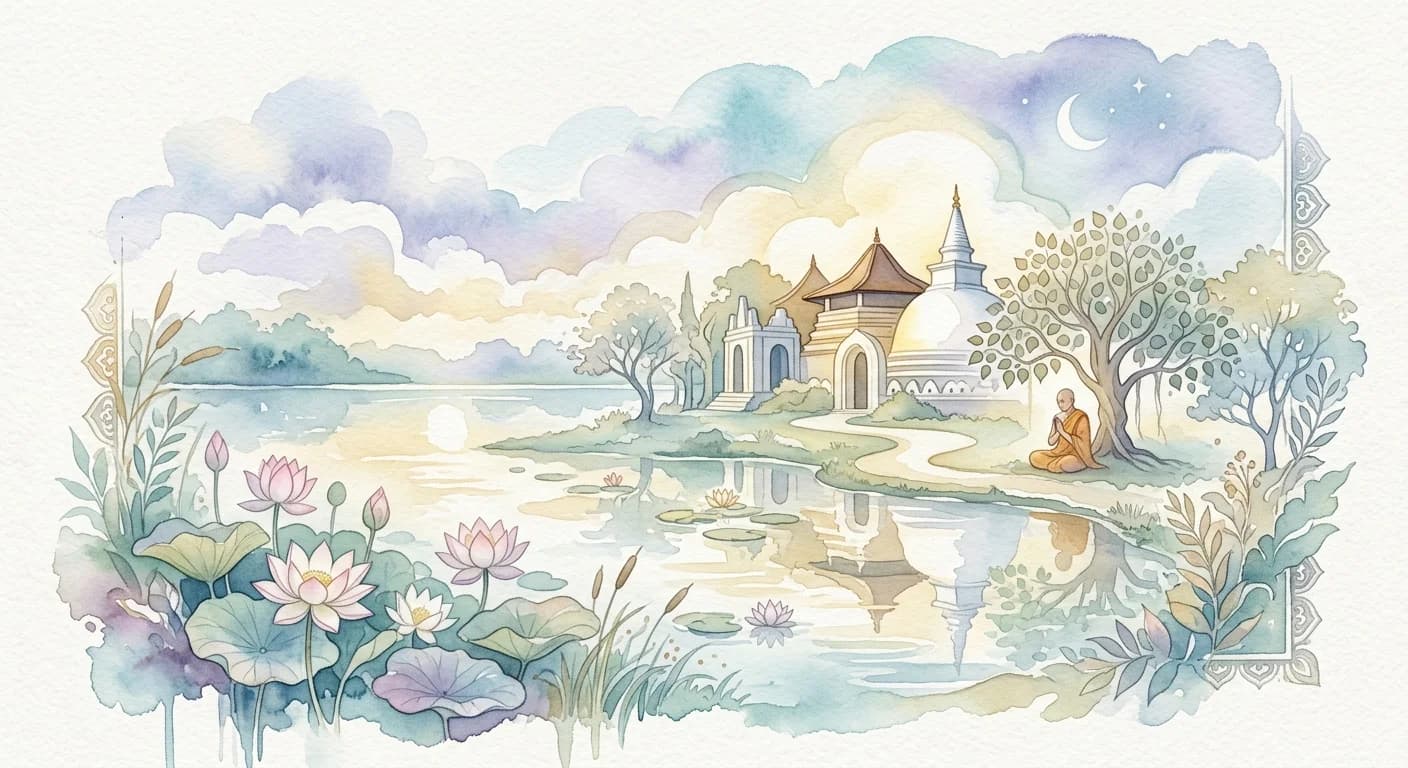
    Artistic representation of Pirith
    Sinhala•
    🇱🇰Sri Lanka

    Pirith

    /PEE-rith/

    Meaning

    Pirith is the profound Buddhist ritual of protective chanting, a spiritual anchor in Sri Lankan life. It involves the melodious recitation of ancient Pali suttas, typically by Venerable monks, creating a sonic tapestry believed to imbue blessings, purify spaces, and dispel malevolent forces. More than a religious act, it's a communal invocation of well-being, fostering a deep sense of security and harmony for individuals, families, and the nation during life's pivotal moments and times of adversity.

    Literal Translation

    Protection

    The Story Behind the Word

    Pirith is deeply woven into the fabric of Sri Lankan Buddhist culture, stemming from the belief in the power of the Buddha's word (Dhamma) to offer protection (rakkha). Its origins trace back to ancient Buddhist scriptures where the Buddha himself taught specific suttas for safeguarding against danger, illness, and negative influences. This practice reveals a worldview where the spiritual realm actively intersects with the material, and where the collective recitation of sacred texts can manifest tangible positive outcomes. It underscores the importance of community, the reverence for the Sangha (monastic order), and the enduring faith in the Dhamma as a source of solace and strength in a world perceived to be full of both seen and unseen challenges. The enduring presence of Pirith in daily life, from a new home blessing to a national crisis, highlights its role as a fundamental cultural and spiritual safety net.

    Experience It

    New Home Blessing

    The new house gleamed, but it felt empty until the monks arrived. Their rhythmic Pirith chanting filled every room, the air vibrating with ancient words, transforming the structure into a hallowed space, ready to welcome its new inhabitants with blessings and peace.

    Community Healing

    After a devastating flood, the villagers gathered, their faces etched with grief. As the monks began the Pirith, their voices a steady balm, a quiet strength permeated the crowd, offering not just protection, but a collective sense of resilience and hope amidst the sorrow.

    The Deeper Meaning

    Pirith embodies the Buddhist principle of "metta" (loving-kindness) and the power of "sacca-kriya" (an act of truth). It's not about magical incantations, but rather the cultivation of a positive mental state through mindfulness of the Dhamma, generating wholesome energy that can influence one's environment and internal well-being. It reflects a worldview where ethical conduct and spiritual devotion are seen as potent forces for protection and prosperity.

    Did You Know?

    The 'Pirith Potha' (Pirith Book) often used contains a collection of 29 suttas, with the 'Maha Piritha' (Great Pirith) being a comprehensive selection recited for major occasions, sometimes lasting for hours or even days.

    How It's Used

    Pirith chanting is performed during various Buddhist ceremonies, significant life events (like births, weddings, funerals), and times of crisis or national importance in Sri Lanka. It is also recited in homes and temples for general protection and merit-making.

    Emotions
    comfort,gratitude,peace,serenity
    Contexts
    celebration,family,farewell,relaxation
    🇱🇰Sri Lanka

    by Annelise Dubois·Written Mar 10, 2026·Updated Apr 3, 2026

    Related Words

    Explore more
    Dolce far nienteItalian

    Dolce far niente captures the profound joy and effortless pleasure derived from simply existing without obligation or purpose. It's the art of savoring moments of pure, unadulterated idleness – lying in the sun, watching the clouds drift, or enjoying a leisurely coffee – not as a break from work, but as a valuable state in itself. This 'sweetness of doing nothing' is a conscious embrace of stillness and contentment, allowing the soul to breathe and the senses to fully engage with the present.

    Wabi-sabiJapanese

    Wabi-sabi is the profound appreciation for the ephemeral, the imperfect, and the incomplete aspects of existence. It is about discovering beauty in the subtle textures of age, the unique character of flaws, and the gentle decay that marks the passage of time. This philosophy encourages a quiet acceptance of impermanence and a mindful connection to the natural world, finding elegance in simplicity and authenticity.

    IkigaiJapanese

    Ikigai is more than just a reason to get out of bed; it's a deeply personal and evolving sense of purpose that brings genuine fulfillment and joy to one's life. It represents the sweet spot where your passions, talents, needs of the world, and what you can be paid for beautifully converge. Discovering your ikigai often leads to a life lived with intentionality, resilience, and a profound connection to one's contributions. It's the intrinsic motivation that fuels a meaningful existence, regardless of external circumstances.

    NunchiKorean

    Nunchi is the sophisticated, almost telepathic, ability to instantly grasp the unspoken dynamics of any social situation, anticipating others' thoughts and feelings, and then responding with impeccable grace and timing. It's an acute form of social intuition, allowing one to navigate complex interpersonal landscapes by reading subtle cues like body language, tone, and context. Possessing good nunchi means effortlessly understanding the underlying emotional currents and adjusting one's behavior to maintain harmony and effectiveness, often without a single word exchanged.