U.
HomeRegionsLanguagesEmotionsCollections
Find Your Word

“The limits of my language mean the limits of my world.”

— Ludwig Wittgenstein, Philosopher

Untranslatable

A curated collection of the world's most beautiful expressions—words that remind us language is humanity's greatest invention.

  • Home
  • Collections
  • Regions
  • Countries
  • Emotions
  • Tags
  • Contexts
  • Finder
  • Europe
  • Asia
  • Americas
  • Africa
  • Middle East
  • About
  • Contact
  • Privacy Policy
  • Terms of Service

2026 © Untranslatable. All rights reserved.

    /
    /
    1. Home
    2. /
    3. Americas
    4. /
    5. Kapu
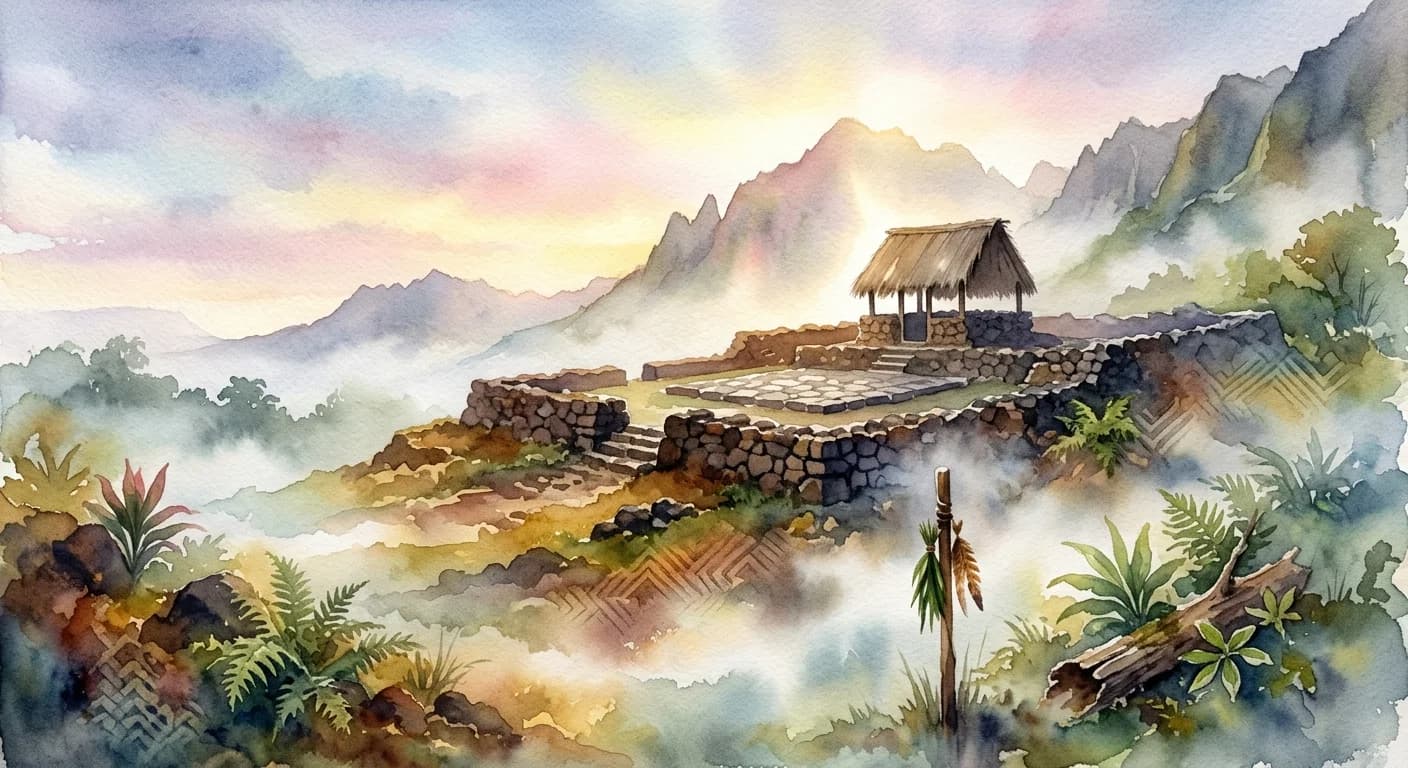
    Artistic representation of Kapu
    Hawaiian•
    🇺🇸United States

    Kapu

    /KAH-poo/

    Meaning

    In Hawaiian culture, 'kapu' is far more than a simple prohibition; it signifies a profound state of sacredness, a demarcation that sets something apart as inviolable and often divine. It denotes a spiritual boundary, an ancient law rooted in reverence for the gods, the natural world, and social order. To violate a kapu was not merely breaking a rule, but disrupting the delicate balance of mana (spiritual power) and inviting cosmic consequence, underscoring a deep-seated respect for tradition and the interconnectedness of all things.

    Literal Translation

    forbidden, taboo, sacred, prohibited

    The Story Behind the Word

    The concept of kapu was the bedrock of ancient Hawaiian society, a comprehensive system of laws and religious beliefs that governed every aspect of life, from resource management to social hierarchy and spiritual practices. It originated from the gods themselves, passed down through aliʻi (chiefs), and ensured societal harmony and the proper flow of mana. Kapu dictated who could eat what, where people could go, and how they should interact with sacred sites and individuals. This intricate system reveals a worldview deeply attuned to balance (pono), spiritual power, and the inherent sacredness of the land (ʻāina) and its resources, where human actions had direct spiritual repercussions. Though largely abolished in 1819, the spirit of kapu persists in contemporary Hawaiian culture as a respect for sacred spaces and traditions.

    Experience It

    Sacred Burial Ground

    A group of tourists approaches an ancient Hawaiian burial site marked by faded stone walls. Their local guide gently but firmly explains, 'This area is kapu. We must not enter, touch anything, or disturb the peace of those who rest here. It is a place of profound respect and spiritual significance.'

    Forbidden Fruit

    During a traditional hula ceremony, a young dancer instinctively reaches for a specific type of fish laid out as an offering. Her kumu hula (hula teacher) subtly stops her, whispering, 'That fish is kapu for women; it is reserved for the men and the gods. To partake would be to disrespect the ancient ways and disrupt the ceremony's mana.'

    The Deeper Meaning

    Kapu embodies a worldview where the sacred and secular are not distinct, but deeply intertwined. It highlights a philosophy of inherent spiritual value in places, objects, and actions, demanding a profound respect for invisible forces and established order. This concept reveals a society that understood the delicate balance of its ecosystem and community, where reverence for tradition and the divine was paramount to maintaining harmony and well-being (pono) for all.

    Did You Know?

    The word 'kapu' is the direct etymological root of the English word 'taboo,' demonstrating its global impact on understanding forbidden or sacred concepts.

    How It's Used

    Used to designate areas or actions that are forbidden or sacred, often in a traditional or spiritual context.

    Emotions
    serenity,wonder
    Contexts
    nature,tradition
    🇺🇸United States

    by Kwame Nkrumah·Written Mar 10, 2026·Updated Apr 3, 2026

    Related Words

    Explore more
    Pura vidaSpanish

    More than just 'pure life,' "Pura vida" encapsulates a profound philosophy of embracing the present moment with unwavering optimism and gratitude. It's a daily commitment to finding joy in simple pleasures, accepting life's challenges with a positive spirit, and prioritizing well-being over material possessions. This ubiquitous phrase reflects a national identity built on resilience, community, and an deep appreciation for nature's bounty.

    MamihlapinatapaiYaghan

    Mamihlapinatapai encapsulates that profound, unspoken moment when two individuals lock eyes, each silently acknowledging a mutual desire or intention, yet both hesitate to be the first to act upon it. It's a delicate dance of anticipation, a shared gaze brimming with common understanding and a quiet longing for the other to break the ice. This intricate look carries the weight of a shared, uninitiated potential, a silent conversation where both parties are perfectly aware of what could happen, but neither makes the first move.

    TingoPascuense

    Tingo describes the subtle, insidious process of progressively appropriating a neighbor's belongings by habitually requesting to borrow them, only to 'forget' their return. It's not outright theft, but a slow, deliberate erosion of another's possessions, often under the guise of neighborly exchange. This gradual accumulation, piece by piece, ultimately results in a significant transfer of goods without any direct confrontation or formal acknowledgment of the loss. It speaks to a passive-aggressive form of acquisition, where social niceties are weaponized.

    ArbejdsroDanish

    Arbejdsro encapsulates the deep, almost meditative state of calm and unwavering focus achieved when one is completely undisturbed in their work. It's not merely the absence of noise, but a profound mental stillness that allows for uninterrupted flow, enabling deep concentration and peak productivity. This cherished Danish concept highlights the intrinsic value placed on creating an environment conducive to genuine engagement and satisfaction, where one can truly immerse themselves in their tasks without the constant pull of digital distractions or external demands.