U.
HomeRegionsLanguagesEmotionsCollections
Find Your Word

“The limits of my language mean the limits of my world.”

— Ludwig Wittgenstein, Philosopher

Untranslatable

A curated collection of the world's most beautiful expressions—words that remind us language is humanity's greatest invention.

  • Home
  • Collections
  • Regions
  • Countries
  • Emotions
  • Tags
  • Contexts
  • Finder
  • Europe
  • Asia
  • Americas
  • Africa
  • Middle East
  • About
  • Contact
  • Privacy Policy
  • Terms of Service

2026 © Untranslatable. All rights reserved.

    /
    /
    1. Home
    2. /
    3. Americas
    4. /
    5. K'anchay
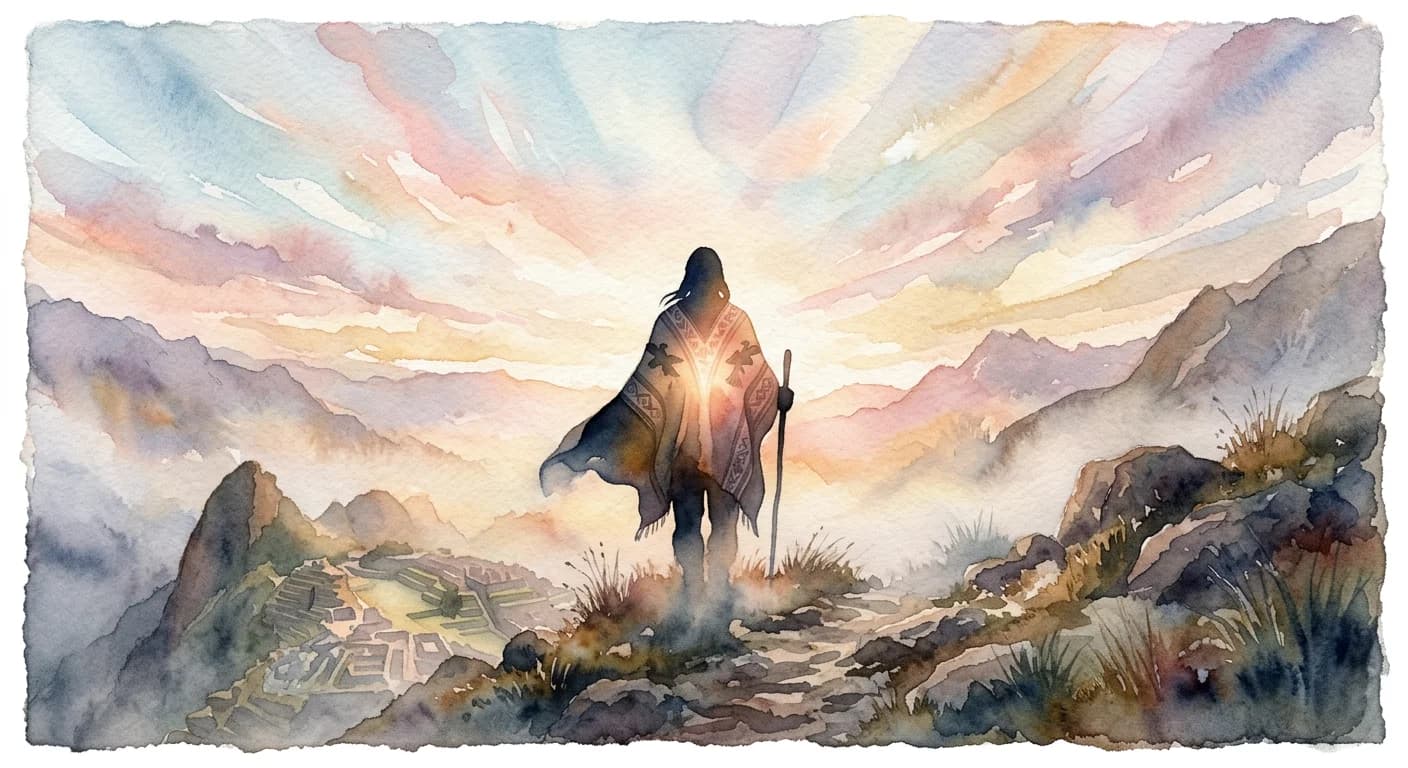
    Artistic representation of K'anchay
    Quechua•
    🇧🇴Bolivia🇪🇨Ecuador🇵🇪Peru

    K'anchay

    /KAHN-chai/

    Meaning

    K'anchay transcends mere physical illumination, embodying the radiant dawn of understanding and the spiritual glow emanating from within. It signifies the inner light of wisdom and profound enlightenment, a core concept in Andean cosmology that speaks to moments of deep realization. This term evokes a sudden clarity that dispels confusion, much like the sun breaking through morning mist, guiding not just the eyes but also the intellect and spirit, fundamental to personal growth and the cosmic order.

    Literal Translation

    to shine, to illuminate, light

    The Story Behind the Word

    In Andean cosmology, light is not merely an optical phenomenon but a sacred force deeply intertwined with life, consciousness, and the divine. K'anchay reflects the indigenous understanding that true knowledge and spiritual insight are not acquired externally but rather awakened from within, often through connection with Pachamama (Mother Earth) and the Apus (mountain spirits). The sun, Inti, is the ultimate source of physical and spiritual k'anchay, symbolizing life-giving energy and clear vision. This word encapsulates a worldview where the universe is imbued with vital energy, and humans strive to align their inner light with the cosmic radiance, achieving harmony and enlightenment. It underpins the Andean reverence for wisdom passed down through generations and the pursuit of a life lived in conscious awareness.

    Experience It

    A Shaman's Vision

    During a sacred ceremony high in the Andes, the shaman closed his eyes, seeking guidance. Suddenly, a profound k'anchay flooded his mind, revealing the path to healing for his community. It was a moment of pure, unadulterated spiritual insight.

    Student's Breakthrough

    A young Quechua student struggled with a complex ancient text for weeks. Then, late one night, as she re-read a passage, a sudden k'anchay illuminated her understanding, and the intricate wisdom of her ancestors became brilliantly clear.

    The Deeper Meaning

    K'anchay reveals an Andean philosophy where enlightenment is an intrinsic human capacity, not solely a divine gift. It suggests that wisdom is not just accumulated facts but an internal radiance that, once ignited, guides one's path. This worldview emphasizes the interconnectedness of all things, where personal insight (k'anchay) contributes to the greater cosmic order, fostering a deep respect for self-discovery and spiritual growth.

    Did You Know?

    K'anchay is often associated with the concept of 'Illariy,' the dawn, emphasizing the gradual but powerful emergence of light and understanding, both physically and spiritually.

    How It's Used

    Used to describe the light of the sun, the moon, stars, or any source of illumination, but more profoundly, it signifies the light of consciousness, wisdom, and the dawning of understanding. It can be used in spiritual contexts or when describing a moment of profound insight.

    Emotion
    wonder
    Contexts
    nature,solitude,spirituality
    🇧🇴Bolivia🇪🇨Ecuador🇵🇪Peru

    by Dr. Kenji Tanaka·Written Mar 10, 2026·Updated Apr 3, 2026

    Related Words

    Explore more
    Pura vidaSpanish

    More than just 'pure life,' "Pura vida" encapsulates a profound philosophy of embracing the present moment with unwavering optimism and gratitude. It's a daily commitment to finding joy in simple pleasures, accepting life's challenges with a positive spirit, and prioritizing well-being over material possessions. This ubiquitous phrase reflects a national identity built on resilience, community, and an deep appreciation for nature's bounty.

    MamihlapinatapaiYaghan

    Mamihlapinatapai encapsulates that profound, unspoken moment when two individuals lock eyes, each silently acknowledging a mutual desire or intention, yet both hesitate to be the first to act upon it. It's a delicate dance of anticipation, a shared gaze brimming with common understanding and a quiet longing for the other to break the ice. This intricate look carries the weight of a shared, uninitiated potential, a silent conversation where both parties are perfectly aware of what could happen, but neither makes the first move.

    TingoPascuense

    Tingo describes the subtle, insidious process of progressively appropriating a neighbor's belongings by habitually requesting to borrow them, only to 'forget' their return. It's not outright theft, but a slow, deliberate erosion of another's possessions, often under the guise of neighborly exchange. This gradual accumulation, piece by piece, ultimately results in a significant transfer of goods without any direct confrontation or formal acknowledgment of the loss. It speaks to a passive-aggressive form of acquisition, where social niceties are weaponized.

    FolkeoplysningDanish

    Folkeoplysning is the vibrant heartbeat of Danish civil society, a profound commitment to public enlightenment that transcends formal schooling. It embodies the lifelong journey of knowledge acquisition and cultural immersion for every citizen, fostering critical thinking and active democratic participation. Through accessible institutions like folk high schools, libraries, and community initiatives, it empowers individuals to understand their world, engage meaningfully, and contribute to a cohesive, informed society, viewing education not as a privilege but as a fundamental right and societal pillar.