Ixiptla
/EE-sheep-tlah/
Meaning
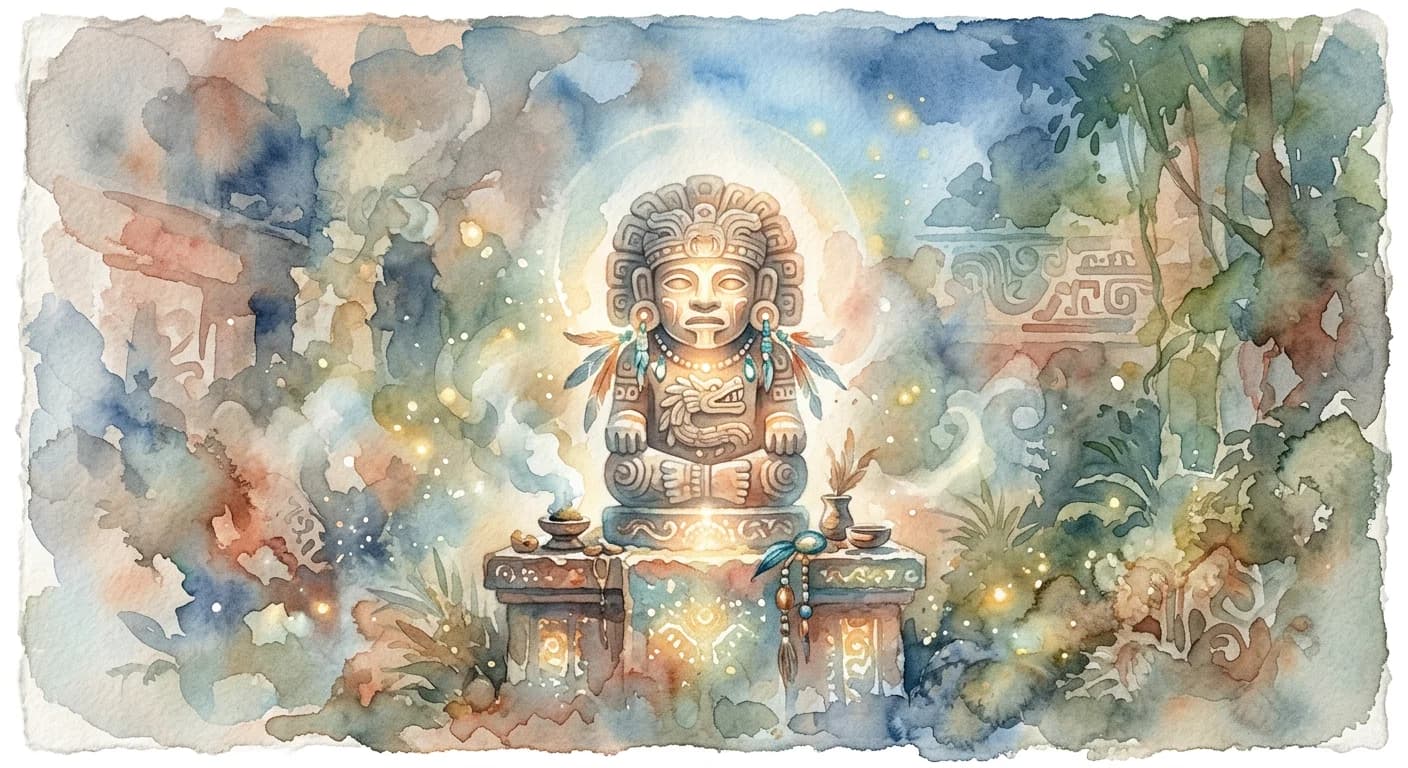
The 'ixiptla' is far more than a mere statue; it serves as a living embodiment, a sacred conduit through which the divine presence of a deity manifests directly into the human realm. It is a potent vessel, meticulously crafted to house and project the very essence, power, and will of a god, making the ethereal tangible for worship. Through the 'ixiptla', devotees could engage in profound communication, receive divine blessings, and experience the awe-inspiring reality of their gods, bridging the cosmic divide.
Literal Translation
icon/image of the divine
The Story Behind the Word
The concept of 'ixiptla' is deeply rooted in the Nahua worldview, which perceived the cosmos as inherently interconnected and imbued with sacred forces. For the Nahua, the divine was not distant but active in the world, and the 'ixiptla' provided a crucial interface for this interaction. Its existence reflects a profound understanding of immanence – that the gods could literally inhabit and animate specific forms. This belief system necessitated such objects, as they were central to ritual, sacrifice, and maintaining cosmic balance. The creation and veneration of an 'ixiptla' were not acts of idolatry in the Western sense, but rather a direct engagement with the divine presence itself, essential for societal well-being and the continuation of life.
Experience It
Festival of Huitzilopochtli
During the great Toxcatl festival, the 'ixiptla' of Huitzilopochtli, adorned with precious feathers and jewels, was paraded through Tenochtitlan. Priests offered incense and blood, believing the war god's spirit actively resided within the effigy, observing and accepting their devotion, ensuring victory in future battles.
Consulting Tlaloc's Image
A farmer, worried by a long drought, approached the 'ixiptla' of Tlaloc in the temple. He offered a small jade pendant and spoke his prayers directly to the rain god's image, confident that Tlaloc's essence within the statue heard his plea and would soon bring life-giving rains to his fields.
The Deeper Meaning
The 'ixiptla' reveals a Nahua philosophy where the divine is not abstract or solely transcendent, but capable of concrete manifestation and immanent presence within the material world. It underscores a fundamental belief in the permeability of boundaries between the sacred and the profane, and the active, reciprocal relationship between humanity and the gods, mediated through tangible forms. This worldview emphasizes participation and embodiment as paths to spiritual understanding and interaction.
Did You Know?
Some 'ixiptla' were not just carved statues but living individuals, chosen to impersonate a deity for a year before being ritually sacrificed, becoming the ultimate embodiment of the god.
How It's Used
Used in religious and cultural contexts to refer to divine effigies and representations within Nahuatl traditions.