U.
HomeRegionsLanguagesEmotionsCollections
Find Your Word

“The limits of my language mean the limits of my world.”

— Ludwig Wittgenstein, Philosopher

Untranslatable

A curated collection of the world's most beautiful expressions—words that remind us language is humanity's greatest invention.

  • Home
  • Collections
  • Regions
  • Countries
  • Emotions
  • Tags
  • Contexts
  • Finder
  • Europe
  • Asia
  • Americas
  • Africa
  • Middle East
  • About
  • Contact
  • Privacy Policy
  • Terms of Service

2026 © Untranslatable. All rights reserved.

    /
    /
    1. Home
    2. /
    3. Americas
    4. /
    5. Nahualli
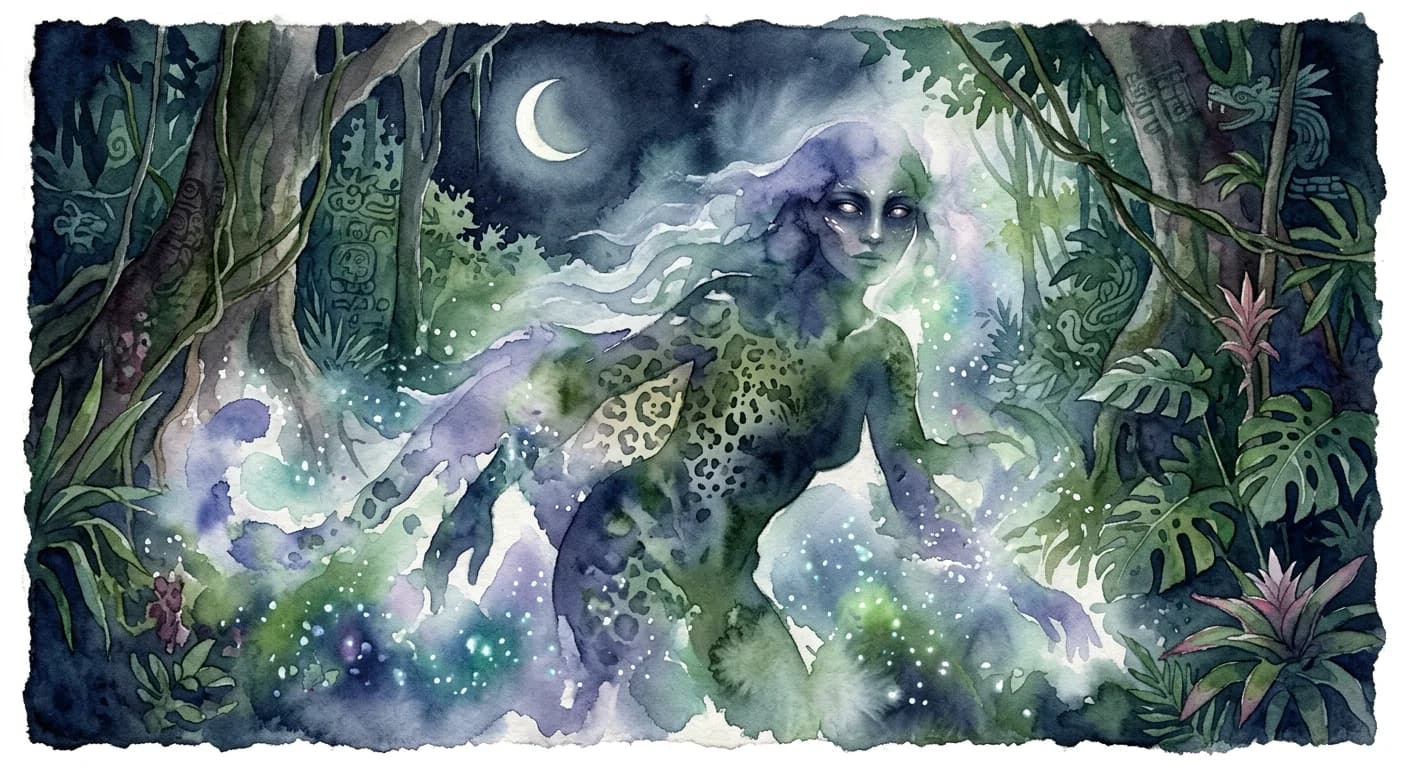
    Artistic representation of nahualli
    Nahuatl•
    🇲🇽Mexico

    Nahualli

    /nah-WAH-lee/

    Meaning

    The term 'nahualli' in Nahuatl transcends a simple translation of 'sorcerer' or 'witch'; it denotes an individual deeply connected to the spiritual fabric of the cosmos, possessing the extraordinary ability to shapeshift, often into animal forms. This power allows them to project their essence or transform their physical body, blurring the lines between human and animal, visible and invisible. A nahualli could wield their mystical capabilities for both benevolent healing and malevolent curses, embodying the potent, often unpredictable, forces inherent in the natural world and the hidden dimensions of existence.

    Literal Translation

    shaman, sorcerer, witch, shapeshifter

    The Story Behind the Word

    The concept of the nahualli is fundamental to understanding pre-Hispanic Mesoamerican worldview, where animism and the interconnectedness of all life were paramount. It reflects a belief system where the human spirit was not confined to the physical body and could interact directly with the spiritual realm, often through an animal 'alter ego' or 'spirit companion' (tonal). The existence of nahuallis underscored a world where power was fluid, magic was real, and the boundaries between species were permeable. This word exists because it articulated a crucial aspect of their cosmology: the belief that certain individuals could harness and manipulate the cosmic energies that bound the physical and spiritual worlds, influencing fate and reality itself. It reveals a worldview that saw nature as animated by spirits and imbued with profound, sometimes fearsome, power.

    Experience It

    The Jaguar's Shadow

    As the moon climbed high, the old healer's eyes took on a feral gleam. Villagers whispered he was a nahualli, capable of shedding his human skin to stalk the night as a powerful jaguar, protecting the crops from unseen dangers or, some feared, settling old scores under the cloak of darkness.

    Whispers of the Owl

    A sudden illness swept through the village, and the elders suspected a malevolent nahualli was at work. They spoke of an owl that had been seen perched silently on rooftops at night, its gaze too intelligent, believed to be the transformed form of a rival shaman, casting spells from the shadows.

    The Deeper Meaning

    The nahualli embodies a profound indigenous philosophical concept: the fluidity of identity and the porous boundary between humanity and the natural world. It suggests that consciousness is not confined to human form and that deep communion with nature can grant extraordinary powers. This reveals a worldview that values interconnectedness, animism, and a holistic understanding of existence, where spiritual power is inherent in all living things and accessible to those who can bridge the realms.

    Did You Know?

    Some researchers believe the myth of the nahualli might have originated from observations of shamans entering trance states, where their behavior could mimic animals, interpreted as literal transformation.

    How It's Used

    Used to describe a sorcerer, witch, or shaman with supernatural powers, particularly the ability to shapeshift, within Nahuatl-speaking communities and in discussions of pre-Hispanic Mexican culture and mythology.

    Emotions
    fear,wonder
    Contexts
    daily life,spirituality,tradition
    🇲🇽Mexico

    by Dr. Kenji Tanaka·Written Mar 10, 2026·Updated Apr 3, 2026

    Related Words

    Explore more
    Pura vidaSpanish

    More than just 'pure life,' "Pura vida" encapsulates a profound philosophy of embracing the present moment with unwavering optimism and gratitude. It's a daily commitment to finding joy in simple pleasures, accepting life's challenges with a positive spirit, and prioritizing well-being over material possessions. This ubiquitous phrase reflects a national identity built on resilience, community, and an deep appreciation for nature's bounty.

    MamihlapinatapaiYaghan

    Mamihlapinatapai encapsulates that profound, unspoken moment when two individuals lock eyes, each silently acknowledging a mutual desire or intention, yet both hesitate to be the first to act upon it. It's a delicate dance of anticipation, a shared gaze brimming with common understanding and a quiet longing for the other to break the ice. This intricate look carries the weight of a shared, uninitiated potential, a silent conversation where both parties are perfectly aware of what could happen, but neither makes the first move.

    TingoPascuense

    Tingo describes the subtle, insidious process of progressively appropriating a neighbor's belongings by habitually requesting to borrow them, only to 'forget' their return. It's not outright theft, but a slow, deliberate erosion of another's possessions, often under the guise of neighborly exchange. This gradual accumulation, piece by piece, ultimately results in a significant transfer of goods without any direct confrontation or formal acknowledgment of the loss. It speaks to a passive-aggressive form of acquisition, where social niceties are weaponized.

    FolkeoplysningDanish

    Folkeoplysning is the vibrant heartbeat of Danish civil society, a profound commitment to public enlightenment that transcends formal schooling. It embodies the lifelong journey of knowledge acquisition and cultural immersion for every citizen, fostering critical thinking and active democratic participation. Through accessible institutions like folk high schools, libraries, and community initiatives, it empowers individuals to understand their world, engage meaningfully, and contribute to a cohesive, informed society, viewing education not as a privilege but as a fundamental right and societal pillar.