Xiuhpohualli
/shee-oo-POH-wah-lee/
Meaning
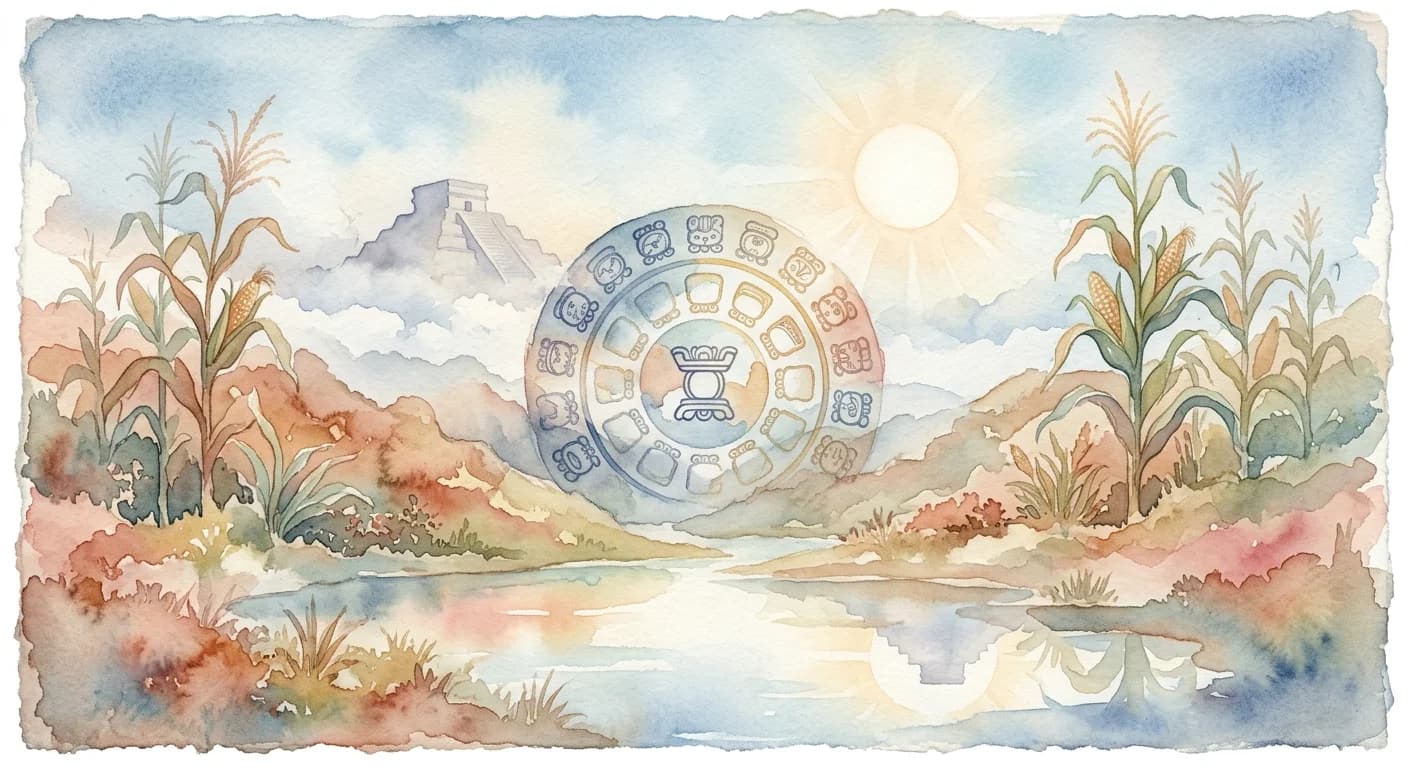
Xiuhpohualli is more than a mere calendar; it is the very pulse of the Aztec cosmos, a sophisticated 365-day solar count intricately woven from eighteen twenty-day 'months' (veintenas) and five ominous 'empty' days (nemontemi). This sacred cycle dictated the rhythms of agricultural life, the timing of elaborate religious ceremonies, and the very structure of society, embodying a profound understanding of celestial mechanics. It represented a worldview where time was not linear but a sacred, cyclical force, perpetually renewing and governing all existence, from the planting of maize to the propitiation of the gods.
Literal Translation
year count
The Story Behind the Word
The xiuhpohualli was foundational to Aztec civilization, reflecting a deep reverence for the sun (Tonatiuh) and its life-giving journey across the sky. Its existence reveals a people who saw the cosmos as an interconnected, living entity where human actions, agricultural cycles, and divine will were inextricably linked. The precise tracking of this calendar ensured cosmic harmony, dictated when to plant and harvest, and set the dates for elaborate festivals and sacrifices intended to maintain balance with the gods. It wasn't just a tool for measuring time; it was a blueprint for living, imbued with spiritual significance, guiding collective and individual destinies. The nemontemi, the five 'unlucky' days at the year's end, highlight a cultural awareness of transitional periods as times of vulnerability and heightened spiritual caution, reinforcing the cyclical nature of renewal and potential peril.
Experience It
Planting Season Ritual
As the xiuhpohualli entered the month of Tlacaxipehualiztli, the priests announced the sacred rituals for the flaying of men, a grim but vital ceremony to ensure bountiful harvests. Farmers, guided by these calendrical decrees, prepared their fields, knowing the gods demanded their due to guarantee the maize would flourish.
Market Day Preparations
A merchant in Tenochtitlan consulted the xiuhpohualli, noting the upcoming market day coinciding with a favorable sign under the current veintena. He carefully arranged his goods, confident that the celestial alignment promised good fortune and bustling trade at the Tlatelolco marketplace.
The Deeper Meaning
The xiuhpohualli embodies a cyclical concept of time, contrasting sharply with linear Western perspectives. It reveals a philosophy where the past is not gone but constantly returning, shaping the present and future. This cyclical understanding fostered a deep sense of responsibility to uphold cosmic order through ritual and sacrifice, ensuring the sun's continued journey and the renewal of life, rather than merely progressing towards an end point.
Did You Know?
The five 'empty days' (nemontemi) at the end of the xiuhpohualli were considered highly unlucky, a time when people avoided travel, conflict, and even left food untouched, fearing malevolent spirits.
How It's Used
Used to refer to the Aztec solar calendar system. It was fundamental for tracking agricultural cycles, religious festivals, and significant historical events in pre-Hispanic Mesoamerica.