U.
HomeRegionsLanguagesEmotionsCollections
Find Your Word

“The limits of my language mean the limits of my world.”

— Ludwig Wittgenstein, Philosopher

Untranslatable

A curated collection of the world's most beautiful expressions—words that remind us language is humanity's greatest invention.

  • Home
  • Collections
  • Regions
  • Countries
  • Emotions
  • Tags
  • Contexts
  • Finder
  • Europe
  • Asia
  • Americas
  • Africa
  • Middle East
  • About
  • Contact
  • Privacy Policy
  • Terms of Service

2026 © Untranslatable. All rights reserved.

    /
    /
    1. Home
    2. /
    3. Americas
    4. /
    5. Teixiptla
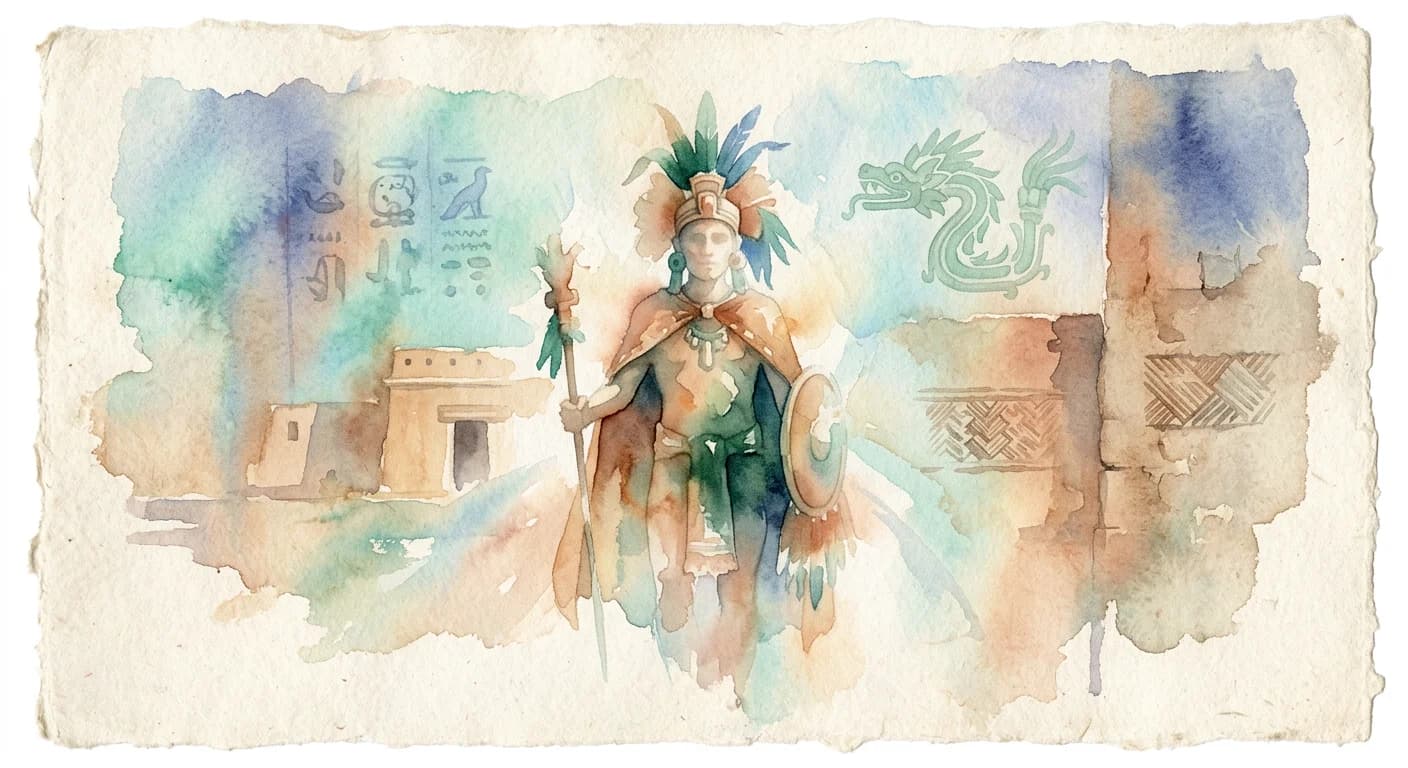
    Artistic representation of teixiptla
    Nahuatl•
    🇲🇽Mexico

    Teixiptla

    /tay-sheep-tla/

    Meaning

    A teixiptla is far more than a mere statue or idol; it is the living embodiment and active presence of a deity within the earthly realm. Crafted with meticulous ritual, these sacred figures served as a conduit, allowing the divine essence to manifest tangibly among the people. During ceremonies, the teixiptla became the god, receiving offerings, prayers, and even sacrifices, acting as a direct interface between humanity and the powerful, ever-present spiritual forces that governed the Aztec cosmos. It was a focal point for profound reverence, channeling the numinous into a perceivable form.

    Literal Translation

    divine likeness

    The Story Behind the Word

    The concept of teixiptla is foundational to the Aztec worldview, revealing a universe where the divine was not distant but intimately interwoven with the material world. It reflects a profound understanding of sacred power as something that could be concentrated, manifested, and interacted with. The creation of a teixiptla was a complex ritual, often involving precious materials, human blood, and elaborate ceremonies to imbue it with divine energy. This word exists because the Aztecs did not separate the spiritual from the physical; for them, the teixiptla was a liminal object, blurring the lines between god and image, spirit and matter. It underscores a cyclical cosmology where gods actively participated in human affairs, and humans could, through such sacred objects, directly engage with the divine will and power, ensuring cosmic balance and societal well-being.

    Experience It

    Coronation of a King

    Before the new Tlatoani could ascend the throne, he prostrated himself before the teixiptla of Huitzilopochtli. The priests, with solemn precision, presented offerings to the divine likeness, seeking the war god's blessing and validation for the new ruler, who would now govern under the god's direct gaze and authority.

    Festival of Toxcatl

    During the festival of Toxcatl, a young man chosen as the teixiptla of Tezcatlipoca lived for a year as the god incarnate, receiving honors and reverence. On the final day, dressed in divine regalia, he ascended the temple steps, his sacrifice completing the cycle, returning the god's essence to the heavens while renewing the world below.

    The Deeper Meaning

    The teixiptla embodies a deeply animistic and pantheistic philosophy where divinity is not confined to an ethereal plane but can permeate and manifest within the material world. It challenges the Western dualism of spirit and matter, suggesting an interconnected cosmos where sacred power is immanent and accessible through carefully consecrated forms. This concept reveals a worldview focused on direct engagement with the divine, not merely abstract belief, and emphasizes the active role of ritual in shaping reality.

    Did You Know?

    Some teixiptla were not permanent statues but effigies made of amaranth dough, which were ritually consumed by worshippers, literally ingesting the divine essence.

    How It's Used

    Used in the context of ancient Mesoamerican religions, specifically Aztec and related cultures, to refer to divine effigies.

    Emotions
    gratitude,peace,wonder
    Contexts
    celebration,religion,tradition
    🇲🇽Mexico

    by Kwame Nkrumah·Written Mar 10, 2026·Updated Apr 3, 2026

    Related Words

    Explore more
    Dolce far nienteItalian

    Dolce far niente captures the profound joy and effortless pleasure derived from simply existing without obligation or purpose. It's the art of savoring moments of pure, unadulterated idleness – lying in the sun, watching the clouds drift, or enjoying a leisurely coffee – not as a break from work, but as a valuable state in itself. This 'sweetness of doing nothing' is a conscious embrace of stillness and contentment, allowing the soul to breathe and the senses to fully engage with the present.

    Pura vidaSpanish

    More than just 'pure life,' "Pura vida" encapsulates a profound philosophy of embracing the present moment with unwavering optimism and gratitude. It's a daily commitment to finding joy in simple pleasures, accepting life's challenges with a positive spirit, and prioritizing well-being over material possessions. This ubiquitous phrase reflects a national identity built on resilience, community, and an deep appreciation for nature's bounty.

    MamihlapinatapaiYaghan

    Mamihlapinatapai encapsulates that profound, unspoken moment when two individuals lock eyes, each silently acknowledging a mutual desire or intention, yet both hesitate to be the first to act upon it. It's a delicate dance of anticipation, a shared gaze brimming with common understanding and a quiet longing for the other to break the ice. This intricate look carries the weight of a shared, uninitiated potential, a silent conversation where both parties are perfectly aware of what could happen, but neither makes the first move.

    TingoPascuense

    Tingo describes the subtle, insidious process of progressively appropriating a neighbor's belongings by habitually requesting to borrow them, only to 'forget' their return. It's not outright theft, but a slow, deliberate erosion of another's possessions, often under the guise of neighborly exchange. This gradual accumulation, piece by piece, ultimately results in a significant transfer of goods without any direct confrontation or formal acknowledgment of the loss. It speaks to a passive-aggressive form of acquisition, where social niceties are weaponized.