U.
HomeRegionsLanguagesEmotionsCollections
Find Your Word

“The limits of my language mean the limits of my world.”

— Ludwig Wittgenstein, Philosopher

Untranslatable

A curated collection of the world's most beautiful expressions—words that remind us language is humanity's greatest invention.

  • Home
  • Collections
  • Regions
  • Countries
  • Emotions
  • Tags
  • Contexts
  • Finder
  • Europe
  • Asia
  • Americas
  • Africa
  • Middle East
  • About
  • Contact
  • Privacy Policy
  • Terms of Service

2026 © Untranslatable. All rights reserved.

    /
    /
    1. Home
    2. /
    3. Africa
    4. /
    5. Boda-boda
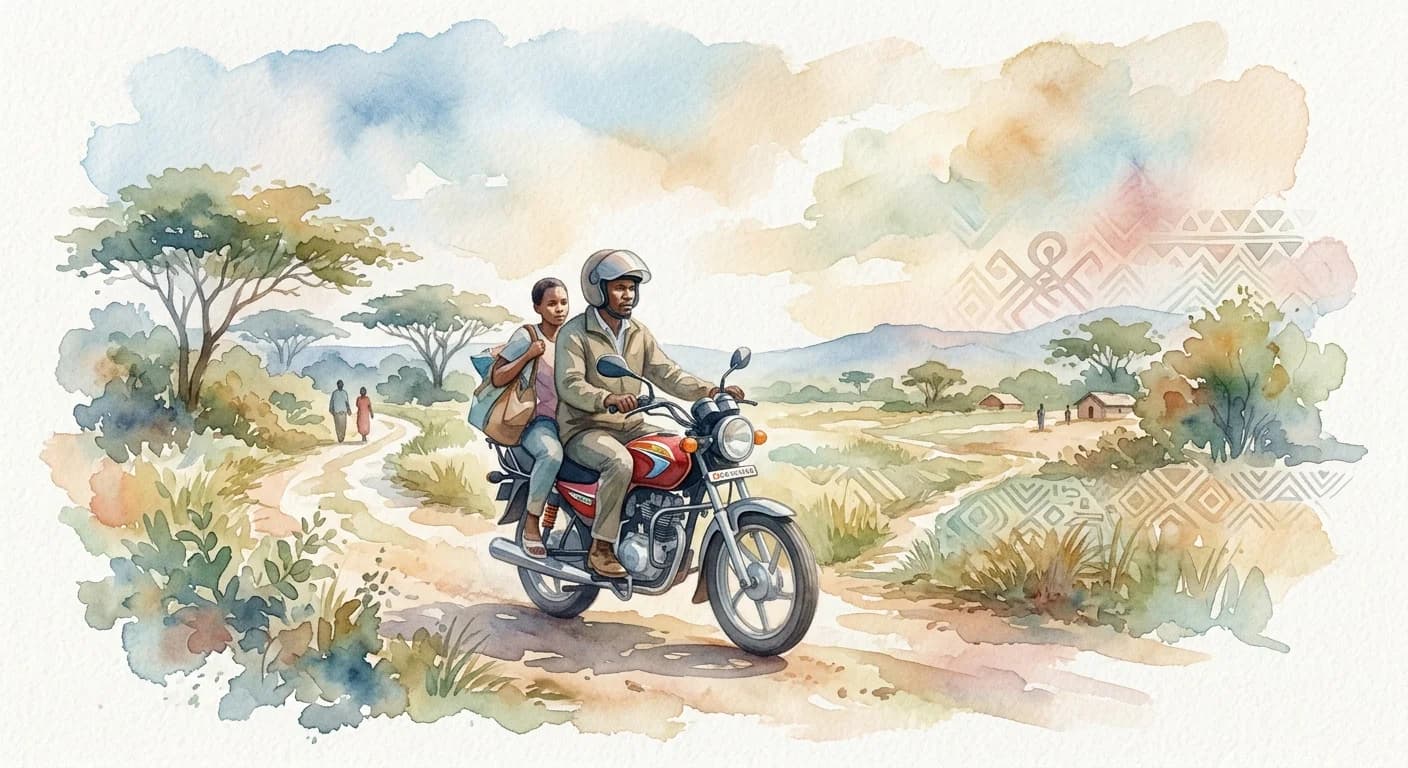
    Artistic representation of Boda-boda
    Swahili•
    🇰🇪Kenya🇹🇿Tanzania🇺🇬Uganda

    Boda-boda

    /BOH-dah BOH-dah/

    Meaning

    A "boda-boda" is more than just a motorcycle taxi; it's the pulsating artery of East African urban and rural life, a two-wheeled chariot navigating the chaos with agile precision. It embodies instant mobility, carrying everything from market produce to schoolchildren, often defying traffic laws with a skillful dance. This ubiquitous service provides crucial livelihoods for countless young men, transforming motorcycles into indispensable tools of commerce and connection in a region where reliable public transport can be scarce.

    Literal Translation

    Motorcycle taxi

    The Story Behind the Word

    The term "boda-boda" itself is believed to have emerged from the need for cross-border transport between Uganda and Kenya, specifically for those wanting to cross the no-man's-land between official border posts – a "border to border" journey. This origin story speaks volumes about the ingenuity and entrepreneurial spirit born out of necessity in the region. Boda-bodas quickly evolved from a niche border service to a dominant mode of transport, filling a critical gap in infrastructure and accessibility. They represent a paradox: a symbol of both aspiration and peril. For many young men, owning and operating a boda-boda is a path out of unemployment, a tangible step towards economic independence and dignity. Yet, the work is fraught with dangers, from road accidents to exploitation, reflecting the broader socio-economic challenges faced by many. The boda-boda is thus deeply embedded in the daily rhythms, economic struggles, and dreams of East African communities, a testament to human adaptability and resilience.

    Experience It

    Rush Hour Rescue

    A sudden downpour hits just as evening traffic grinds to a halt. Amina, late for her evening class, spots a line of boda-bodas weaving through the gridlock. She flags one down, quickly negotiating a fare, and expertly hops on, her bag tucked securely as the driver skillfully navigates puddles and cars, getting her to campus just in time.

    Market Day Haul

    Mama Zawadi has just finished her shopping at the bustling open-air market. Her basket overflows with fresh vegetables, live chickens, and a sack of maize flour. She calls out for a boda-boda, and within moments, a driver helps her load her purchases, strapping them securely to the back of his bike, ready for the journey home through the dusty village paths.

    The Deeper Meaning

    The boda-boda embodies a profound philosophy of adaptive resilience and individual enterprise in the face of systemic challenges. It signifies a society where informal networks often outpace formal infrastructure, where the individual's hustle creates solutions for the collective's needs. It speaks to a cultural value placed on immediate, practical solutions and the inherent entrepreneurial spirit that thrives even, or especially, in environments of scarcity.

    Did You Know?

    The earliest boda-bodas weren't even motorcycles, but bicycles! They ferried people and goods across the no-man's-land between border posts before motorized versions became common, highlighting their humble, practical origins.

    How It's Used

    Used to refer to a motorcycle taxi service or a motorcycle taxi driver.

    Contexts
    travel,work
    🇰🇪Kenya🇹🇿Tanzania🇺🇬Uganda

    by Kwame Nkrumah·Written Mar 10, 2026·Updated Apr 3, 2026

    Related Words

    Explore more
    UbuntuZulu/Xhosa

    Ubuntu is a profound African philosophy that translates to 'I am because we are,' signifying that an individual's humanity is inextricably linked to the humanity of others. It embodies the belief that our existence and well-being are deeply intertwined with the community. This concept emphasizes compassion, reciprocity, dignity, and the understanding that true fulfillment is found not in isolation, but through collective flourishing and mutual support. It's a call to recognize and affirm the humanity in everyone, fostering a sense of interconnectedness.

    VoetstootsAfrikaans

    Voetstoots encapsulates the unvarnished truth of a transaction: accepting an item, typically property or a vehicle, precisely as it stands, with all its inherent imperfections, visible or hidden. It's a declaration that the buyer embraces the full spectrum of risk, relying solely on their own assessment and a handshake-level understanding, freeing the seller from future liability. This term doesn't just describe a legal clause; it embodies a pragmatic relinquishment of recourse, placing the onus squarely on the purchaser to exercise ultimate due diligence or simply accept fate.

    Lui lekkerAfrikaans

    “Lui lekker” transcends simple enjoyment, embodying a profound, almost visceral contentment that resonates deeply within one's being. It signifies a moment where sensory input—be it taste, sight, sound, or touch—aligns perfectly to create a holistic sense of well-being and satisfaction. This phrase captures an authentic, unadulterated pleasure, suggesting a state of perfect ease where one is utterly delighted and at peace with the experience. It's the feeling of everything being just right, reaching a peak of pleasantness.

    UbuntuZulu

    Ubuntu is a profound Nguni Bantu philosophy asserting that our humanity is inextricably woven into the fabric of our relationships with others. It champions the radical idea that 'I am because we are,' emphasizing that a person's well-being and identity are affirmed through community, compassion, and collective flourishing. Far more than just empathy, it's a call to active participation in building a harmonious society, where generosity, kindness, and mutual respect are not merely virtues but the very essence of existence.