U.
HomeRegionsLanguagesEmotionsCollections
Find Your Word

“The limits of my language mean the limits of my world.”

— Ludwig Wittgenstein, Philosopher

Untranslatable

A curated collection of the world's most beautiful expressions—words that remind us language is humanity's greatest invention.

  • Home
  • Collections
  • Regions
  • Countries
  • Emotions
  • Tags
  • Contexts
  • Finder
  • Europe
  • Asia
  • Americas
  • Africa
  • Middle East
  • About
  • Contact
  • Privacy Policy
  • Terms of Service

2026 © Untranslatable. All rights reserved.

    /
    /
    1. Home
    2. /
    3. Middle East
    4. /
    5. Baqa'
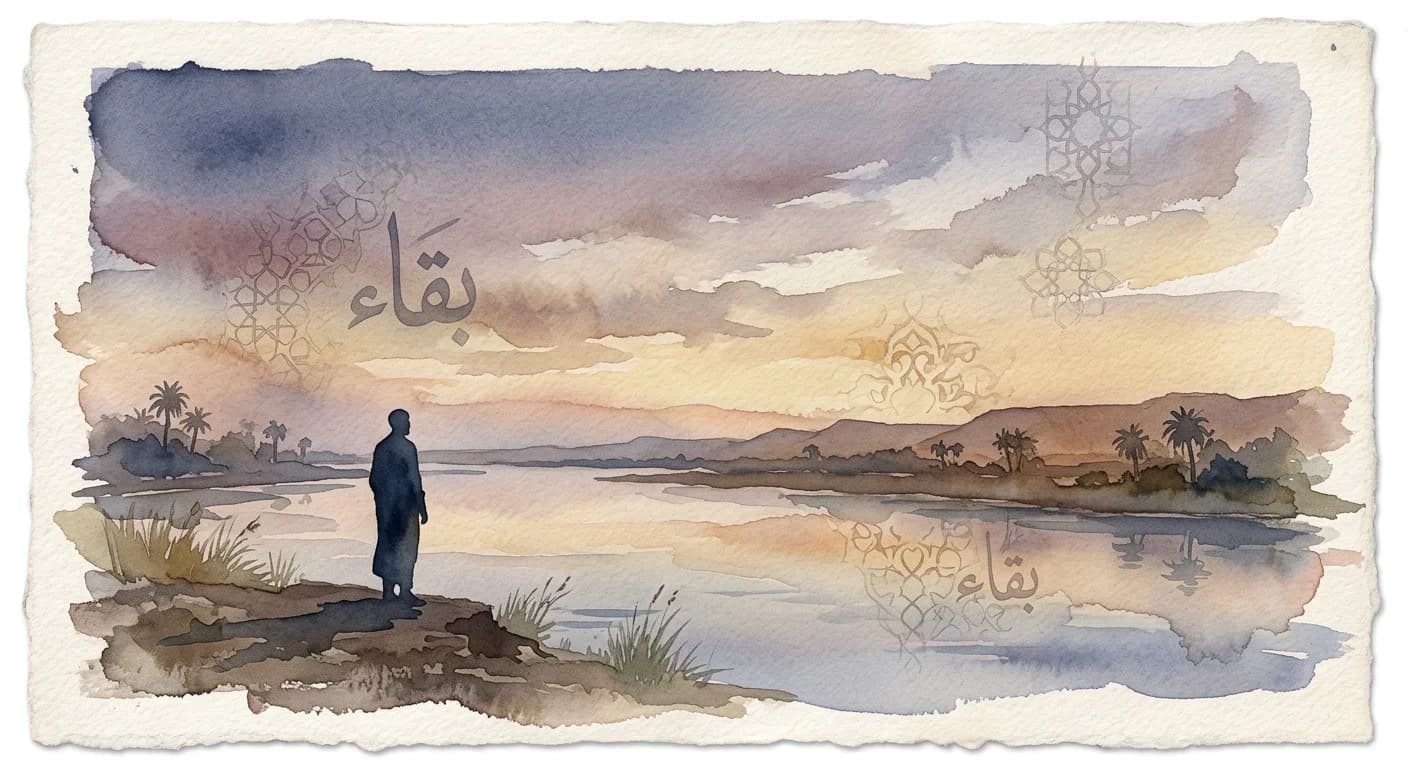
    Artistic representation of Baqa'
    Arabic•
    🇪🇬Egypt🇯🇴Jordan🇱🇧Lebanon🇵🇸Palestine🇸🇾Syria

    Baqa'

    /BAH-kah/

    Meaning

    Baqa' encapsulates a profound, sometimes spiritual, melancholy born from the acute awareness of life's fleeting nature and the inevitability of loss. It's not despair, but rather a poignant, bittersweet ache that appreciates the beauty and joy of the present while simultaneously acknowledging its eventual disappearance. This deep emotional state imbues each moment with a fragile preciousness, fostering a desire to savor experiences before they, too, become memories.

    Literal Translation

    remaining, enduring, or presence (can also refer to a specific type of cheese)

    The Story Behind the Word

    The concept of Baqa' is deeply rooted in Islamic philosophical and mystical traditions, particularly Sufism, where the contemplation of impermanence (fana') is a path to understanding divine permanence. While 'fana'' often refers to the annihilation of the self in God, Baqa' in this context can be seen as the 'remaining' or 'subsistence' in God after fana', a state of abiding in truth. This spiritual lineage imbues the everyday Egyptian understanding of Baqa' with a sense of profound acceptance and a recognition of a higher order. It reflects a culture that has historically grappled with both the richness of life and the harsh realities of transience, often finding solace and meaning in spiritual contemplation. This worldview encourages a deep appreciation for the present, knowing it will pass, and a certain resignation to the cycles of existence.

    Experience It

    Sunset Over the Nile

    As the sun dipped below the horizon, casting vibrant hues across the Nile, Aisha felt a familiar Baqa'. The breathtaking beauty filled her with joy, yet a gentle sadness lingered, knowing this perfect moment, like all others, would soon be just a memory.

    A Child's Laughter

    Ahmed watched his young daughter playing, her laughter echoing through the garden. A wave of Baqa' washed over him; he cherished her innocence and joy, acutely aware of how quickly she was growing and how these precious, fleeting years would soon be gone.

    The Deeper Meaning

    Baqa' reveals a philosophical stance that embraces paradox: finding beauty in impermanence and strength in vulnerability. It suggests that true appreciation for life emerges not despite, but because of, its transient nature. This worldview encourages a mindful presence and a spiritual acceptance of the cyclical rhythm of creation and dissolution, fostering a deeper connection to existence itself.

    Did You Know?

    The word 'Baqa'' also literally refers to a type of Egyptian cheese, creating a curious linguistic duality between a profound emotional state and a dairy product!

    How It's Used

    Used in poetry, literature, and everyday conversation to describe a deep emotional state related to the passage of time and the impermanence of all things.

    Emotions
    bittersweet,melancholy,nostalgia,peace
    Contexts
    farewell,personal growth,seasons
    🇪🇬Egypt🇯🇴Jordan🇱🇧Lebanon🇵🇸Palestine🇸🇾Syria

    by Sofia Rossi·Written Mar 10, 2026·Updated Apr 3, 2026

    Related Words

    Explore more
    SaudadePortuguese

    Saudade encapsulates a profound, melancholic longing for something or someone cherished that is absent, often with the bittersweet knowledge that it may never return. It's a deep emotional state tinged with nostalgia, evoking a sense of loss for past experiences, places, or people, yet also holding a tender appreciation for the beauty of what once was. This yearning is not merely sadness, but a complex tapestry of desire, memory, and a poignant acceptance of absence, holding the beloved in a warm, persistent embrace within the heart.

    Dolce far nienteItalian

    Dolce far niente captures the profound joy and effortless pleasure derived from simply existing without obligation or purpose. It's the art of savoring moments of pure, unadulterated idleness – lying in the sun, watching the clouds drift, or enjoying a leisurely coffee – not as a break from work, but as a valuable state in itself. This 'sweetness of doing nothing' is a conscious embrace of stillness and contentment, allowing the soul to breathe and the senses to fully engage with the present.

    TarofPersian

    Tarof is a deeply ingrained Iranian social custom, a delicate dance of politeness and deference where individuals engage in an elaborate exchange of offers and refusals. It's a performative humility, a way of showing respect and avoiding imposing, often involving multiple cycles of insistence and polite decline before a genuine acceptance or refusal is reached. This intricate ritual governs interactions from sharing food to paying bills, creating a nuanced social ballet.

    TarabArabic

    Tarab is far more than mere enjoyment; it's a profound, almost spiritual communion with music, where the performer and audience become one in a shared emotional journey. It signifies a state of ecstatic enchantment, a deep emotional surrender that transcends the self, leading to a transformative experience. This intense connection often manifests as spontaneous vocalizations, tears, or even physical swaying, as the music penetrates the soul and evokes a powerful release of feeling. It's a moment of pure, unadulterated musical rapture.