Nowruz
/NOH-rooz/
Meaning
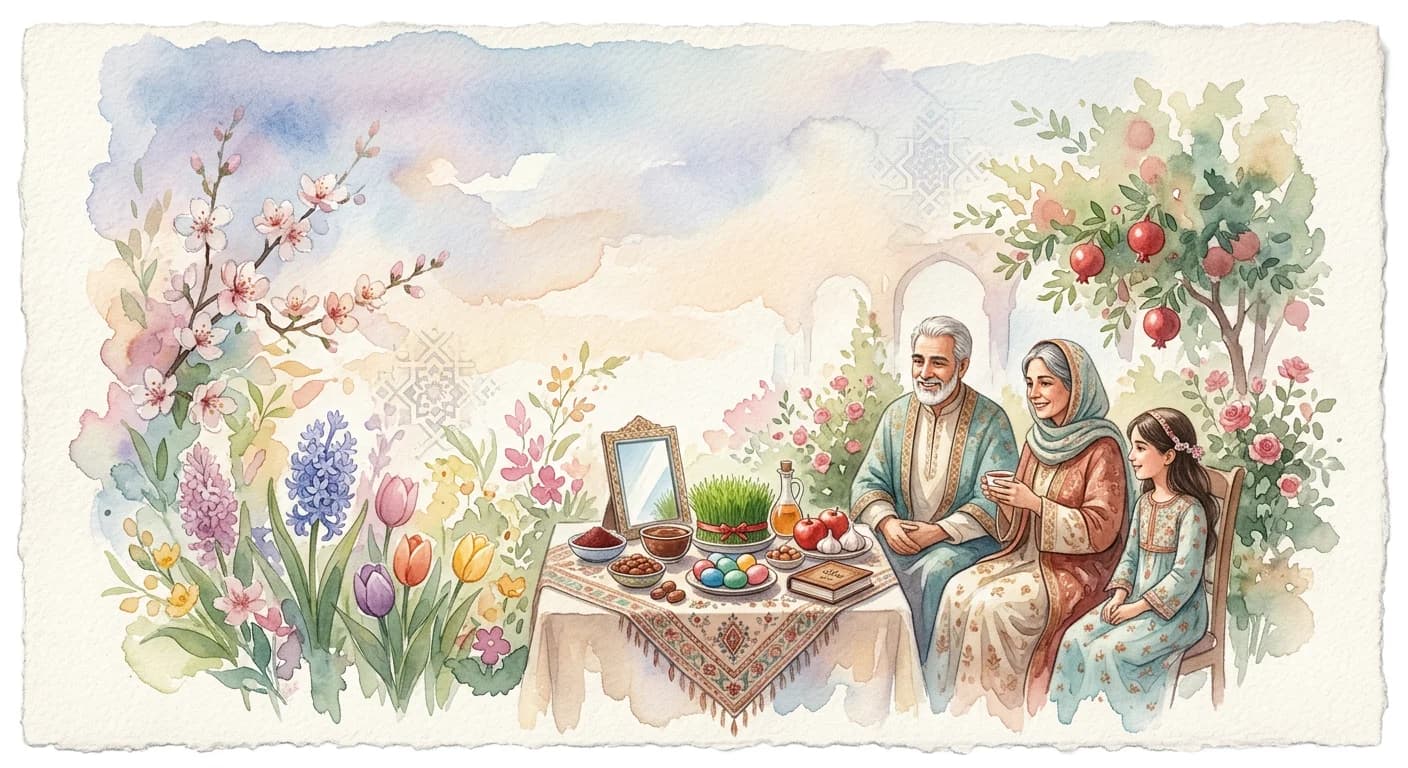
Nowruz, meaning 'new day,' is the vibrant Persian New Year, coinciding with the vernal equinox and the earth's awakening. It's a profound celebration of renewal, hope, and the timeless victory of light over winter's darkness, symbolizing nature's cyclical rebirth. Families meticulously prepare for this ancient festival, culminating in the elegant Haft-Seen table, where seven symbolic items beginning with the letter 'S' each embody a heartfelt wish for prosperity, health, and happiness in the year ahead. More than just a holiday, Nowruz is a deep cultural touchstone, reconnecting generations to ancestral traditions and the rhythmic pulse of the natural world.
Literal Translation
new day
The Story Behind the Word
Nowruz boasts an unbroken lineage stretching back over 3,000 years, deeply rooted in Zoroastrianism, one of the world's oldest monotheistic religions. It predates Islam in Iran and signifies a profound reverence for creation, the elements, and the cycle of life. The emphasis on renewal, purification, and the triumph of good over evil (symbolized by light over darkness) reflects core Zoroastrian tenets. Its persistence through millennia, despite various political and religious shifts, underscores its fundamental importance to Iranian identity and the collective memory of its people. It's not merely a calendar event but a yearly reaffirmation of cultural heritage, communal bonds, and an optimistic outlook towards the future, seeing each spring as a fresh opportunity for growth and prosperity for all.
Experience It
Haft-Seen Preparation
Auntie Fatemeh meticulously polishes the silver mirror, placing it at the center of the Haft-Seen. Her grandchildren gather around, carefully arranging the green sprouts of Sabzeh, the red apples (Seeb), and the garlic (Seer), each item a silent prayer for the coming year's blessings.
Nowruz Visits
On Nowruz morning, the scent of fresh pastries fills the air as families embark on 'Eid Didani,' visiting elders and relatives. Children receive 'Eidi' (small gifts of money), and laughter echoes as stories are shared, strengthening family ties for the year ahead.
The Deeper Meaning
Nowruz embodies a profound philosophy of cyclical time and renewal, viewing life not as linear but as a continuous process of death and rebirth, mirroring nature's rhythm. It teaches resilience, hope, and the belief that after every winter, spring inevitably arrives, bringing with it fresh opportunities for growth, purification, and the triumph of life-affirming forces. This worldview fosters an inherent optimism and a deep connection to the natural environment.
Did You Know?
Nowruz is recognized by UNESCO as an Intangible Cultural Heritage of Humanity and is celebrated by over 300 million people worldwide, not just in Iran but across Central Asia, the Caucasus, and beyond.
How It's Used
Celebrated on the vernal equinox, typically around March 20th or 21st. It is a public holiday in many countries and marks the beginning of the spring season and the new year in the Iranian solar calendar.