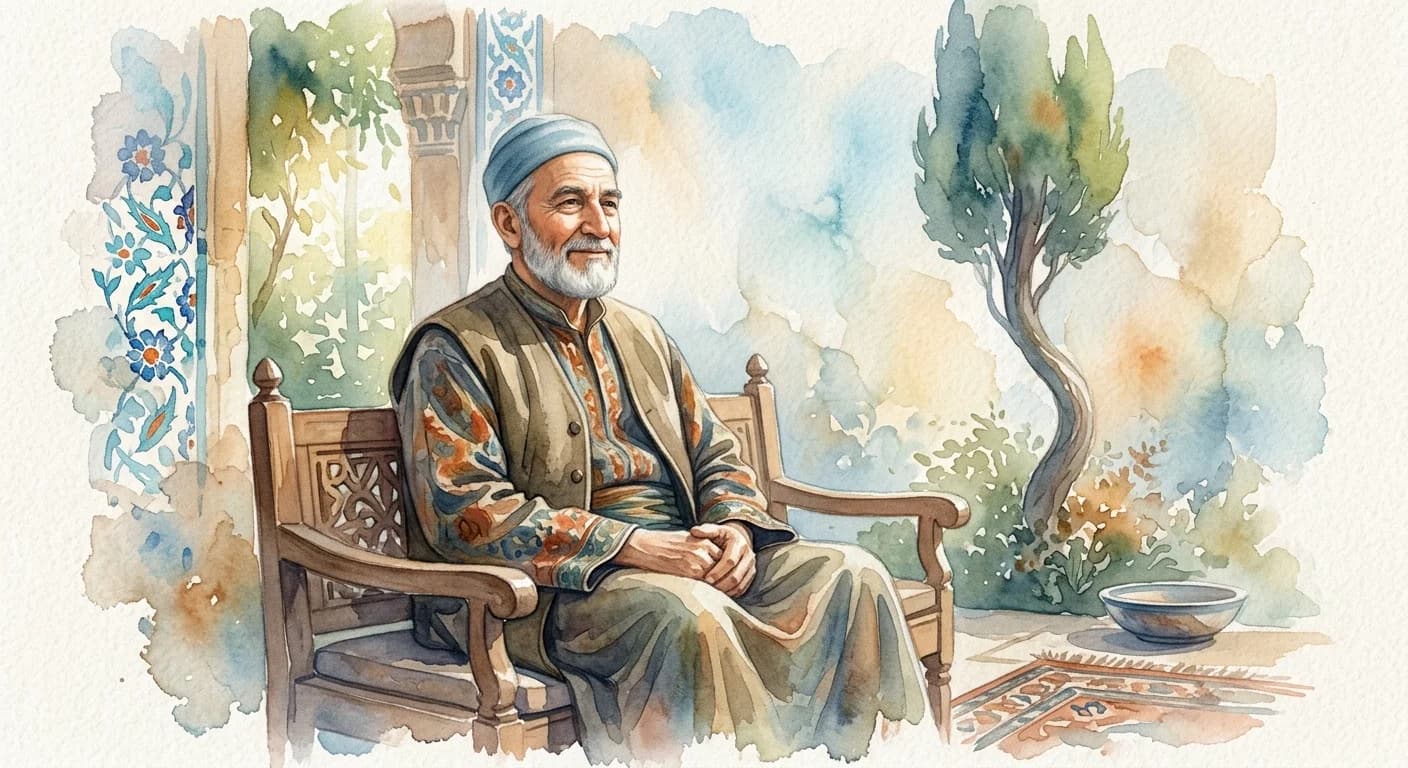
Çelebi
/CHEH-leh-bee/
Meaning
Çelebi describes an individual, typically male, who embodies a profound sense of cultivated grace, intellectual curiosity, and impeccable social conduct. It signifies a person whose refinement stems not from inherited status but from a deliberate cultivation of mind and manners, reflecting an inner nobility. Such a person is characterized by their gentle demeanor, broad education, artistic appreciation, and an effortless charm that commands respect and admiration in any social setting, making them a truly distinguished presence.
Literal Translation
Gentleman, lord, master, noble
The Story Behind the Word
The term 'Çelebi' emerged prominently during the Ottoman Empire, particularly flourishing from the 14th century onwards. It wasn't merely a descriptor of wealth or lineage, but rather an ideal of the cultured Ottoman gentleman: someone well-versed in poetry, music, calligraphy, and often Sufi mysticism, possessing both intellectual depth and moral integrity. The existence of 'Çelebi' underscores a societal value placed on individual cultivation, aesthetic appreciation, and a dignified approach to life, emphasizing that true nobility comes from character and learning rather than birth alone. It reveals a worldview where inner richness and outward grace were highly esteemed, shaping the aspirations of many within the Ottoman elite and beyond.
Experience It
The Diplomat's Poise
At the international summit, Ambassador Demir handled a tense negotiation with remarkable calm. His eloquent arguments, respectful tone, and ability to find common ground, even with challenging counterparts, earned him praise as a true 'Çelebi' by all present.
The Scholar's Grace
Professor Elif, a renowned historian, always hosted her students with exceptional warmth and intellectual generosity. She would engage in deep discussions, offer insightful critiques with gentle encouragement, and share her vast knowledge without a hint of arrogance, embodying the spirit of a 'Çelebi' in academia.
What Gets Lost in Translation
English speakers might mistakenly equate 'Çelebi' solely with 'gentleman,' missing its crucial emphasis on intellectual and artistic cultivation, often coupled with spiritual depth. It's more than just good manners; it implies a profound inner world and a broad, refined education, extending beyond mere politeness to a way of being.
Across Cultures
While not a perfect match, 'Çelebi' shares conceptual ground with the English 'Renaissance man' or 'gentleman scholar,' emphasizing broad learning and refined manners. In Japanese culture, aspects of 'bushi' (the ideal samurai, encompassing arts and ethics) or 'bunka-jin' (a cultured person) can resonate. The French 'homme de lettres' also captures the intellectual and artistic dimensions.
The Deeper Meaning
'Çelebi' reflects a philosophy where human flourishing is tied to the cultivation of both intellect and character, suggesting that true societal value lies not in material wealth or status, but in personal refinement, ethical conduct, and a deep appreciation for culture and knowledge. It posits that a beautiful soul manifests in graceful action and intellectual curiosity.
Did You Know?
The famous 17th-century Ottoman traveler, Evliya Çelebi, was not born into aristocracy but earned the honorific 'Çelebi' due to his vast knowledge, eloquent writing, and cultured observations during his extensive journeys across the Ottoman Empire and beyond.
How It's Used
The term 'Çelebi' is used as a respectful form of address or as a descriptor for someone exhibiting refined qualities and good manners.