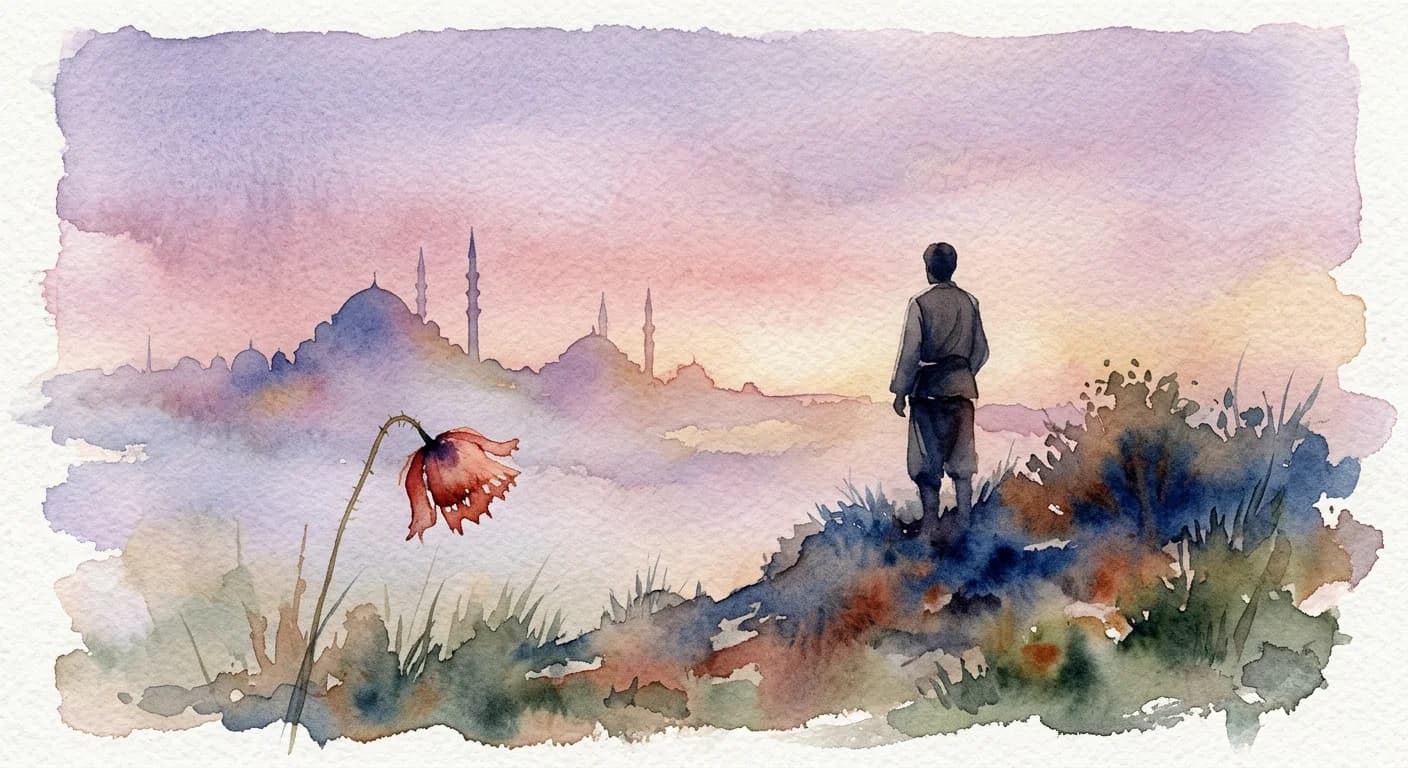
Hasret
/HAHS-ret/
Meaning
Hasret is a profound and often bittersweet yearning, a deep ache for something or someone absent that transcends mere missing. It embodies a persistent sense of incompleteness, a soul's longing for a past connection, a distant homeland, or even an unfulfilled dream. This powerful emotional state is deeply woven into the fabric of Turkish culture, coloring its poetry, music, and daily expressions, representing an enduring desire for what is lost or out of reach.
Literal Translation
longing, yearning, missing
The Story Behind the Word
The prevalence of 'hasret' in Turkish culture stems from a rich history marked by migrations, empires rising and falling, and a deep connection to both ancestral lands and spiritual longing. Ottoman poetry, Sufi mysticism, and folk music are replete with expressions of 'hasret,' often directed towards a beloved, a lost paradise, or even a divine presence. This word reveals a cultural propensity for emotional depth and a recognition that life is inherently transient, fostering an appreciation for what once was and a melancholic yearning for its return. It underscores a collective memory of displacement and an intense value placed on belonging and connection, whether to people, places, or ideals. The concept is not merely about absence, but about the emotional residue and the persistent hope or pain it leaves behind.
Experience It
Longing for Homeland
An elderly Turkish immigrant sits by his window, gazing at the unfamiliar cityscape. He feels a deep hasret for the village he left decades ago, the scent of the orchards, the sound of his mother's lullabies, and the warmth of his childhood home, a pang that never truly fades.
Yearning for a Lost Love
A young woman listens to a melancholic Turkish folk song, tears welling in her eyes. It evokes a powerful hasret for a love that ended too soon, a shared future that never materialized, leaving an emotional void that no new experience seems to fill completely.
The Deeper Meaning
The concept of 'hasret' reveals a worldview that embraces emotional depth and acknowledges the inherent impermanence of existence. It suggests that true connection leaves an indelible mark, and the absence of that connection creates a profound, persistent longing. This isn't a weakness, but a testament to the value placed on belonging, memory, and the enduring power of love and place, even in their absence.
Did You Know?
Many classical Turkish love songs and folk ballads are entirely dedicated to expressing 'hasret,' making it one of the most frequently sung emotions in Turkish music.
How It's Used
Used to describe a deep sense of longing or yearning for someone, something, or a place that is far away or no longer present.