Afikoman
/ah-fee-KOH-man/
Meaning
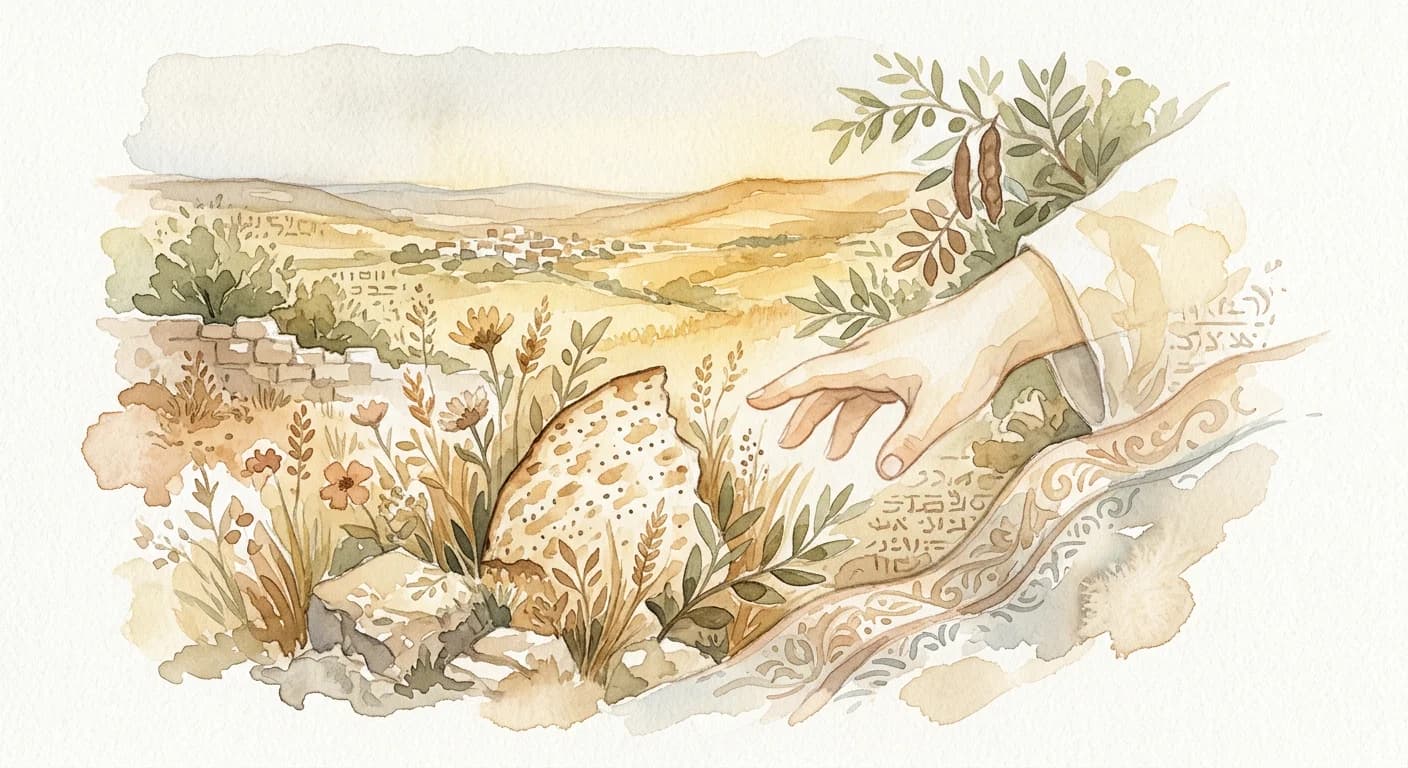
The Afikoman is the larger half of a broken matzah, ceremonially hidden during the Passover Seder. Its discovery by eager children marks a pivotal moment, as the Seder meal cannot fully conclude until this special piece of unleavened bread is found and shared. It embodies the hope of redemption and the promise of a future feast, transforming a simple piece of bread into a profound symbol of anticipation, freedom, and the ultimate completion of a sacred journey.
Literal Translation
from the Greek 'aphikomenos' meaning 'he has come' or 'arrival'
The Story Behind the Word
The Afikoman's role is deeply woven into the fabric of Jewish memory and identity, representing the 'dessert' (or 'epilogue') of the Passover meal. Its very name, derived from Greek for 'arrival' or 'that which comes after,' hints at its function as both an ending and a beginning. Symbolically, it connects to the Paschal lamb sacrifice in ancient times, the last thing eaten at the meal. Its hiding and subsequent recovery instill in children a tangible sense of the Exodus narrative – the temporary 'loss' of freedom and the joyous 'finding' of redemption. This ritualistic search and reward reinforce the intergenerational transmission of history, making abstract concepts like liberation and faith interactive and memorable, revealing a culture that prioritizes active engagement and storytelling in its deepest traditions.
Experience It
The Seder Finale
Grandma clapped her hands, signaling the moment everyone had been waiting for. 'Children, the Afikoman is hidden!' Instantly, a flurry of excited shouts erupted as cousins scrambled under tables and behind curtains, their laughter echoing through the house, determined to uncover the prize.
A Child's Reward
Young Maya triumphantly emerged from the pantry, clutching the wrapped Afikoman above her head. A collective cheer went up, and her uncle immediately pulled out a crisp twenty-dollar bill, fulfilling the time-honored tradition of rewarding the successful seeker, allowing the Seder to finally proceed to its joyous conclusion.
The Deeper Meaning
The Afikoman ritual encapsulates the Jewish philosophy of hope and deferred gratification. It teaches that true completion often requires a journey, a search, and a waiting period. The temporary 'loss' and eventual 'recovery' of this essential element mirrors the historical narrative of exile and redemption, reinforcing the belief that even in times of hardship, joy and fulfillment ultimately await those who persevere.
Did You Know?
Some traditions say the Afikoman symbolizes the final meal of the Messiah, to be eaten upon his arrival, connecting the ancient Passover story to future redemption.
How It's Used
The Afikoman is a central element of the Passover Seder ritual in Jewish tradition. A piece of matzah is broken early in the Seder, and the larger half (the Afikoman) is hidden. Children typically search for it, and whoever finds it often receives a prize. The meal concludes only after the Afikoman is found and eaten.