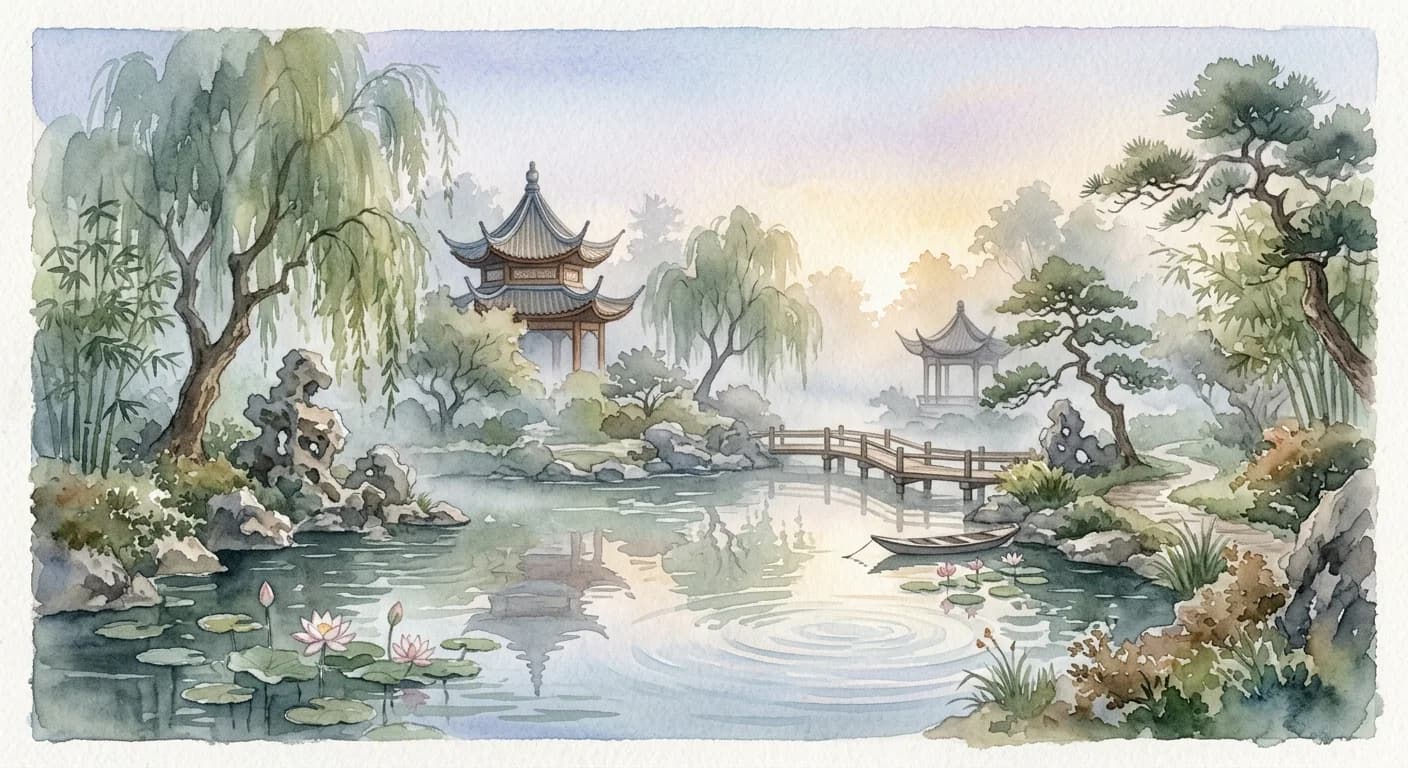
Feng shui
/FUNG SHWAY/
Meaning
Feng shui, literally 'wind-water,' is an ancient Chinese art and science dedicated to orchestrating harmony between human habitations and the invisible cosmic currents of qi (life force). It's a profound system for arranging spaces—from individual rooms to entire cities—to optimize the flow of positive energy, thereby attracting auspicious outcomes in health, wealth, and relationships. This intricate practice transcends mere aesthetics, delving into the interplay of natural elements, cardinal directions, and astronomical influences to create environments that resonate with the universe's rhythms and support human flourishing.
Literal Translation
Wind-water
The Story Behind the Word
Feng shui is deeply rooted in ancient Chinese cosmology, particularly Daoist principles that emphasize the interconnectedness of all things and the dynamic balance of yin and yang. Its origins can be traced back thousands of years to observations of nature, astronomy, and geography, initially used for selecting auspicious burial sites to ensure the prosperity of descendants. Over time, it evolved to guide the placement of homes, villages, and imperial palaces, reflecting a profound belief that the physical environment directly impacts one's destiny and well-being. The existence of feng shui reveals a worldview where humans are not separate from nature but integral to its energetic fabric, constantly seeking to align with its powerful, unseen forces for optimal living and spiritual harmony. It underscores a cultural value placed on balance, order, and the careful manipulation of surroundings to achieve desired outcomes, from personal health to dynastic success.
Experience It
Designing a New Home
A young couple consults a feng shui master before building their new home. They discuss the optimal orientation of the house relative to the mountains and water, the placement of the main entrance to draw in positive qi, and the layout of rooms to ensure good health and family harmony, carefully avoiding sharp corners facing living areas.
Office Prosperity Arrangement
A business owner notices a stagnant atmosphere in their office and seeks feng shui advice. The consultant suggests moving the desk to a 'commanding position' with a solid wall behind it, adding a small water feature near the entrance to symbolize wealth, and arranging plants to soften harsh energy, hoping to boost productivity and client flow.
The Deeper Meaning
Feng shui embodies a holistic philosophy that views the built environment not as separate from, but as an extension of, the natural world and the human spirit. It posits that by consciously aligning our living spaces with the invisible flows of cosmic energy (qi), we can influence our fortune, health, and overall destiny. This reveals a deep-seated belief in a dynamic, interconnected universe where human actions, even in spatial arrangement, have profound energetic consequences, urging a harmonious collaboration with nature rather than its subjugation.
Did You Know?
The Forbidden City in Beijing, a masterpiece of imperial architecture, was meticulously designed according to sophisticated feng shui principles to ensure the emperor's power, prosperity, and the continuity of his dynasty.
How It's Used
Used to describe the ancient Chinese practice of arranging spaces to achieve harmony and balance with the natural world, often applied to architecture, interior design, and urban planning.