Shinrin-yoku
/SHEEN-reen yo-KOO/
Meaning
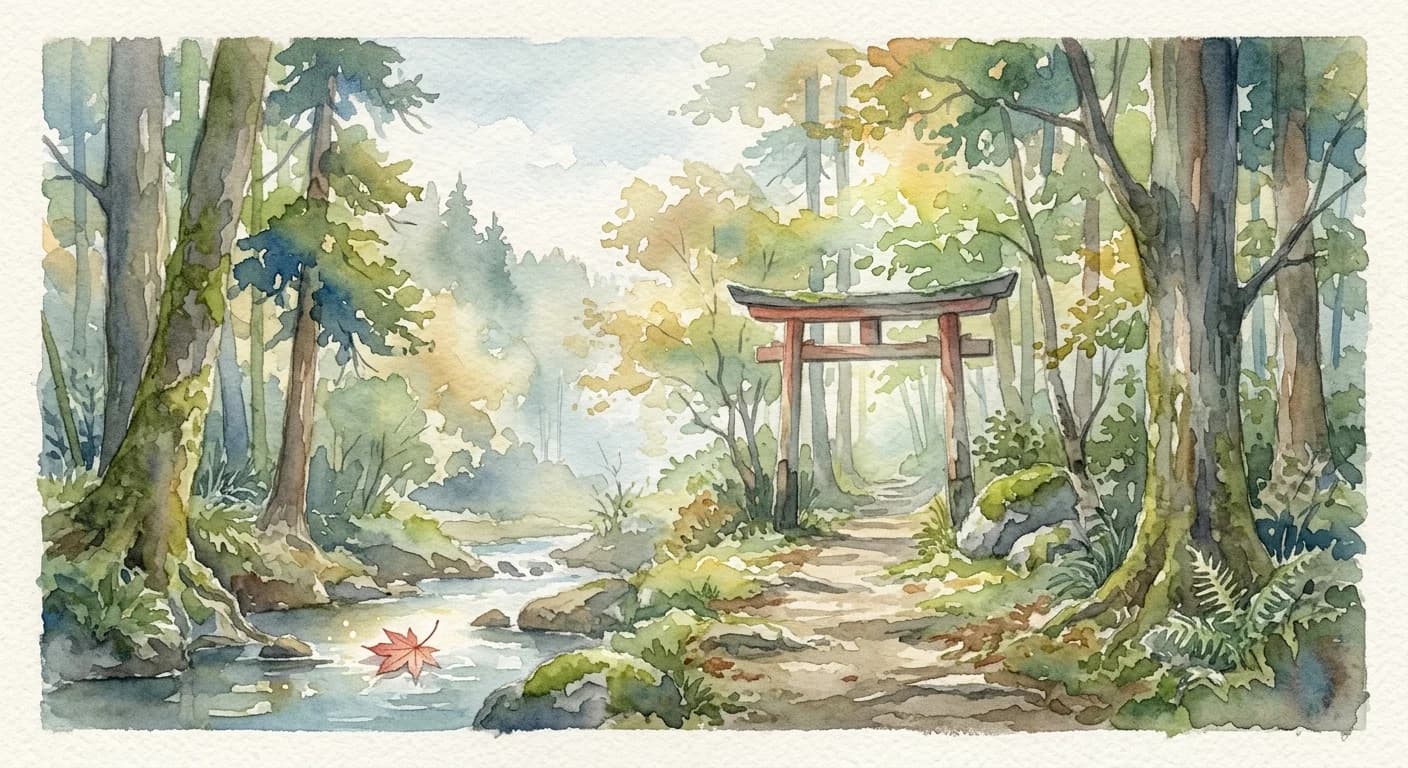
Shinrin-yoku, or 'forest bathing,' is a profound Japanese practice inviting individuals to immerse themselves fully in the forest atmosphere. It transcends a mere walk, encouraging a mindful engagement of all five senses with the sights, sounds, scents, and textures of nature. This deep, sensory communion fosters a reciprocal relationship with the natural world, promoting stress reduction, mood enhancement, and a profound sense of tranquility and well-being for both mind and body.
Literal Translation
Forest-bathing
The Story Behind the Word
The concept of Shinrin-yoku, though formally coined in 1982, draws deeply from Japan's ancient animistic beliefs and the Shinto reverence for nature. For centuries, Japanese culture has emphasized a harmonious co-existence with the natural world, viewing mountains, forests, and rivers as sacred spaces imbued with kami (deities or spirits). This intrinsic respect for nature, deeply embedded in spiritual practices and daily life, underpins the belief in the forest's restorative powers. It reflects a worldview where humans are not separate from, but rather an integral part of, the natural ecosystem, highlighting the importance of reconnecting with this fundamental bond for holistic health and spiritual solace.
Experience It
Mindful Forest Stroll
A salaryman, weary from city life, ventures into a serene forest. He pauses to feel the cool moss beneath his fingers, inhales the earthy scent of damp soil, and listens intently to the rustling leaves and distant bird calls, practicing shinrin-yoku to clear his mind.
Guided Nature Connection
A group follows a certified guide through a national park, stopping to observe the play of light through the canopy and consciously breathing in the forest air, rich with phytoncides. They engage in quiet reflection, allowing the forest's presence to soothe their anxieties and rejuvenate their spirits.
The Deeper Meaning
Shinrin-yoku embodies a profound philosophical understanding of humanity's interconnectedness with nature. It challenges the modern tendency to view nature as a resource to be exploited, instead advocating for a humble and reciprocal relationship. This practice reveals a worldview where well-being is not solely an internal state but is deeply influenced and enhanced by a mindful engagement with the vibrant, healing energies of the natural world.
Did You Know?
Scientific studies have shown that spending time in forests, or practicing shinrin-yoku, can significantly lower blood pressure, reduce stress hormones like cortisol, and boost the immune system by increasing natural killer (NK) cell activity.
How It's Used
Used to describe the practice of spending time in a forest for well-being, often in a guided or intentional manner.