Kekau
/KEH-kow/
Meaning
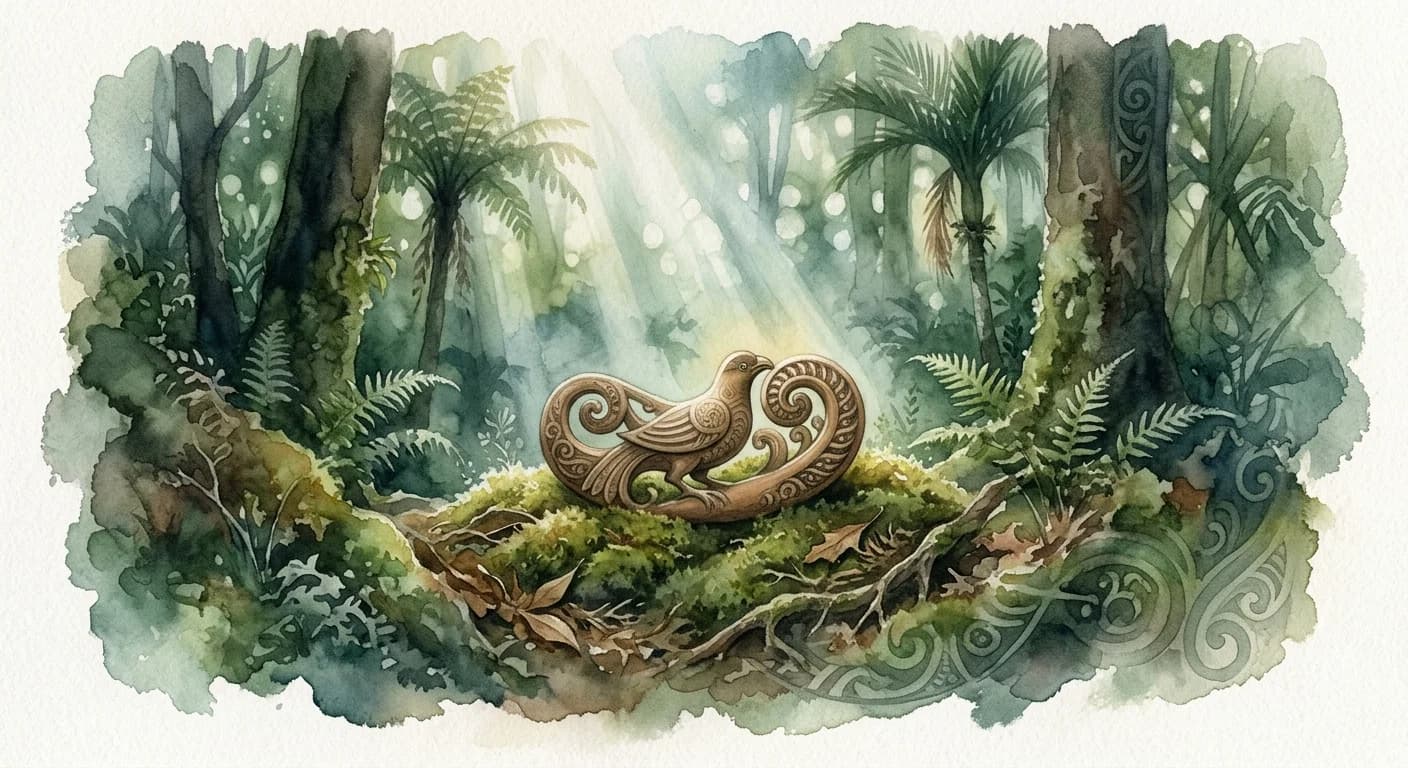
Kekau is the profound act of presenting offerings, typically food, in sacred natural locations like forests or riverbanks, as a gesture of reverence to deities and ancestors. It embodies a deep spiritual reciprocity, acknowledging the intricate web of life and the enduring connection between the living and the spiritual realms. This practice is not merely a donation but a heartfelt plea for blessings, guidance, or thanksgiving, reflecting a vibrant, ongoing dialogue with the unseen forces that shape the world. Through kekau, the Māori express profound gratitude and respect, reinforcing their cultural lineage and spiritual obligations.
Literal Translation
offering
The Story Behind the Word
The existence of 'kekau' is deeply rooted in the Māori worldview, which perceives the natural world as imbued with 'mana' (spiritual power and prestige) and inhabited by 'atua' (gods) and the spirits of ancestors. This practice reflects the fundamental principle of 'utu' (reciprocity and balance) – that humans must give back to the spiritual realm from which all life and sustenance flow. It underscores a holistic understanding of existence where humans are not separate from, but intimately connected to, their environment and their lineage. Kekau reinforces community bonds by collectively honoring shared ancestors and ensuring the continued well-being of the 'whānau' (extended family) and 'iwi' (tribe) through spiritual alignment and respectful interaction with the land and its guardians. It's a living tradition that continuously weaves the past, present, and future together.
Experience It
Seeking a Bountiful Harvest
Before planting the kumara (sweet potato) crop, the elder led the community to a sacred grove. There, they performed kekau, placing carefully prepared food offerings at the base of an ancient tree, chanting prayers for a prosperous harvest, acknowledging the land and its spiritual guardians.
Honoring a Passed Ancestor
After a loved one's passing, the family journeyed to a secluded waterfall, a place significant to their ancestor. They performed kekau, leaving a small basket of berries and a woven flax item, speaking aloud their ancestor's name and sharing memories, strengthening their spiritual bond.
Gratitude for Safe Passage
Having successfully navigated a treacherous fishing expedition, the fishermen returned to shore. Before feasting, they made a kekau by offering a portion of their catch to Tangaroa, the god of the sea, expressing deep gratitude for their safe return and abundant haul.
The Deeper Meaning
Kekau reveals a profound philosophy of interconnectedness and reciprocal obligation. It posits that humanity is not superior to nature, but an integral part of a living, spiritual ecosystem. This practice emphasizes humility, gratitude, and the enduring power of ancestral connections, reminding individuals that their well-being is inextricably linked to their respect for the spiritual and natural worlds.
Did You Know?
Historically, certain kekau offerings were left on specific 'wahi tapu' (sacred places) that were considered highly potent spiritual sites, sometimes marked by unique rock formations or ancient trees.
How It's Used
Used when making offerings to the gods or ancestors, typically in natural settings.