Wabi
/WAH-bee/
Meaning
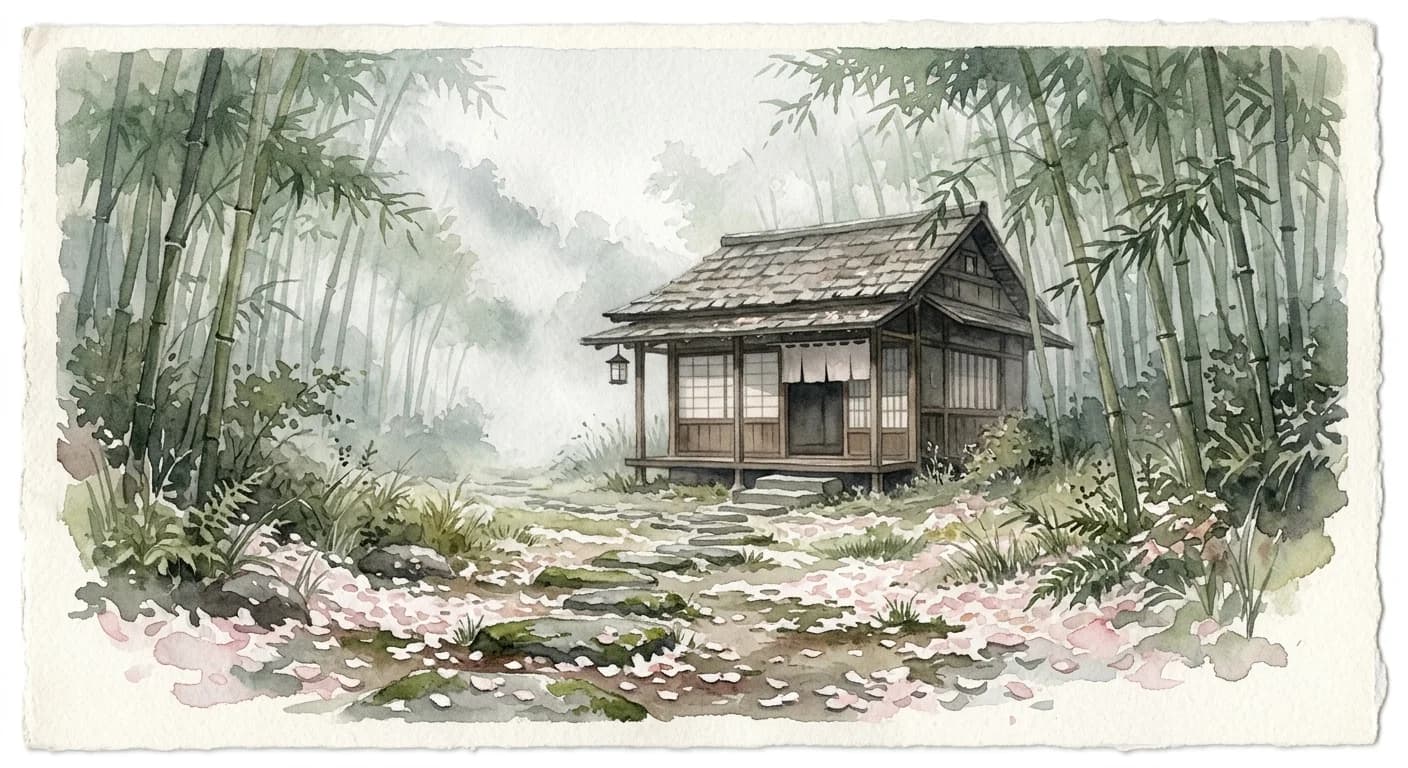
Wabi encapsulates a profound appreciation for beauty that is inherently imperfect, transient, and incomplete. It's a serene acceptance of life's fleeting nature, finding deep contentment in austerity, simplicity, and the subtle beauty of natural processes. This aesthetic celebrates the humble and unpretentious, recognizing that the wear of time and the marks of age add character, wisdom, and a quiet, melancholic charm. It invites one to find peace and richness in the unadorned and the organic, often reflecting the quiet dignity of things left to their natural state.
Literal Translation
Wabi originally referred to the loneliness of living in nature, away from society. It later took on connotations of rustic simplicity, freshness or quietness, and could equally apply to the gentle, fading, and melancholic beauty of aging.
The Story Behind the Word
The concept of Wabi evolved from the 15th-16th century, deeply influenced by Zen Buddhism, particularly in the context of the tea ceremony. Initially, 'wabi' denoted the loneliness and desolation of living in nature, away from the bustling society. However, as Zen aesthetics gained prominence, this solitude transformed into a positive value – a state of mind characterized by quiet contentment, detachment from worldly concerns, and an appreciation for rustic simplicity. The refined simplicity of wabi became an antidote to the prevalent opulence of the samurai class, promoting an aesthetic of understated elegance and spiritual depth. It reflects a worldview where impermanence is not a flaw but the very essence of beauty, and where true richness lies not in possessions but in a profound connection to the natural world and an acceptance of life's cycles.
Experience It
Aged Tea Bowl
A potter holds a tea bowl, its glaze subtly cracked and discolored from years of use, a slight chip on the rim. He doesn't see flaws, but a story of countless tea ceremonies, each imperfection adding to its unique wabi beauty.
Moss-Covered Garden
She sits in a small garden, admiring a stone lantern softened by a thick blanket of vibrant moss and a single, gnarled pine tree. The scene, untouched and quietly aging, evokes a deep sense of wabi, a tranquil beauty in its natural, unmanicured state.
The Deeper Meaning
Wabi reveals a profound philosophy rooted in Zen Buddhist principles of impermanence (mujō) and emptiness (kū). It teaches that true beauty isn't found in perfection or permanence, but in the acceptance of life's transient nature and the inherent beauty of decay and aging. This perspective encourages humility, contentment with little, and a deep, meditative appreciation for the subtle, often overlooked aspects of existence, fostering a sense of peace amidst change.
Did You Know?
The legendary tea master Sen no Rikyū (1522–1591) is often credited with refining and popularizing wabi aesthetics in the Japanese tea ceremony, emphasizing simplicity, naturalness, and austere beauty over ostentation.
How It's Used
Wabi is often used in conjunction with 'sabi' (侘寂, wabi-sabi) to describe a comprehensive Japanese aesthetic and worldview. It is applied to art, design, nature, and lifestyle, emphasizing the beauty found in natural processes and imperfections. It guides an appreciation for rustic simplicity and quietude.