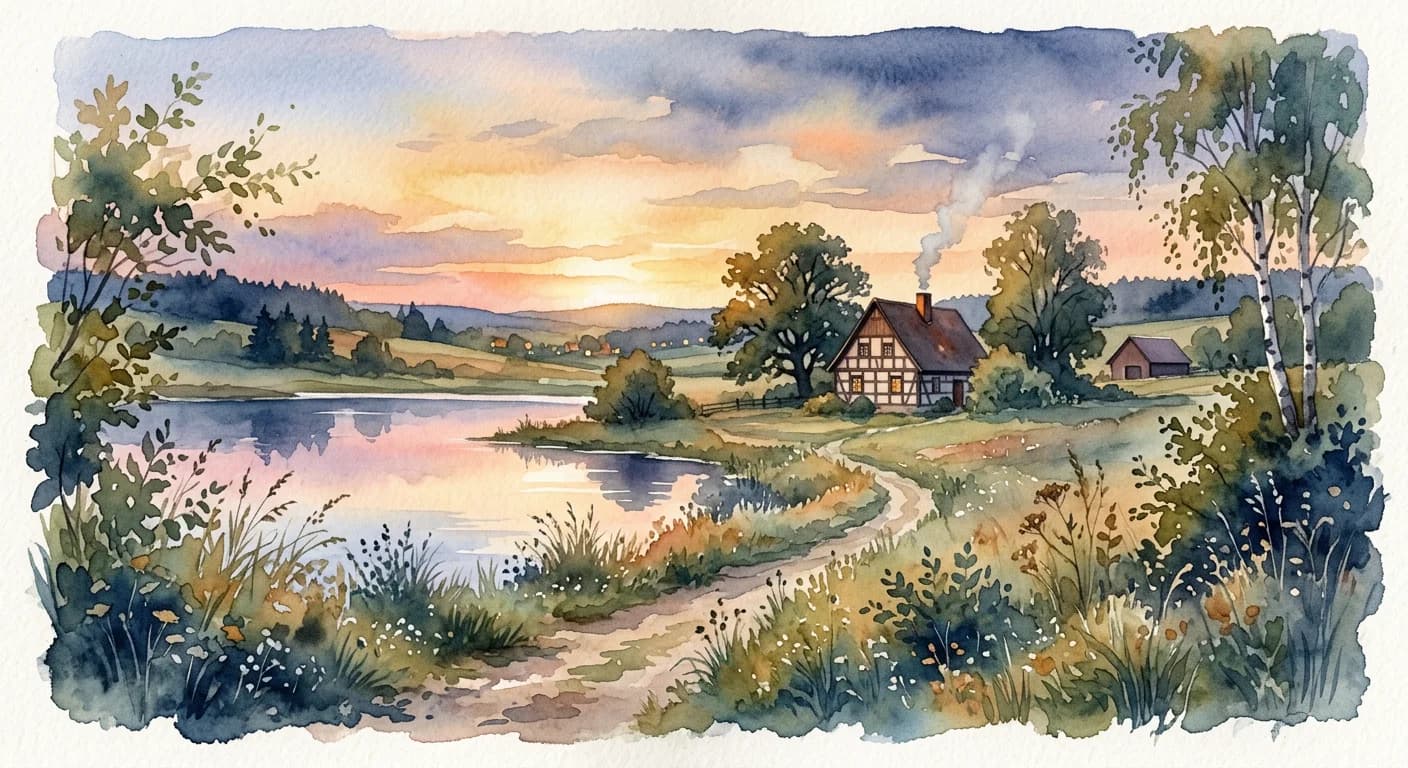
Feierabend
/FAY-er-ah-bent/
Meaning
Feierabend transcends a simple 'end of work'; it's a deeply ingrained cultural ritual marking the sacred transition from disciplined labor to well-earned personal freedom. It signifies the moment the professional persona is shed, making way for relaxation, hobbies, family, and self-care. This cherished period embodies a profound respect for personal time, emphasizing a clear demarcation between work and life that is vital for well-being and productivity, rather than a mere blend.
Literal Translation
celebration evening
The Story Behind the Word
The concept of Feierabend is deeply rooted in German industrial history and the Protestant work ethic, where diligent work was valued, but so was a clear separation from it. Historically, the ringing of church bells or factory whistles signaled the end of the workday, creating a communal understanding of when 'work' ceased and 'life' began. This demarcation reflects a societal value placed on order, structure, and the right to recuperation, viewing personal time not as an absence of work, but as an essential component of a balanced, productive life. It underscores a belief that true accomplishment requires both focused effort and dedicated rest, shaping a culture where personal boundaries are respected and leisure is seen as a necessary, not guilty, pleasure.
Experience It
Afternoon Office Exodus
As the clock strikes 5 PM, Lena meticulously tidies her desk. 'Schönen Feierabend!' she calls out to her colleagues, a genuine smile on her face. She’s already picturing her evening run and then cooking dinner with her partner, having left all work worries firmly behind at the office door.
Family Dinner Ritual
Markus arrives home, loosening his tie with a sigh of contentment. His children rush to greet him. 'Papa hat jetzt Feierabend!' his wife explains, signaling that his work day is officially over and he's fully present for family time, ready to enjoy the evening together.
The Deeper Meaning
Feierabend embodies a philosophical commitment to the intrinsic value of personal time and the necessity of mental and physical recuperation. It reflects a worldview that prioritizes a clear separation between professional duty and individual well-being, suggesting that a well-lived life requires dedicated periods for both. This demarcated approach fosters a sense of control and balance, viewing leisure not as a reward for work, but as an essential, non-negotiable component of human flourishing.
Did You Know?
The word 'Feierabend' literally translates to 'celebration evening,' hinting at the celebratory feeling associated with transitioning from work to personal time, almost like a mini-festival every day.
How It's Used
Used in German-speaking countries to refer to the time after work has ended, typically in the late afternoon or early evening.