U.
HomeRegionsLanguagesEmotionsCollections
Find Your Word

“The limits of my language mean the limits of my world.”

— Ludwig Wittgenstein, Philosopher

Untranslatable

A curated collection of the world's most beautiful expressions—words that remind us language is humanity's greatest invention.

  • Home
  • Collections
  • Regions
  • Countries
  • Emotions
  • Tags
  • Contexts
  • Finder
  • Europe
  • Asia
  • Americas
  • Africa
  • Middle East
  • About
  • Contact
  • Privacy Policy
  • Terms of Service

2026 © Untranslatable. All rights reserved.

    /
    /
    1. Home
    2. /
    3. Asia
    4. /
    5. Kalpa
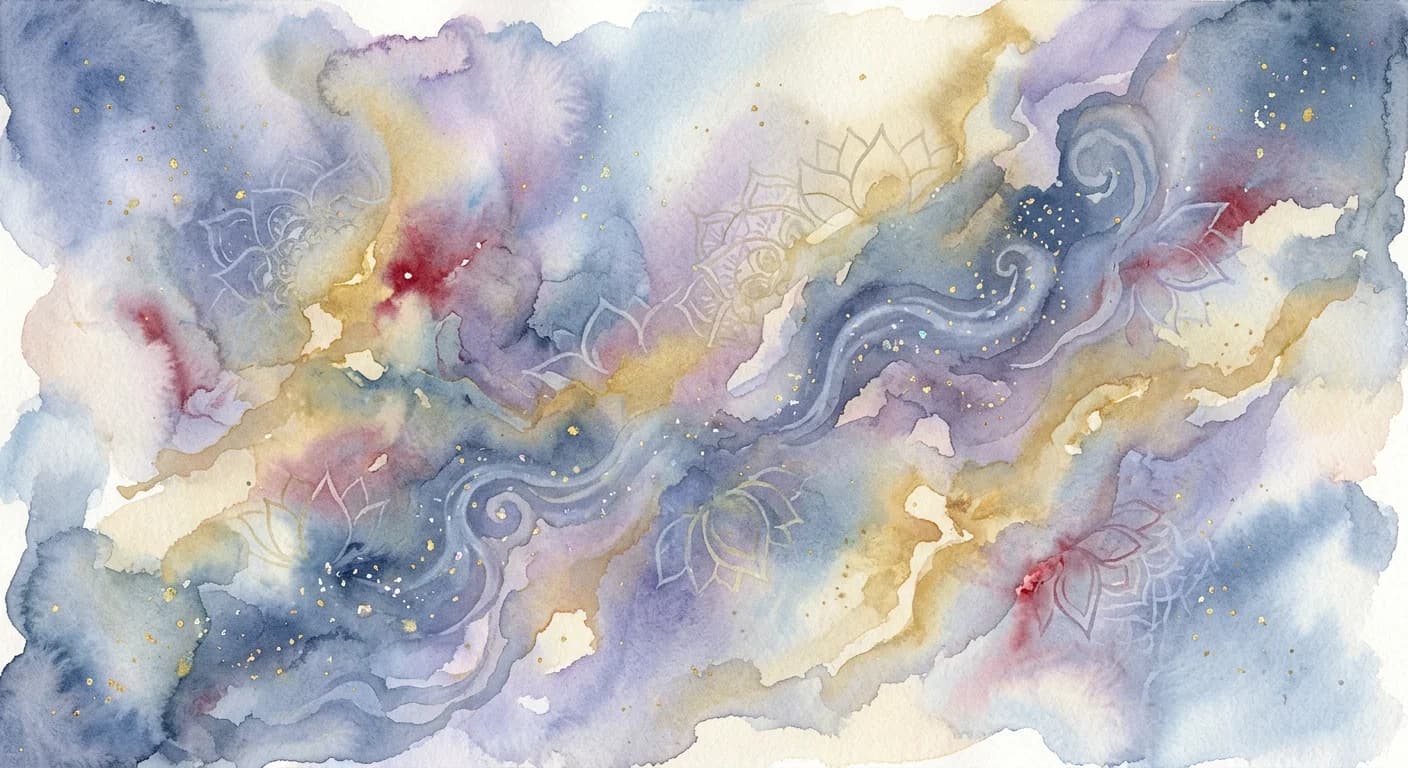
    Artistic representation of Kalpa
    Sanskrit•
    🇮🇳India

    Kalpa

    /KAL-pah/

    Meaning

    Kalpa denotes an unfathomable cosmic epoch within Hindu, Buddhist, and Jain cosmologies, stretching across billions of human years. It represents a complete cycle of universal creation, sustenance, and dissolution, akin to a 'day and night' for the creator deity Brahma. This immense temporal scale profoundly underscores the impermanence of all phenomena and the cyclical nature of existence, dwarfing human history into an infinitesimal flicker within the grand cosmic drama.

    Literal Translation

    a long period of time, epoch, turn, period

    The Story Behind the Word

    The concept of Kalpa is foundational to understanding the Indian worldview, revealing a profound preoccupation with time not as linear, but as cyclical and eternal. Its existence reflects a culture that grappled with the vastness of the universe and sought to integrate individual lives into a cosmic narrative far beyond mundane concerns. This cyclical time allows for concepts like reincarnation (samsara) and karma to play out over immense stretches, providing a framework for spiritual evolution and the eventual attainment of liberation (moksha or nirvana). The immensity of a Kalpa encourages detachment from transient worldly affairs, fostering a perspective where human achievements and suffering are seen as temporary ripples in a boundless ocean of time.

    Experience It

    Cosmic Meditation

    A yogi sits in deep meditation, contemplating the rise and fall of universes across countless Kalpas. Their mind, freed from the confines of personal time, touches upon the eternal, finding peace in the impermanence of all things, including their own existence.

    Ancient Scripture

    An ancient text describes the destruction of a previous world and the re-creation of the cosmos at the dawn of a new Kalpa. It details how all beings and matter are reabsorbed into the primordial essence, only to re-emerge in a new cycle of existence.

    The Deeper Meaning

    Kalpa profoundly shapes the philosophical underpinnings of Indian thought, emphasizing the illusory and transient nature of the material world. It promotes a worldview where individual lives are but fleeting moments in an eternal cycle, encouraging spiritual pursuits over worldly attachments. This immense scale cultivates humility and a perspective that transcends immediate concerns, focusing instead on ultimate liberation from the cycle of birth and death.

    Did You Know?

    One Kalpa is said to be equivalent to 4.32 billion human years, which is remarkably close to the current scientific estimate for the age of the Earth and the solar system, showcasing an ancient, intuitive grasp of deep time.

    How It's Used

    Used in religious and philosophical texts to describe cosmic time cycles, creation myths, and the vastness of existence.

    Emotions
    peace,serenity,wonder
    Contexts
    nature,philosophy,seasons
    🇮🇳India

    by Anya Petrova·Written Mar 14, 2026·Updated Apr 3, 2026

    Related Words

    Explore more
    Dolce far nienteItalian

    Dolce far niente captures the profound joy and effortless pleasure derived from simply existing without obligation or purpose. It's the art of savoring moments of pure, unadulterated idleness – lying in the sun, watching the clouds drift, or enjoying a leisurely coffee – not as a break from work, but as a valuable state in itself. This 'sweetness of doing nothing' is a conscious embrace of stillness and contentment, allowing the soul to breathe and the senses to fully engage with the present.

    Wabi-sabiJapanese

    Wabi-sabi is the profound appreciation for the ephemeral, the imperfect, and the incomplete aspects of existence. It is about discovering beauty in the subtle textures of age, the unique character of flaws, and the gentle decay that marks the passage of time. This philosophy encourages a quiet acceptance of impermanence and a mindful connection to the natural world, finding elegance in simplicity and authenticity.

    IkigaiJapanese

    Ikigai is more than just a reason to get out of bed; it's a deeply personal and evolving sense of purpose that brings genuine fulfillment and joy to one's life. It represents the sweet spot where your passions, talents, needs of the world, and what you can be paid for beautifully converge. Discovering your ikigai often leads to a life lived with intentionality, resilience, and a profound connection to one's contributions. It's the intrinsic motivation that fuels a meaningful existence, regardless of external circumstances.

    NunchiKorean

    Nunchi is the sophisticated, almost telepathic, ability to instantly grasp the unspoken dynamics of any social situation, anticipating others' thoughts and feelings, and then responding with impeccable grace and timing. It's an acute form of social intuition, allowing one to navigate complex interpersonal landscapes by reading subtle cues like body language, tone, and context. Possessing good nunchi means effortlessly understanding the underlying emotional currents and adjusting one's behavior to maintain harmony and effectiveness, often without a single word exchanged.