U.
HomeRegionsLanguagesEmotionsCollections
Find Your Word

“The limits of my language mean the limits of my world.”

— Ludwig Wittgenstein, Philosopher

Untranslatable

A curated collection of the world's most beautiful expressions—words that remind us language is humanity's greatest invention.

  • Home
  • Collections
  • Regions
  • Countries
  • Emotions
  • Tags
  • Contexts
  • Finder
  • Europe
  • Asia
  • Americas
  • Africa
  • Middle East
  • About
  • Contact
  • Privacy Policy
  • Terms of Service

2026 © Untranslatable. All rights reserved.

    /
    /
    1. Home
    2. /
    3. Asia
    4. /
    5. Kehksha
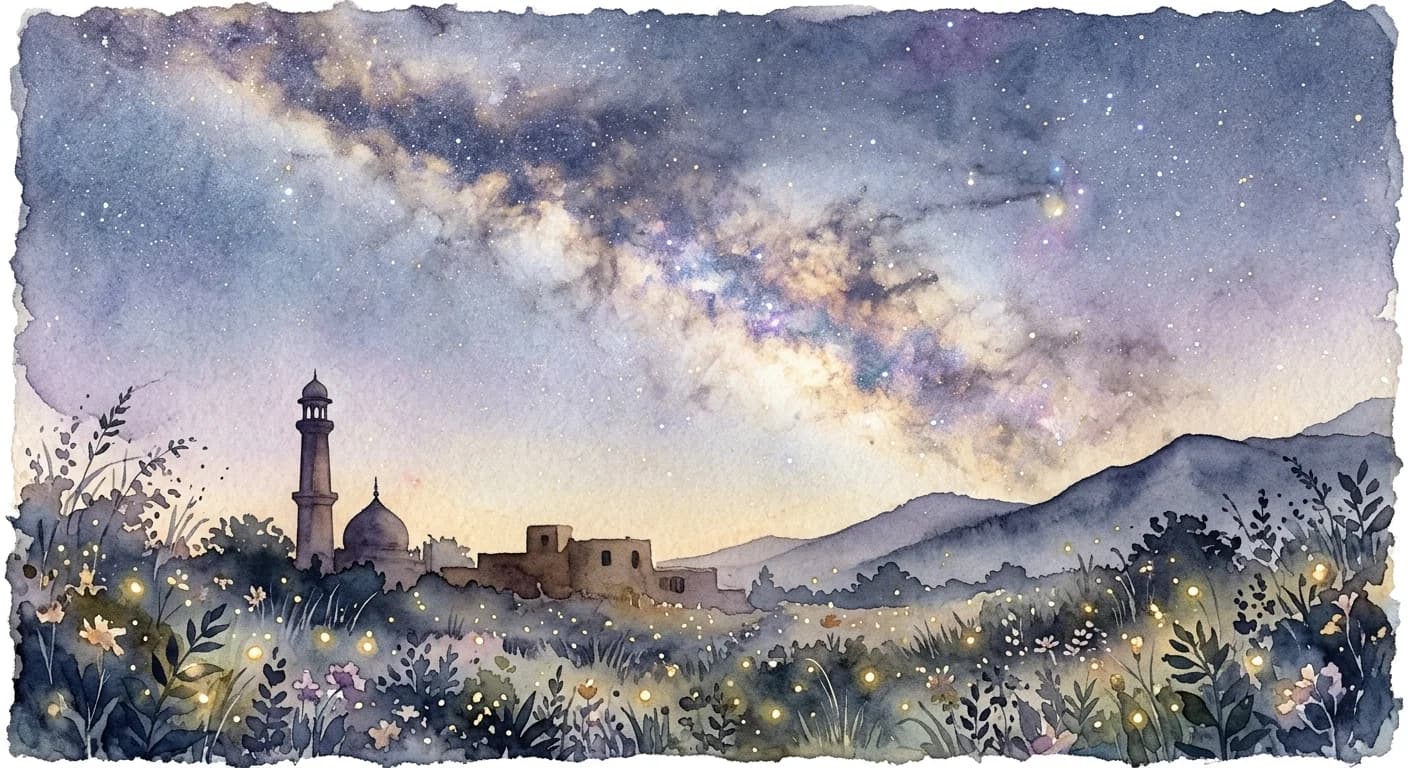
    Artistic representation of Kehksha
    Urdu•
    🇮🇳India🇮🇷Iran🇵🇰Pakistan

    Kehksha

    /KEHK-shah/

    Meaning

    Kehksha transcends a mere astronomical label; it is a poetic invocation of the Milky Way galaxy, depicting the night sky as a shimmering river of stars, a cosmic dust trail. It embodies a profound sense of awe and wonder at the universe's boundless majesty, prompting contemplation of humanity's small yet significant place within the grand tapestry of existence. This term carries a deeply romantic and spiritual resonance, frequently appearing in Urdu literature and ghazals to symbolize beauty, mystery, and the infinite expanse of dreams and possibilities.

    Literal Translation

    Milky Way

    The Story Behind the Word

    The word 'Kehksha' is deeply embedded in the poetic and spiritual traditions of Urdu-speaking cultures, particularly in Pakistan and India. Its prevalence reflects a historical reverence for the night sky as a source of inspiration, philosophical inquiry, and romantic metaphor. Ancient astronomers and poets in these regions observed the cosmos with meticulous detail, often intertwining scientific understanding with mystical interpretations. The 'Kehksha' becomes a canvas for expressing themes of divine grandeur, the ephemeral nature of life, and the longing for union with the infinite. It signifies a cultural worldview that sees beauty and meaning in the natural world, fostering introspection and a connection to something larger than oneself. Its use in classical poetry, like that of Faiz Ahmed Faiz or Mirza Ghalib, elevates it beyond a simple noun to a potent symbol of unattainable beauty and cosmic mystery.

    Experience It

    Stargazing on a Rooftop

    As the city lights faded behind them, two friends lay on a rooftop, gazing upwards. "Dekho, kitni haseen Kehksha hai aaj," one whispered, pointing to the luminous band stretching across the inky sky, feeling a profound sense of peace and insignificance under its vastness.

    Poetic Inspiration

    A poet sat by his window late into the night, struggling with a verse. He looked out at the star-dusted sky, and the word 'Kehksha' came to mind, suddenly unlocking a cascade of imagery about distant hopes and the eternal journey of the soul, inspiring his next lines.

    The Deeper Meaning

    Kehksha embodies a philosophical perspective that views the cosmos not merely as a scientific phenomenon, but as a profound source of existential reflection. It invites contemplation on infinity, our place in the universe, and the transient nature of human existence against an eternal backdrop. This term encourages humility, wonder, and a connection to the sublime, fostering a spiritual appreciation for the grandeur of creation.

    Did You Know?

    The word 'Kehksha' literally translates to 'straw path' or 'path of straw' in Persian, from which Urdu derives much of its vocabulary, reflecting an ancient observation of the Milky Way as a scattered, dusty trail across the heavens.

    How It's Used

    Used in poetry, literature, and everyday conversation to refer to the Milky Way or the starry night sky.

    Emotions
    peace,serenity,wonder
    Contexts
    nature,romance,solitude
    🇮🇳India🇮🇷Iran🇵🇰Pakistan

    by Annelise Dubois·Written Mar 14, 2026·Updated Apr 3, 2026

    Related Words

    Explore more
    Dolce far nienteItalian

    Dolce far niente captures the profound joy and effortless pleasure derived from simply existing without obligation or purpose. It's the art of savoring moments of pure, unadulterated idleness – lying in the sun, watching the clouds drift, or enjoying a leisurely coffee – not as a break from work, but as a valuable state in itself. This 'sweetness of doing nothing' is a conscious embrace of stillness and contentment, allowing the soul to breathe and the senses to fully engage with the present.

    Wabi-sabiJapanese

    Wabi-sabi is the profound appreciation for the ephemeral, the imperfect, and the incomplete aspects of existence. It is about discovering beauty in the subtle textures of age, the unique character of flaws, and the gentle decay that marks the passage of time. This philosophy encourages a quiet acceptance of impermanence and a mindful connection to the natural world, finding elegance in simplicity and authenticity.

    IkigaiJapanese

    Ikigai is more than just a reason to get out of bed; it's a deeply personal and evolving sense of purpose that brings genuine fulfillment and joy to one's life. It represents the sweet spot where your passions, talents, needs of the world, and what you can be paid for beautifully converge. Discovering your ikigai often leads to a life lived with intentionality, resilience, and a profound connection to one's contributions. It's the intrinsic motivation that fuels a meaningful existence, regardless of external circumstances.

    NunchiKorean

    Nunchi is the sophisticated, almost telepathic, ability to instantly grasp the unspoken dynamics of any social situation, anticipating others' thoughts and feelings, and then responding with impeccable grace and timing. It's an acute form of social intuition, allowing one to navigate complex interpersonal landscapes by reading subtle cues like body language, tone, and context. Possessing good nunchi means effortlessly understanding the underlying emotional currents and adjusting one's behavior to maintain harmony and effectiveness, often without a single word exchanged.