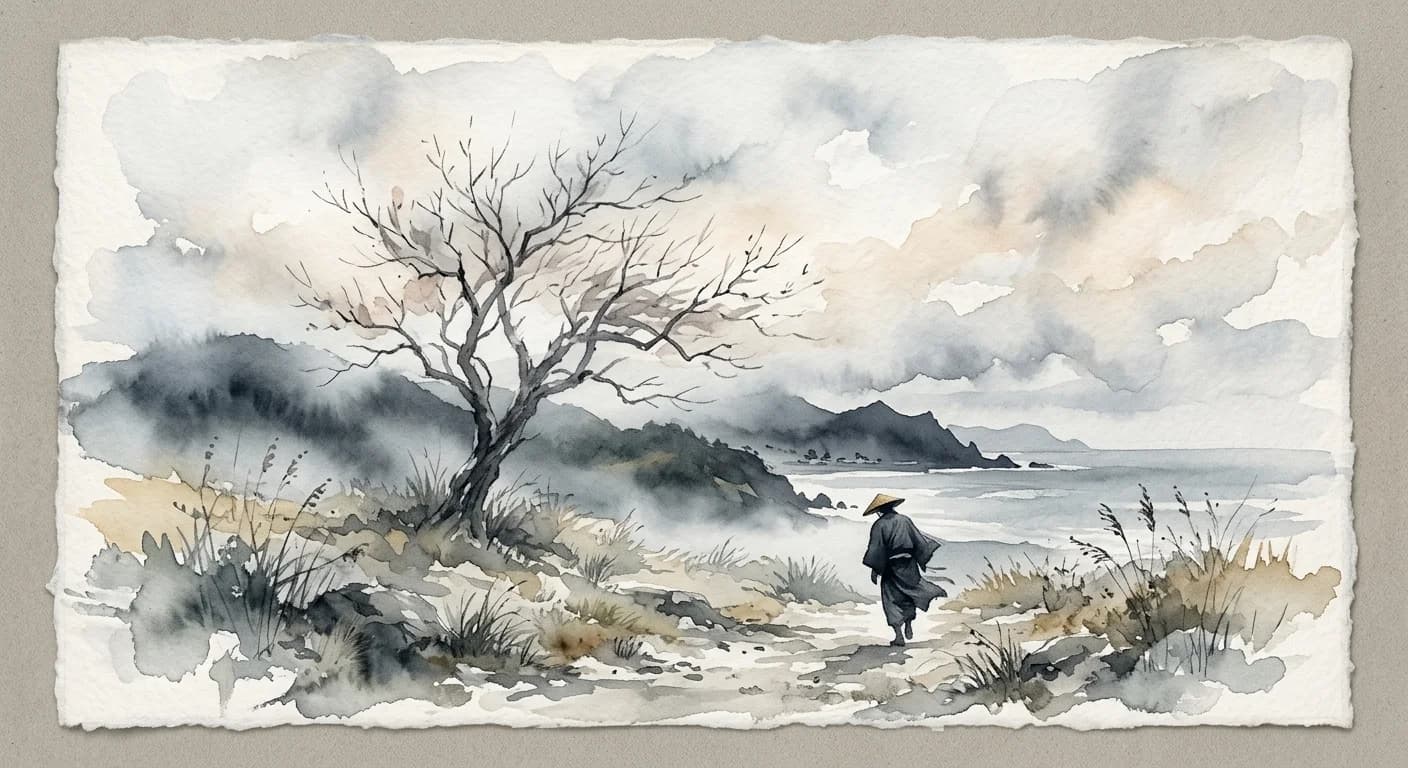
Kogarashi
/koh-gah-rah-shee/
Meaning
Kogarashi is the sharp, biting northwesterly wind that sweeps across Japan during late autumn and early winter. It carries a distinct chill, often accompanied by the rustling of fallen leaves and the crisp scent of the approaching snow, signaling winter's undeniable arrival. This wind is not merely cold; it's a powerful, almost spiritual force that strips the landscape bare, evoking a profound sense of natural transition, resilience, and the melancholic beauty of the fading year, prompting introspection and a bracing against the elements.
Literal Translation
wintry wind
The Story Behind the Word
The existence of 'Kogarashi' as a specific term highlights Japan's deep connection to and nuanced observation of seasonal changes, a core element of its culture. The Japanese language is rich with words describing specific natural phenomena, reflecting an animistic appreciation for nature's subtle shifts. Kogarashi is more than just weather; it's a sensory marker, deeply embedded in poetry (haiku), art, and daily life, signifying the transition from the vibrant autumn colors to the stark beauty of winter. It embodies the concept of mono no aware – the pathos of things, a gentle melancholy at impermanence – as the vibrant world recedes before winter's dominion, yet also suggests a quiet strength in facing the inevitable.
Experience It
First Winter's Breath
As Tanaka-san walked home, the sudden gust of kogarashi whipped around him, tugging at his scarf. He shivered, pulling his coat tighter, realizing that the warmth of autumn was truly gone, replaced by winter's stern embrace.
Bare Branches
The old woman watched from her window as the kogarashi rattled the bare branches of the persimmon tree. Each gust seemed to whisper of the coming snow, a stark reminder of nature's relentless cycle and her own advancing years.
The Deeper Meaning
Kogarashi embodies the Japanese appreciation for impermanence and the cyclical nature of life, known as 'wabi-sabi'. It represents the raw, unadorned beauty found in the fading of things, urging a quiet acceptance of change and a recognition of the inherent beauty in starkness and resilience as one prepares for a new season.
Did You Know?
Kogarashi is often depicted in Japanese poetry and art not just as a cold wind, but as an active, almost sentient entity that ushers in winter.
How It's Used
Used to describe the specific cold, dry northwesterly wind experienced in late autumn and winter in Japan, often associated with the changing seasons and the coming of snow.