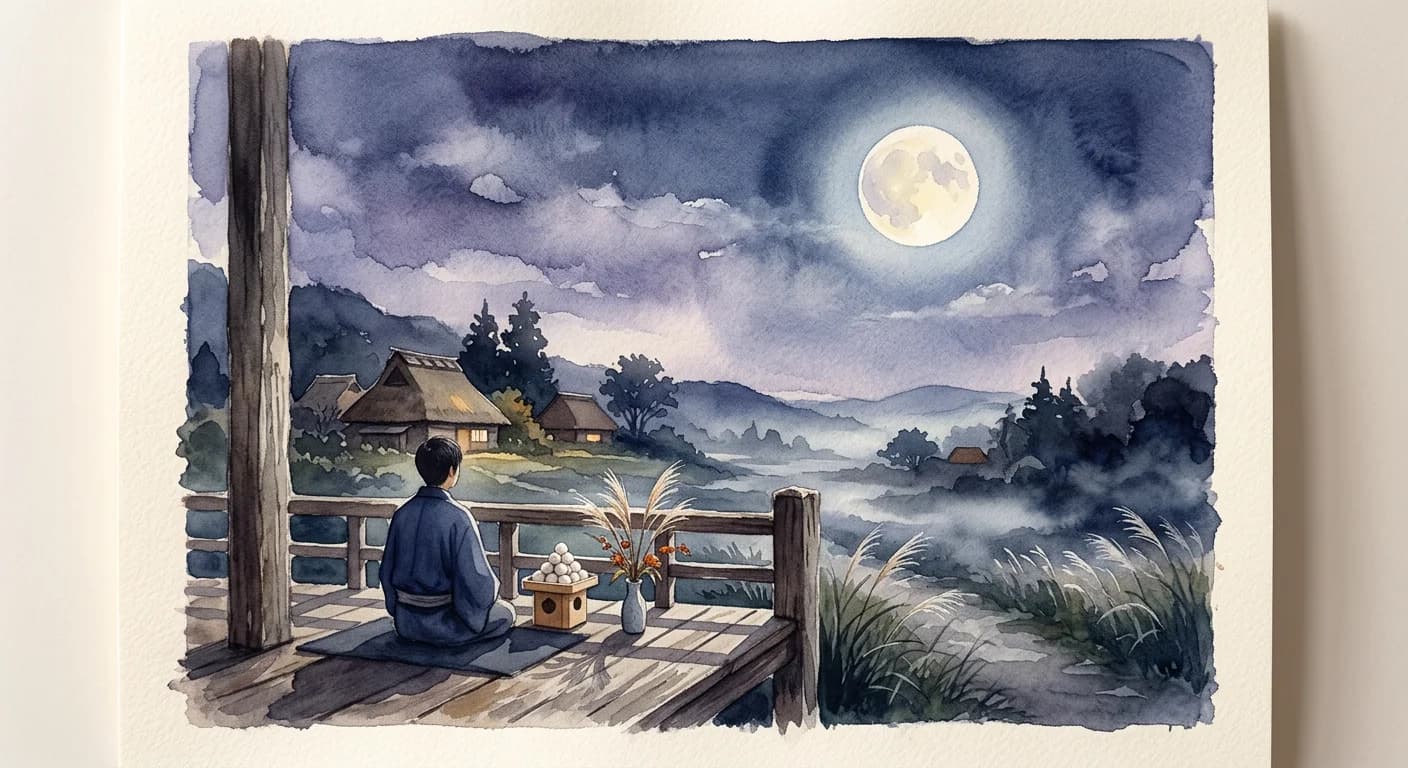
Tsukimi
/TSOO-kee-mee/
Meaning
Tsukimi, literally 'moon viewing,' is a cherished Japanese tradition of appreciating the autumn moon, particularly the harvest moon. It transcends mere observation, embodying a profound contemplation of nature's transient beauty and the cyclical rhythms of life. This ritual often involves aesthetic preparations like decorating with pampas grass and enjoying seasonal delicacies such as tsukimi dango and sake, fostering a sense of serene melancholy and connection to the cosmos.
Literal Translation
moon viewing
The Story Behind the Word
The practice of Tsukimi has roots in ancient Chinese moon-viewing festivals, which were introduced to Japan during the Heian period (794-1185). Initially, it was an aristocratic pastime involving poetry, music, and banquets, reflecting a deep appreciation for the moon's symbolic significance in literature and art. Over centuries, it diffused through all social strata, becoming a communal celebration often tied to agricultural cycles and prayers for a bountiful harvest. It embodies the Japanese aesthetic principles of *wabi-sabi* (beauty in imperfection and transience) and *mono no aware* (a poignant sensitivity to the ephemeral nature of things), highlighting a cultural reverence for natural beauty and the passage of time. The moon, in Japanese culture, is often associated with purity, eternity, and the passage of time, making its viewing a moment for introspection and connection to a deeper spiritual plane.
Experience It
Family Harvest Moon Gathering
The Tanaka family gathered on their veranda, a small table laden with perfectly round tsukimi dango and fresh taro. As the full moon ascended, casting a soft glow, Mr. Tanaka poured sake while his daughter, Hana, recited a haiku, their shared silence punctuated only by the gentle rustle of pampas grass decorations.
Solitary Contemplation by the Lake
A solitary figure sat on a lakeside bench, wrapped in a warm shawl, watching the moon's reflection shimmer on the water. With a cup of warm tea in hand, she found a quiet solace in the crisp autumn air and the luminous orb above, allowing the serene beauty to wash over her, a moment of profound personal Tsukimi.
The Deeper Meaning
Tsukimi subtly encapsulates the Japanese philosophical concept of *yūgen* – a profound, mysterious sense of the beauty of the universe, and the sad beauty of human suffering. It encourages a meditative state where one finds beauty not just in the moon's brilliance, but in its subtle changes, the surrounding darkness, and the fleeting nature of the moment. This practice underscores a worldview that values quiet contemplation, the impermanence of existence, and a deep, empathetic connection with the natural world.
Did You Know?
Traditionally, tsukimi dango are arranged in a pyramid shape, symbolizing clouds and an offering to the moon for a good harvest. The number of dango can vary, often matching the month (15 for Jugoya) or the full year (12 or 13).
How It's Used
Tsukimi is primarily associated with the autumn season in Japan, particularly around the time of the harvest moon (Jugoya). It's observed during festivals, private gatherings, or even solitary moments of reflection, often involving food, sake, and quiet observation of the night sky.