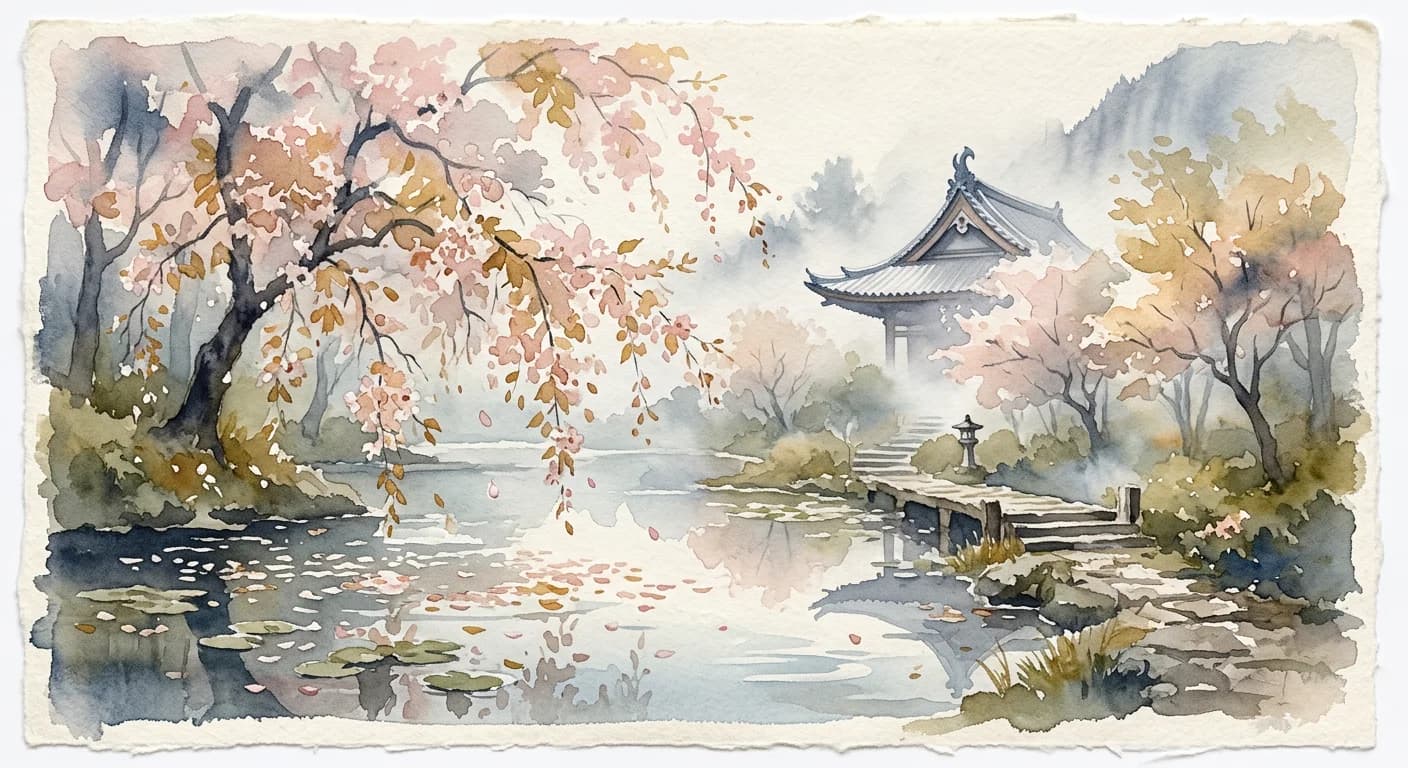
Aware
/AH-wah-reh/
Meaning
Aware captures a profound, bittersweet sensitivity to the ephemeral beauty of existence. It's the gentle ache in one's heart when witnessing the fleeting perfection of cherry blossoms in full bloom, knowing their glory is momentary, or the poignant beauty of autumn leaves gracefully falling. This feeling transcends mere sadness, encompassing a deep appreciation for life's transient wonders and a compassionate connection to the world's impermanence, evoking both joy and a tender melancholy.
Literal Translation
aware
The Story Behind the Word
The concept of aware has deep roots in Japanese aesthetics and thought, traceable to the Heian period (794-1185). It was famously articulated by the Edo period scholar Motoori Norinaga, who linked it to the emotional resonance of observing the world, particularly nature's cycles. This sensitivity is central to understanding Japanese arts, from poetry (waka, haiku) to garden design and the tea ceremony, all of which often highlight the transient nature of beauty and the passage of time. It reveals a worldview that embraces impermanence not as a flaw, but as an integral, beautiful aspect of life, fostering a profound appreciation for the present moment and the delicate balance of existence.
Experience It
Cherry Blossom's Farewell
As the last cherry petals drifted onto the river, a woman paused, feeling a pang of aware. The fleeting beauty of their bloom, now ending, filled her with a gentle sadness mixed with deep gratitude for having witnessed their splendor.
Autumn's Fading Glow
An old man looked out at the vibrant maple leaves, their colors brilliant but beginning to fade. He felt aware, a quiet recognition of the season's transient majesty and the inevitable march of time, bringing both a sigh and a smile.
The Deeper Meaning
Aware encapsulates a core philosophical tenet in Japan: the acceptance and appreciation of impermanence (mujo). It suggests that true beauty often lies in its transience, encouraging a mindful engagement with the present moment and fostering a deep empathy for all things subject to change. This perspective transforms potential sorrow into a nuanced, appreciative understanding of life's delicate, ever-shifting nature.
Did You Know?
The term 'mono no aware' (物の哀れ), meaning 'the pathos of things,' is a more complete expression, emphasizing the emotional resonance with the impermanence of objects and phenomena.
How It's Used
It is used to describe a person's sensitivity to the impermanence of beauty and life, often evoked by natural phenomena or artistic expressions.