U.
HomeRegionsLanguagesEmotionsCollections
Find Your Word

“The limits of my language mean the limits of my world.”

— Ludwig Wittgenstein, Philosopher

Untranslatable

A curated collection of the world's most beautiful expressions—words that remind us language is humanity's greatest invention.

  • Home
  • Collections
  • Regions
  • Countries
  • Emotions
  • Tags
  • Contexts
  • Finder
  • Europe
  • Asia
  • Americas
  • Africa
  • Middle East
  • About
  • Contact
  • Privacy Policy
  • Terms of Service

2026 © Untranslatable. All rights reserved.

    /
    /
    1. Home
    2. /
    3. Asia
    4. /
    5. Moksha
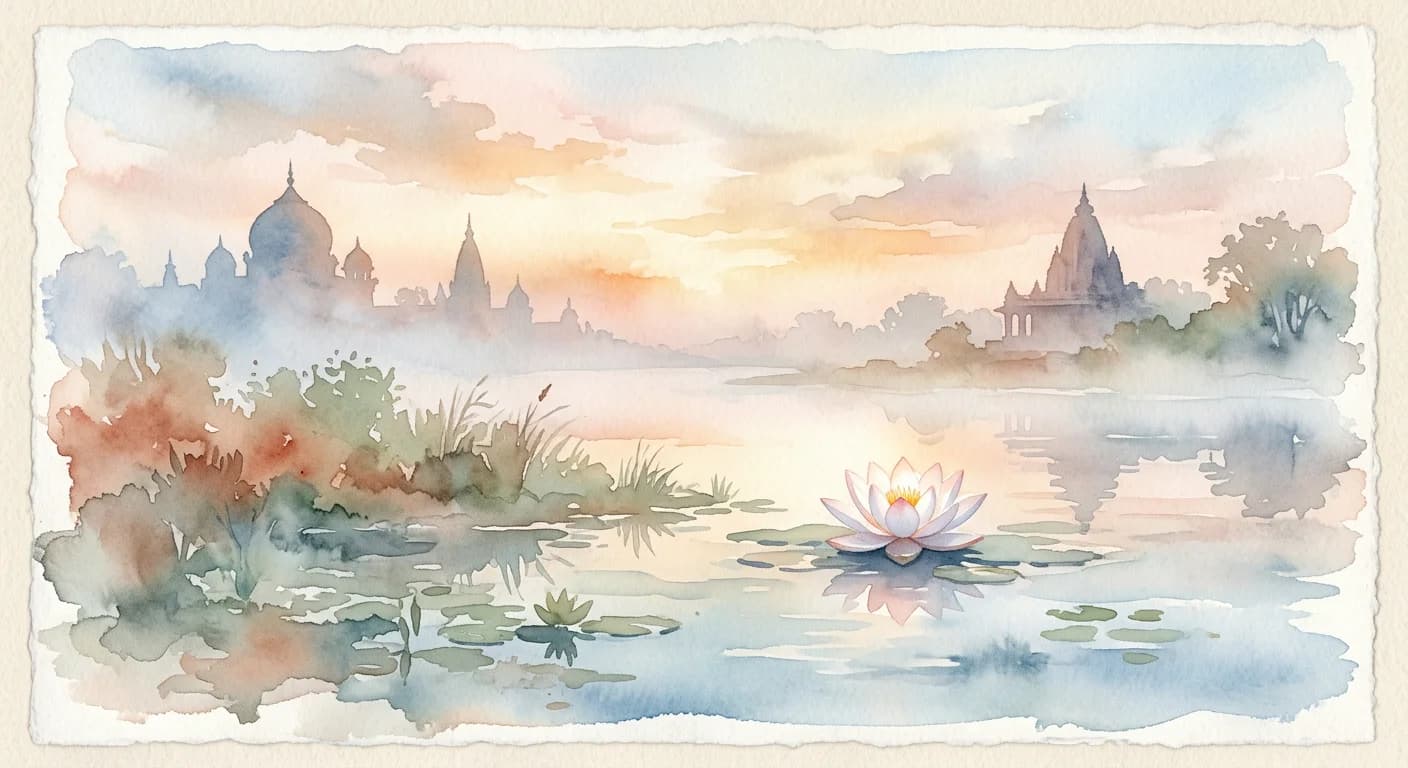
    Artistic representation of Moksha
    Sanskrit•
    🇮🇳India

    Moksha

    /MOK-shuh/

    Meaning

    Moksha is the profound spiritual liberation, the ultimate goal in many Indian traditions, signifying emancipation from the relentless cycle of birth, death, and rebirth (samsara). It's not merely freedom, but a sublime state of self-realization where the individual soul (Atman) recognizes its inherent unity with the ultimate reality (Brahman) or the divine. This transcendent bliss is achieved through shedding desires, ego, and ignorance, leading to an eternal peace that dissolves all suffering and attachment.

    Literal Translation

    liberation, release, emancipation

    The Story Behind the Word

    Moksha is the cornerstone of Indian philosophical and religious thought, a concept born from an ancient worldview that perceives existence as cyclical and often fraught with suffering. Its genesis lies in the Upanishads and Vedic traditions, evolving through millennia to become the supreme aspiration in Hinduism, Buddhism, and Jainism. The pursuit of moksha fundamentally shapes ethical frameworks, spiritual practices like yoga and meditation, and societal values, emphasizing detachment, self-control, and wisdom over material accumulation. It reveals a culture deeply concerned with the nature of existence, the self, and the ultimate purpose of life, viewing the material world as a temporary stage and spiritual liberation as the highest achievement.

    Experience It

    A Rishi's Attainment

    After decades of rigorous meditation in the Himalayan caves, the old rishi felt a profound shift. The incessant chatter of his mind silenced, and he perceived the interconnectedness of all things, realizing his true self was not separate from the universe. This was his moksha, a liberation from all earthly bindings.

    Seeking Inner Peace

    A young woman, disillusioned by the endless pursuit of wealth and status, began to study ancient texts and practice selfless service. Slowly, she found her attachments lessening and an inner tranquility growing. She understood that her journey was towards moksha, finding freedom not in what she gained, but in what she let go.

    The Deeper Meaning

    Moksha encapsulates a worldview that challenges the Western emphasis on individual achievement and material progress. It posits that true fulfillment comes not from external gains but from internal realization and detachment from the fleeting nature of the world. It suggests that suffering is largely self-imposed through ignorance and attachment, and that liberation is always possible through wisdom and ethical living, revealing a profoundly introspective and self-transformative philosophy.

    Did You Know?

    While often seen as an afterlife state, some traditions believe moksha can be attained while still living, a state known as 'jivanmukta' or 'liberated while living'.

    How It's Used

    Moksha is a central concept in the spiritual and philosophical traditions originating from the Indian subcontinent. It is discussed in religious texts, philosophical treatises, and spiritual discourses, guiding adherents on the path to ultimate liberation. The term is used to describe the goal of a spiritual life and the state achieved upon its fulfillment.

    Emotions
    gratitude,peace,serenity,wonder
    Contexts
    meditation,relaxation,solitude
    🇮🇳India

    by Annelise Dubois·Written Mar 14, 2026·Updated Apr 3, 2026

    Related Words

    Explore more
    Dolce far nienteItalian

    Dolce far niente captures the profound joy and effortless pleasure derived from simply existing without obligation or purpose. It's the art of savoring moments of pure, unadulterated idleness – lying in the sun, watching the clouds drift, or enjoying a leisurely coffee – not as a break from work, but as a valuable state in itself. This 'sweetness of doing nothing' is a conscious embrace of stillness and contentment, allowing the soul to breathe and the senses to fully engage with the present.

    Wabi-sabiJapanese

    Wabi-sabi is the profound appreciation for the ephemeral, the imperfect, and the incomplete aspects of existence. It is about discovering beauty in the subtle textures of age, the unique character of flaws, and the gentle decay that marks the passage of time. This philosophy encourages a quiet acceptance of impermanence and a mindful connection to the natural world, finding elegance in simplicity and authenticity.

    IkigaiJapanese

    Ikigai is more than just a reason to get out of bed; it's a deeply personal and evolving sense of purpose that brings genuine fulfillment and joy to one's life. It represents the sweet spot where your passions, talents, needs of the world, and what you can be paid for beautifully converge. Discovering your ikigai often leads to a life lived with intentionality, resilience, and a profound connection to one's contributions. It's the intrinsic motivation that fuels a meaningful existence, regardless of external circumstances.

    NunchiKorean

    Nunchi is the sophisticated, almost telepathic, ability to instantly grasp the unspoken dynamics of any social situation, anticipating others' thoughts and feelings, and then responding with impeccable grace and timing. It's an acute form of social intuition, allowing one to navigate complex interpersonal landscapes by reading subtle cues like body language, tone, and context. Possessing good nunchi means effortlessly understanding the underlying emotional currents and adjusting one's behavior to maintain harmony and effectiveness, often without a single word exchanged.

    Featured in 1 collection

    🧘‍♀️The Art of Rest