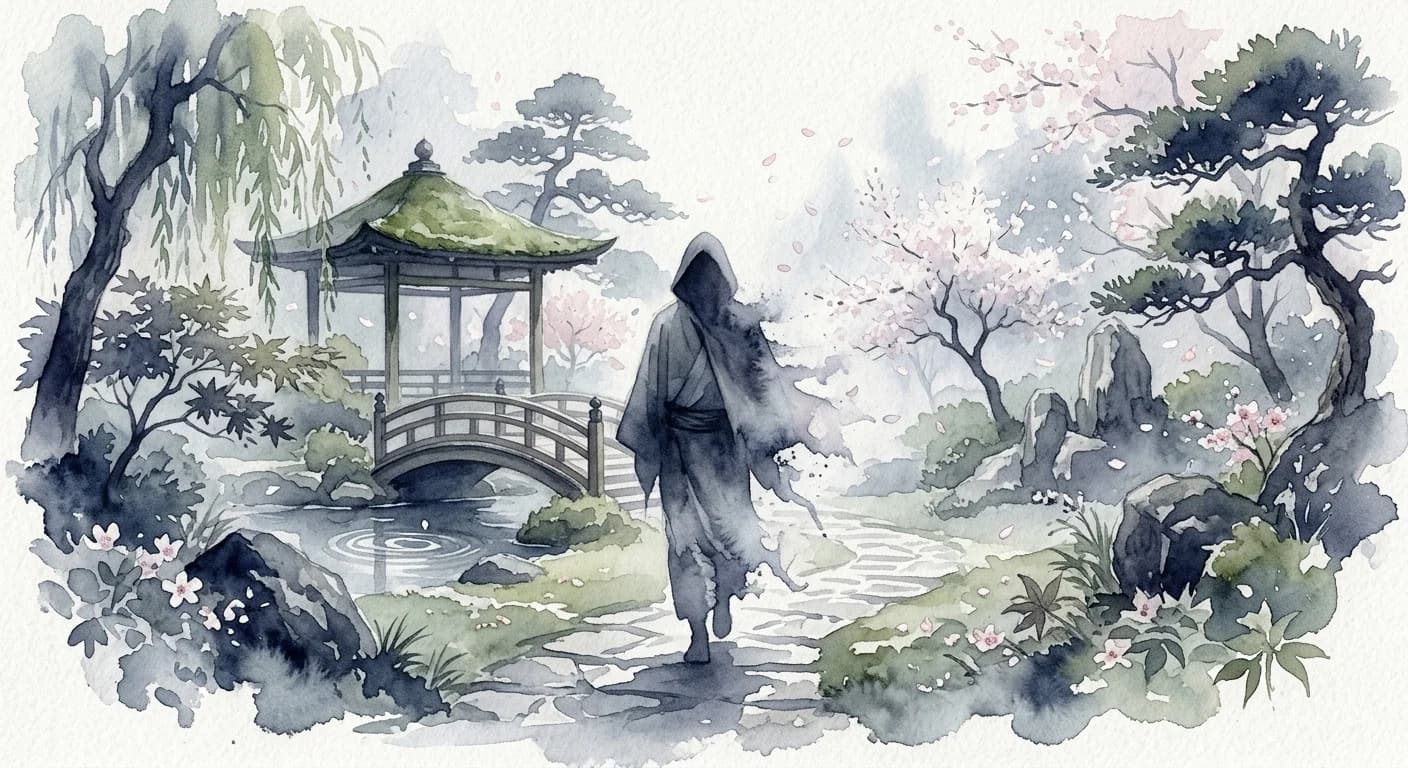
Johatsu
/JOH-haht-soo/
Meaning
Johatsu, literally 'evaporation,' describes the profound and deliberate act of vanishing from one's life in Japan, severing all personal, professional, and social ties without a trace. It's a radical escape from overwhelming societal pressures, deep-seated shame, financial ruin, or insurmountable personal failures. This often meticulously planned disappearance, sometimes aided by clandestine 'evaporation companies,' signifies a desperate bid for a new, unburdened existence, reflecting a silent societal phenomenon where individuals choose anonymity over confronting their circumstances.
Literal Translation
Evaporation / Disappearance
The Story Behind the Word
The existence of 'johatsu' is deeply entwined with Japan's unique societal fabric, which places immense value on conformity, collective harmony (wa), and avoiding shame (haji). The pressure to maintain outward appearances, coupled with a strong sense of responsibility and a fear of burdening others, can make admitting failure or seeking help incredibly difficult. Rather than face public disgrace or the perceived dishonor of being a 'failure' within a rigid social structure, some choose to disappear entirely. This phenomenon highlights the intense, often unspoken, psychological toll of Japan's demanding social environment and the lengths to which individuals may go to escape its perceived judgments or inescapable obligations. It reveals a culture where personal struggle can feel so isolating that vanishing becomes a viable, albeit desperate, solution.
Experience It
Escaping Debt's Shadow
After his business venture failed spectacularly, leaving him with mountains of debt and shame, Kenji made the agonizing decision. He meticulously planned his johatsu, arranging for his mail to be held and quietly withdrawing his remaining funds, leaving behind only a brief, ambiguous note before disappearing into the urban anonymity, hoping to start anew.
The Pressure to Conform
Akari, stifled by the relentless pressure to marry and conform to traditional expectations, felt her spirit evaporating. One day, she simply didn't show up for work, her apartment was emptied, and her phone disconnected. Her johatsu was a silent rebellion, a desperate bid for self-determination away from the suffocating expectations of her family and society.
The Deeper Meaning
Johatsu reveals a poignant philosophical tension between the individual and society in Japan. It reflects a worldview where the weight of collective expectation and the fear of personal failure can be so immense that self-erasure is perceived as the only path to liberation or a fresh start. It underscores the profound existential loneliness that can arise within a highly interconnected yet rigorously conformist society, where individual identity can feel inseparable from one's social role.
Did You Know?
There are entire underground industries in Japan, known as 'night-moving' or 'evaporation' companies, that specialize in helping individuals orchestrate their disappearance, providing logistical support and new identities.
How It's Used
Used to describe the act of disappearing voluntarily and completely from one's life, often to escape societal pressures or debt.