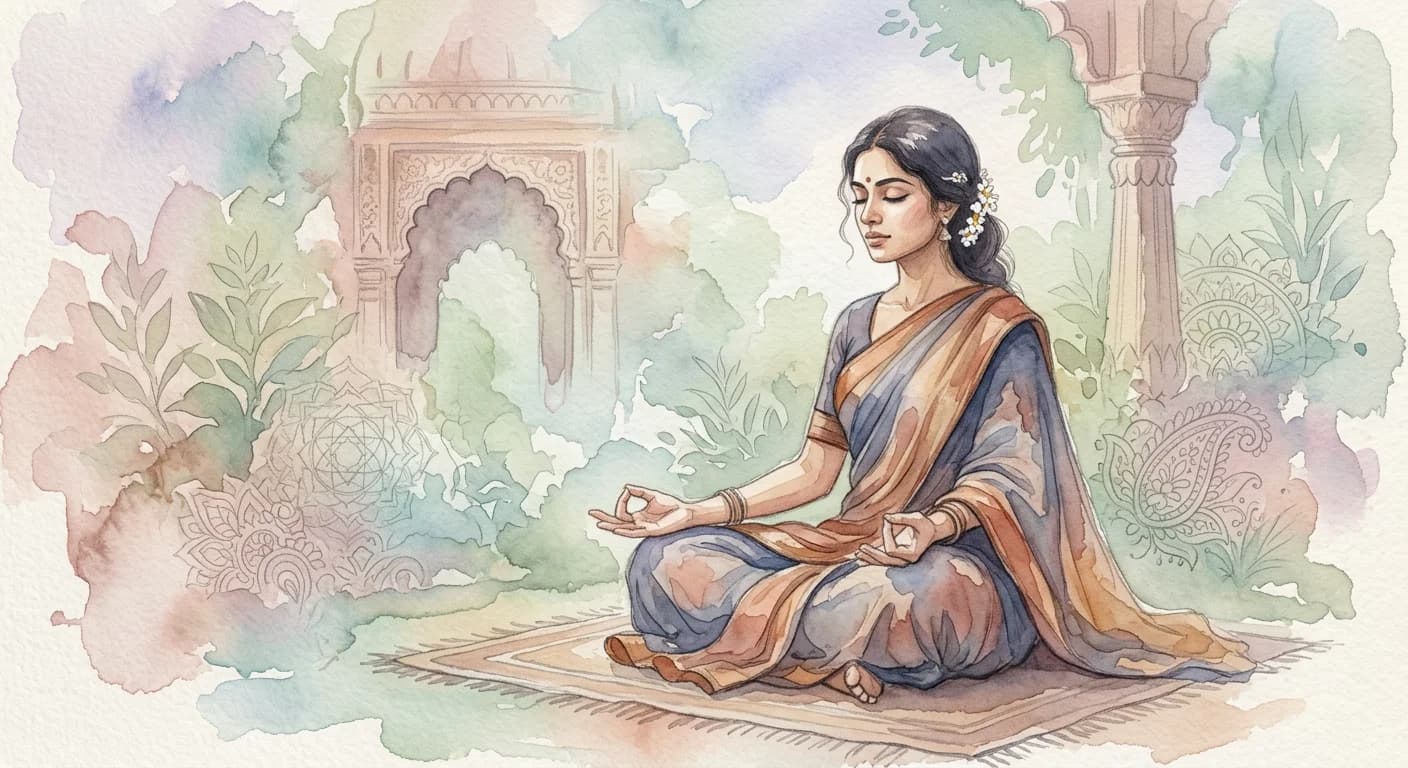
Mudra
/MOO-druh/
Meaning
A 'Mudra' transcends mere gesture, serving as a profound symbolic language of the divine, primarily within Hinduism, Buddhism, and Jainism. These intricate hand positions, and sometimes full body postures, are meticulously crafted to act as conduits, directing vital life force (prana) and invoking specific mental states or cosmic energies. Each mudra is a sacred 'seal,' believed to unlock inner wisdom, represent deities, or manifest blessings, requiring precise execution to achieve its intended spiritual, energetic, and even therapeutic effects. They are a physical embodiment of spiritual intent, bridging the mundane with the transcendental.
Literal Translation
Seal, mark, or gesture
The Story Behind the Word
The concept of 'mudra' is deeply woven into the spiritual fabric of India, reflecting a worldview where the body is seen as a microcosm of the universe and a vehicle for spiritual awakening. Its origins trace back to ancient Vedic rituals and early Buddhist iconography, evolving over millennia to become an integral part of yoga, meditation, classical dance (like Bharatanatyam), and temple worship. Mudras reveal a profound understanding of subtle energy systems (nadis and chakras) and the belief that external forms can influence internal states and connect an individual to universal energies. They underscore a culture that values non-verbal communication, symbolic representation, and the active engagement of the body in spiritual practice, seeing it not as separate from the mind or spirit, but as an essential partner in the journey toward enlightenment or divine connection.
Experience It
Meditation with Dhyana Mudra
In a quiet meditation hall, a yogi sits in a lotus position, hands gently resting in their lap, right over left, thumbs touching. This is the Dhyana Mudra, embodying perfect balance and concentration, helping to deepen their meditative state and unite with universal consciousness.
Blessing with Abhaya Mudra
A guru raises their right hand, palm facing outward, fingers pointing upwards, as a devotee bows. This is the Abhaya Mudra, the gesture of fearlessness and protection, conveying reassurance, divine blessing, and dispelling anxieties, a common sight in spiritual gatherings.
The Deeper Meaning
Mudra encapsulates the philosophical idea that the human body is a sacred instrument, capable of interacting directly with cosmic forces and internal energy. It reflects a holistic worldview where the physical, mental, and spiritual are interconnected, and where precise, intentional action (the gesture) can lead to profound internal transformation and a deeper understanding of the self and the universe. It's a testament to the power of embodied symbolism.
Did You Know?
There are hundreds of different mudras, some so ancient their exact origins are debated, and many are depicted in sacred art dating back thousands of years, showcasing their enduring significance.
How It's Used
Used in Hindu and Buddhist religious ceremonies, yoga practices, meditation, and classical Indian dance forms to convey specific meanings or energies.