U.
HomeRegionsLanguagesEmotionsCollections
Find Your Word

“The limits of my language mean the limits of my world.”

— Ludwig Wittgenstein, Philosopher

Untranslatable

A curated collection of the world's most beautiful expressions—words that remind us language is humanity's greatest invention.

  • Home
  • Collections
  • Regions
  • Countries
  • Emotions
  • Tags
  • Contexts
  • Finder
  • Europe
  • Asia
  • Americas
  • Africa
  • Middle East
  • About
  • Contact
  • Privacy Policy
  • Terms of Service

2026 © Untranslatable. All rights reserved.

    /
    /
    1. Home
    2. /
    3. Asia
    4. /
    5. Samadhi
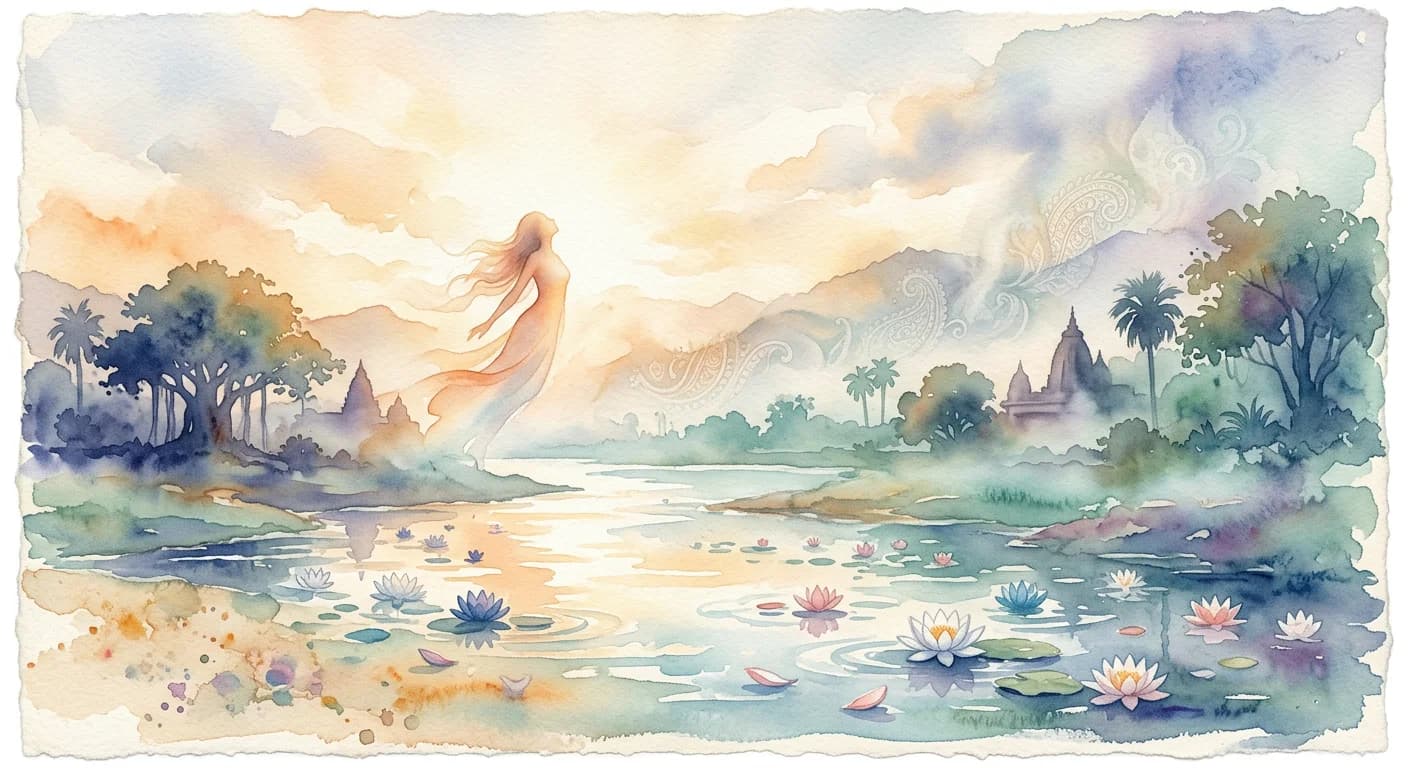
    Artistic representation of Samadhi
    Sanskrit•
    🇮🇳India

    Samadhi

    /suh-MAH-dee/

    Meaning

    Samadhi represents the zenith of meditative consciousness, an extraordinary state of profound absorption where the individual consciousness merges with the divine or ultimate reality. It transcends ordinary awareness, embodying a deep, unshakeable inner peace and a complete dissolution of the ego. This blissful union, achieved through rigorous spiritual discipline, leads to a realization of oneness, offering a stark contrast to Western cognitive paradigms that often emphasize individual identity and separation.

    Literal Translation

    conjunction, union, togetherness

    The Story Behind the Word

    The concept of Samadhi is deeply woven into the fabric of Indian spiritual traditions, particularly Hinduism and Buddhism, where it signifies the ultimate goal of yogic and meditative practices. Its existence reveals a culture that has historically prioritized inner exploration, self-realization, and the pursuit of liberation (moksha) over material achievements. The various stages of Samadhi, as outlined in texts like Patanjali's Yoga Sutras, reflect a meticulously charted path to higher consciousness, indicating a profound understanding of the human mind and its potential for transcendence. This quest for ultimate union shapes the philosophical landscape, emphasizing the ephemeral nature of the individual self and the eternal, interconnected essence of existence.

    Experience It

    The Yogi's Trance

    After decades of dedicated practice, the old yogi sat motionless, his breath barely perceptible. He had entered a state of Samadhi, his mind completely absorbed, the world around him fading into an undifferentiated unity. In that profound stillness, he experienced the boundless joy of true liberation.

    Moment of Oneness

    During an intense meditation retreat, Sarah felt a sudden, overwhelming sense of interconnectedness with everything. Her individual worries vanished, replaced by an expansive feeling of peace and belonging. It was a fleeting glimpse, but she knew she had touched the edge of Samadhi.

    The Deeper Meaning

    Samadhi embodies the core philosophical tenet of non-duality (Advaita) prevalent in many Indian traditions. It posits that the individual soul (Atman) is ultimately identical with the universal spirit (Brahman). The pursuit of Samadhi is thus a journey of unveiling this inherent unity, demonstrating a worldview where true reality is not found in the fragmented, external world, but within the integrated, transcendent self.

    Did You Know?

    There are traditionally eight stages of Samadhi, culminating in 'Nirvikalpa Samadhi,' a state of complete absorption without any dualistic thought, often described as an experience beyond description.

    How It's Used

    Samadhi is used in spiritual and yogic contexts to describe the highest state of meditative consciousness attainable.

    Emotions
    contentment,peace,serenity,wonder
    Contexts
    relaxation,solitude,spirituality
    🇮🇳India

    by Annelise Dubois·Written Mar 14, 2026·Updated Apr 3, 2026

    Related Words

    Explore more
    HyggeDanish

    Hygge is more than mere coziness; it's a holistic embrace of comfort, warmth, and belonging that nourishes the soul. It describes the intentional creation of an intimate atmosphere where simple pleasures, genuine connection, and mindful presence converge, fostering a profound sense of contentment and well-being. It's about finding joy and peace in the small, everyday moments, often shared with loved ones.

    Dolce far nienteItalian

    Dolce far niente captures the profound joy and effortless pleasure derived from simply existing without obligation or purpose. It's the art of savoring moments of pure, unadulterated idleness – lying in the sun, watching the clouds drift, or enjoying a leisurely coffee – not as a break from work, but as a valuable state in itself. This 'sweetness of doing nothing' is a conscious embrace of stillness and contentment, allowing the soul to breathe and the senses to fully engage with the present.

    Wabi-sabiJapanese

    Wabi-sabi is the profound appreciation for the ephemeral, the imperfect, and the incomplete aspects of existence. It is about discovering beauty in the subtle textures of age, the unique character of flaws, and the gentle decay that marks the passage of time. This philosophy encourages a quiet acceptance of impermanence and a mindful connection to the natural world, finding elegance in simplicity and authenticity.

    IkigaiJapanese

    Ikigai is more than just a reason to get out of bed; it's a deeply personal and evolving sense of purpose that brings genuine fulfillment and joy to one's life. It represents the sweet spot where your passions, talents, needs of the world, and what you can be paid for beautifully converge. Discovering your ikigai often leads to a life lived with intentionality, resilience, and a profound connection to one's contributions. It's the intrinsic motivation that fuels a meaningful existence, regardless of external circumstances.