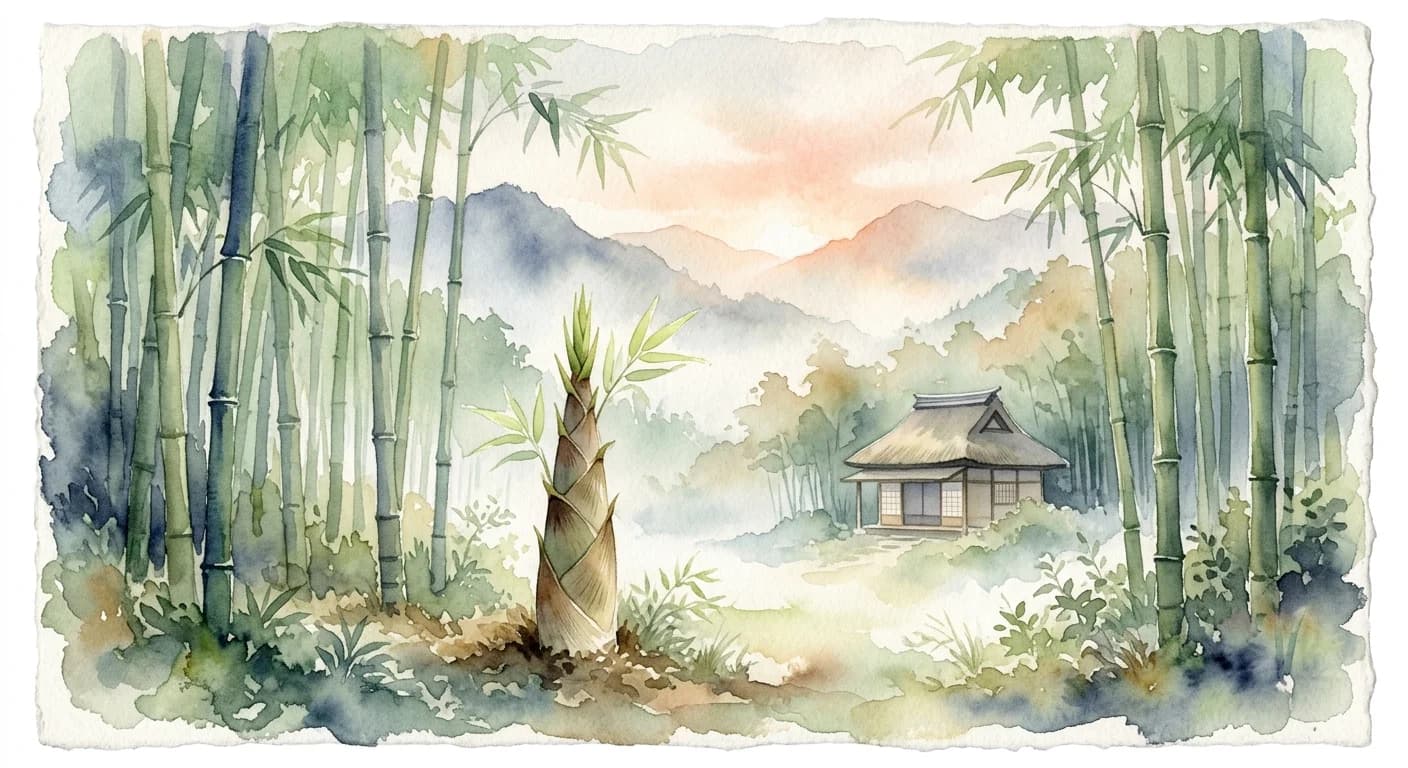
Takenoko seikatsu
/TAH-keh-no-koh seh-ee-kah-tsoo/
Meaning
Takenoko seikatsu, or "bamboo shoot life," describes a conscious and intentional lifestyle rooted in profound simplicity, frugality, and a deep mindfulness towards consumption. It embodies a philosophy of living lightly on the earth, mirroring how a bamboo shoot thrives with minimal resources, yet grows strong. This approach rejects excessive materialism, encouraging individuals to find profound contentment in less, appreciate the intrinsic value of essentials, and adopt a sustainable, harmonious way of being within their means.
Literal Translation
Bamboo shoot life
The Story Behind the Word
The concept of "takenoko seikatsu" is deeply embedded in Japan's historical and philosophical traditions, particularly influenced by Zen Buddhism and its emphasis on austerity, mindfulness, and the beauty of imperfection (wabi-sabi). The bamboo itself holds significant cultural symbolism in Japan, representing resilience, flexibility, and rapid, yet grounded, growth. This word reflects a long-standing appreciation for nature's cycles and an aesthetic that values simplicity and natural forms over ostentation. It reveals a cultural inclination towards finding spiritual richness in material restraint, a stark contrast to consumerist pressures yet a recurring theme in Japanese art, literature, and lifestyle movements. The post-war economic boom, followed by periods of introspection, further solidified a desire among some to return to more fundamental, sustainable ways of living, echoing historical periods of humble existence.
Experience It
Urban Minimalist Living
Kenji, living in a small Tokyo apartment, embraces takenoko seikatsu. He carefully curates his possessions, opting for durable, multi-functional items, and enjoys cooking simple, seasonal meals at home rather than frequenting expensive restaurants. His small carbon footprint brings him deep satisfaction.
Retirement in Nature
After years in a demanding corporate job, Akiko retired to a small village, adopting a takenoko seikatsu. She grows her own vegetables, mends her clothes, and finds joy in daily walks and community engagement, feeling more connected to the earth and her true self than ever before.
The Deeper Meaning
This phrase encapsulates a profound philosophical stance: that true richness and contentment are not found in accumulation, but in mindful living, appreciative simplicity, and a harmonious relationship with one's environment. It champions an inner wealth over material possessions, suggesting that liberation comes from reducing desires and living authentically within one's natural limits.
Did You Know?
Historically, bamboo shoots themselves were a staple food during lean times in Japan, embodying resilience and sustenance from minimal resources, further cementing the metaphor.
How It's Used
Used to describe a conscious choice to live a simple, low-impact lifestyle, often associated with environmental consciousness and a rejection of consumerism.