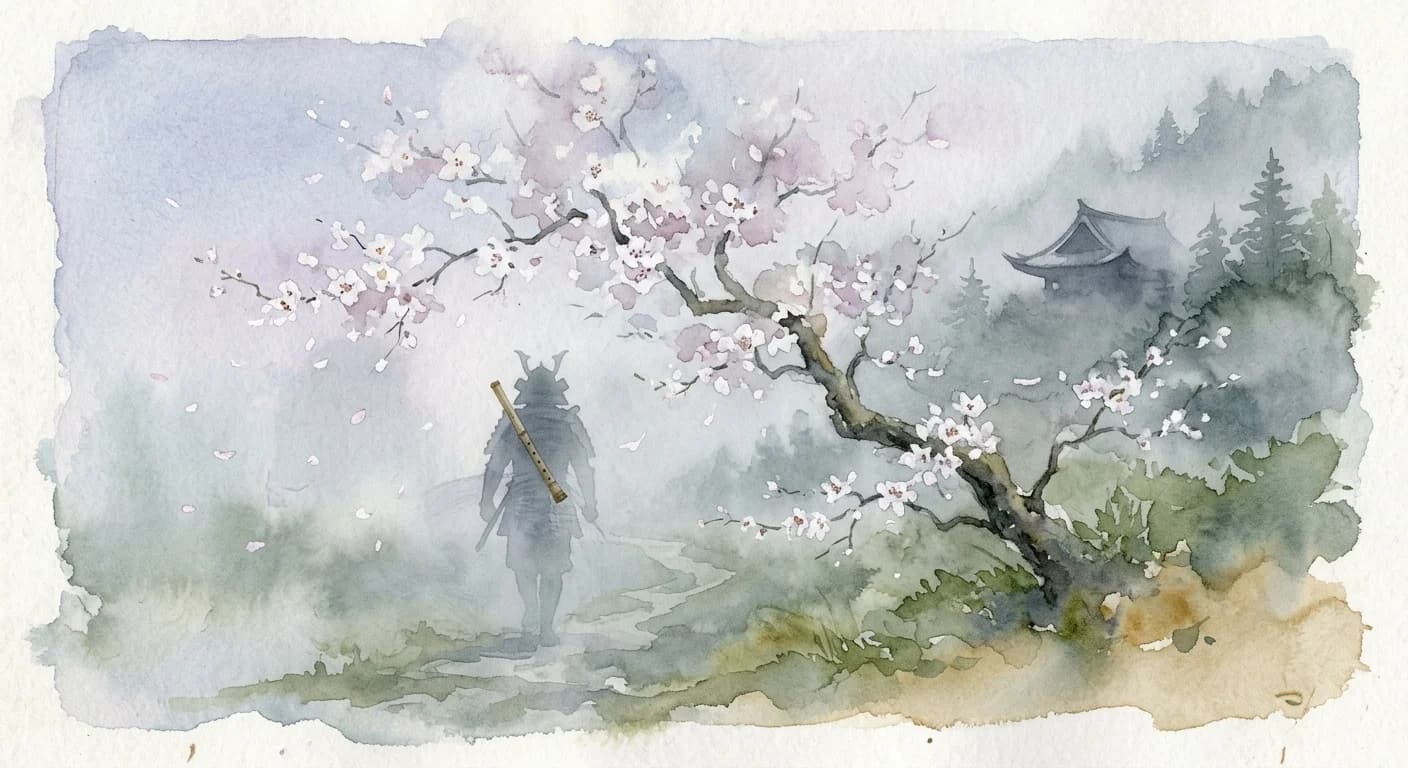
Atsumori
/AHT-soo-moh-ree/
Meaning
Atsumori transcends its origin as a Noh play, embodying a profound contemplation of life's fleeting beauty and the poignant sorrow inherent in impermanence. It evokes a deep, almost wistful reflection on the past, particularly on the vibrant lives and passions of those who have vanished, leaving behind only echoes. This concept is deeply intertwined with the Buddhist understanding of mujō, where the transient nature of all things is not just a fact, but a source of profound and beautiful sadness, a quiet acceptance of passing glory.
Literal Translation
The name 'Atsumori' refers to a historical figure, Taira no Atsumori, a young warrior.
The Story Behind the Word
The word 'Atsumori' is steeped in the Japanese aesthetic of mono no aware (the pathos of things) and mujō (impermanence), core tenets of Japanese culture shaped by centuries of Buddhist thought. The historical Taira no Atsumori was a young warrior who met a tragic end at the Battle of Ichi-no-Tani during the Genpei War (1180-1185). His youth, musical talent, and the poignant circumstances of his death made him an ideal subject for Noh drama. Zeami's play 'Atsumori' elevates his story from a historical footnote to a timeless meditation on life, death, and redemption, reinforcing the idea that beauty is often enhanced by its fragility and transience. This cultural lens encourages a contemplative appreciation of the present moment, knowing it will soon be past, and a respectful remembrance of those who have come before.
Experience It
Autumn Leaves in Kyoto
Strolling through a Kyoto temple garden as vibrant autumn leaves fall, an elderly woman sighs, 'Ah, Atsumori.' She wasn't referring to the play, but to the breathtaking yet transient beauty, knowing these colors would soon fade, evoking a bittersweet sense of time passing.
Old Family Photo
A young man discovers a faded photograph of his grandparents as vigorous youths. A wave of 'Atsumori' washes over him – a deep feeling for their past lives, their dreams, and the unrecoverable moments captured, now only memories and a sense of beautiful, sad reflection.
The Deeper Meaning
Atsumori encapsulates a worldview deeply rooted in the acceptance of impermanence as a fundamental truth of existence. It doesn't lament transience but finds profound beauty and meaning within it, suggesting that the fleeting nature of life and beauty makes them all the more precious. This perspective encourages a contemplative, appreciative stance towards the world, where even sorrow can be imbued with a quiet, aesthetic grace, reflecting a core Buddhist understanding of suffering and enlightenment.
Did You Know?
The warrior Atsumori was known for his flute-playing, and in the Noh play, his ghost appears to his killer, Kumagai, to resolve their karmic ties through a dance, often accompanied by the very flute Atsumori carried.
How It's Used
Atsumori is primarily known as the title of a classic Noh drama by Zeami, which tells the story of a warrior ghost. However, the term can also be used more broadly to refer to the melancholic beauty associated with this play and its themes, often invoked when contemplating the passage of time and the ephemeral nature of existence.