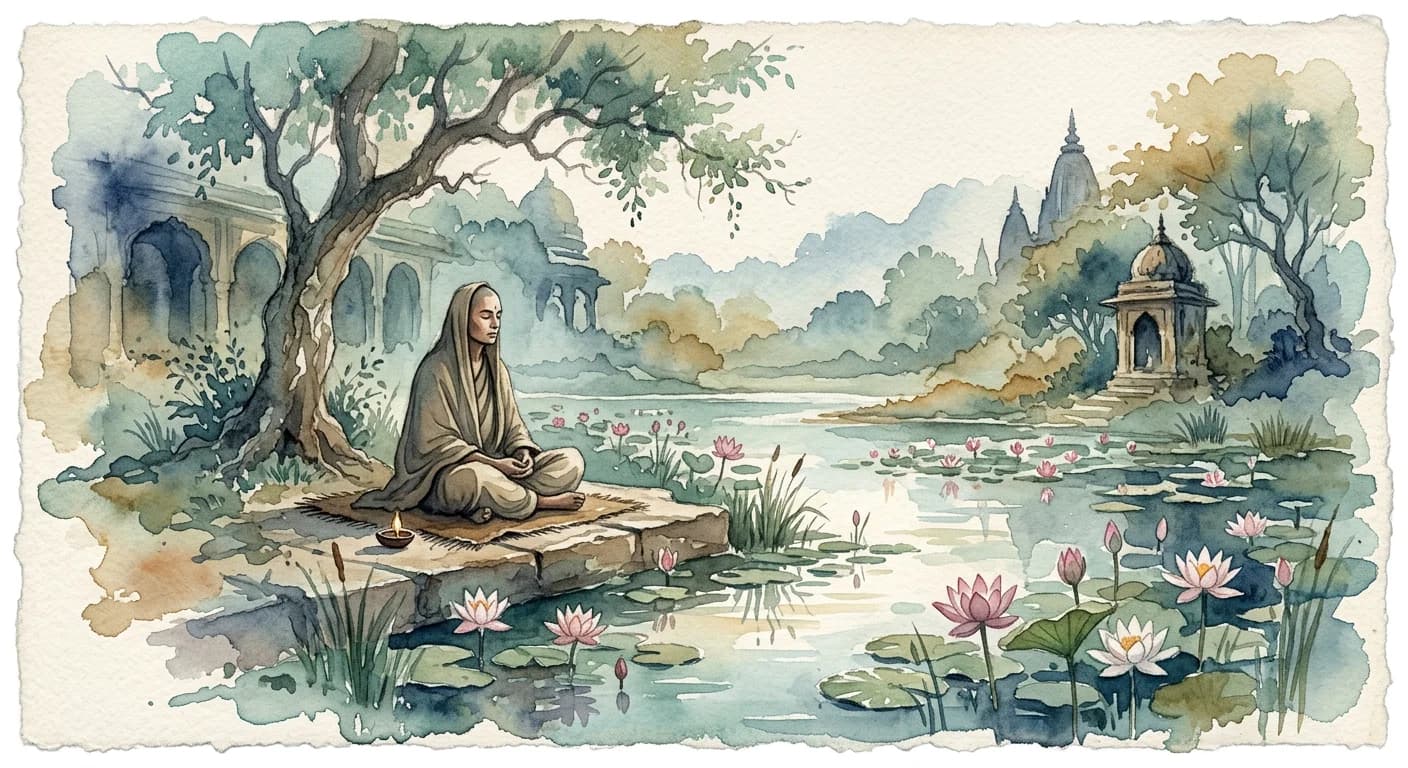
Dukkha
/DUK-kuh/
Meaning
Dukkha transcends mere suffering; it's the profound, pervasive sense of unsatisfactoriness inherent in all conditioned existence. It's the subtle ache of impermanence, the discomfort born from clinging to what constantly shifts, and the existential unease that arises when our desires clash with the ever-changing nature of reality. It encompasses everything from acute physical pain to the most subtle, fleeting disappointment, revealing the fundamental instability of all phenomena.
Literal Translation
suffering, pain, distress, dissatisfaction, unease
The Story Behind the Word
Dukkha is the cornerstone of Buddhist philosophy, the very first of the Four Noble Truths articulated by the Buddha. Its existence in Pali, an ancient Middle Indo-Aryan language, signifies its foundational role in early Buddhist thought, emerging from a rich intellectual tradition that deeply contemplated the human condition. This word reveals a culture that meticulously observed the cyclical nature of life, death, and rebirth (samsara), and sought a definitive escape from its inherent frustrations. It points to a worldview where happiness is not found in external conditions, but through an internal transformation that recognizes and transcends the pervasive 'unsatisfactoriness' of existence. The emphasis on dukkha highlights a profound philosophical inquiry into the nature of reality and the path to liberation, rather than merely a lamentation of pain.
Experience It
The Fading Rose
A gardener admires a perfect, vibrant rose at its peak bloom. A week later, its petals begin to wilt and fall. The subtle pang of disappointment, the recognition that its beauty was fleeting and could not be held, is a form of dukkha.
Unfulfilled Ambition
A student works tirelessly for years, finally achieving their dream career. Yet, after the initial euphoria, they find a persistent, subtle feeling of emptiness or a new set of anxieties. This underlying dissatisfaction, despite apparent success, is also dukkha.
The Deeper Meaning
Dukkha embodies a profound philosophical insight: that attachment to impermanent phenomena inevitably leads to dissatisfaction. It challenges the common human tendency to seek lasting happiness in transient things, instead pointing towards a radical acceptance of change and a liberation from craving. This perspective doesn't deny joy, but reframes it as temporary, encouraging a deeper wisdom that transcends conditional happiness and suffering.
Did You Know?
The etymology of 'dukkha' is often linked to an ancient Indian metaphor of a wheel's axle not fitting properly in its hub, leading to a bumpy, uncomfortable ride – a perfect analogy for life's inherent unease.
How It's Used
Dukkha is a core philosophical and religious term, central to Buddhist teachings and discussions about the nature of existence, the causes of suffering, and the path to enlightenment. It is used in both formal doctrine and everyday contemplation of life's challenges.