Ghobar
/gho-BAR/
Meaning
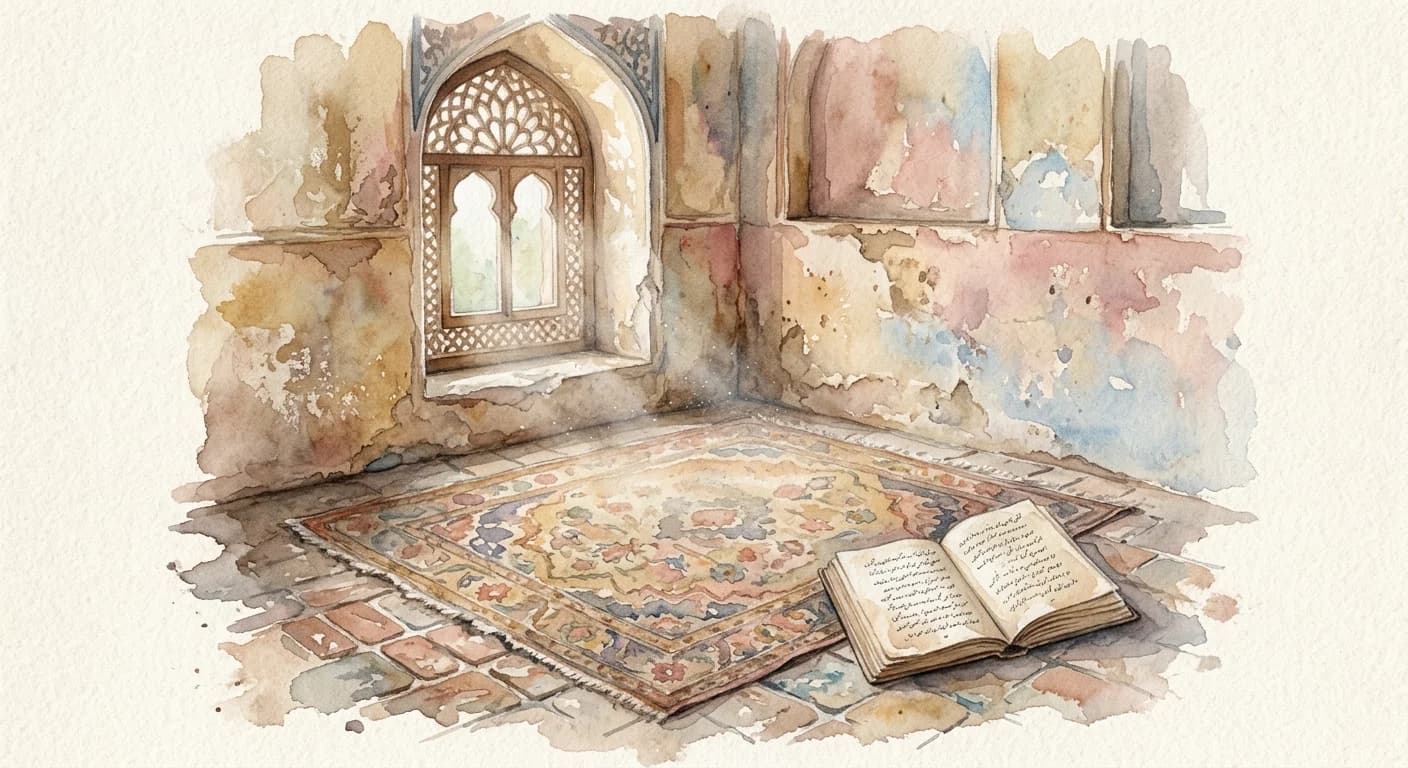
Ghobar transcends mere 'dust'; it is the visible whisper of time's passage, a delicate veil that settles on neglected surfaces, hinting at stories untold and memories fading. This fine, almost imperceptible powder embodies the quiet decay and gentle erosion that touch all things, from ancient manuscripts to forgotten heirlooms. It evokes a poignant sense of wistful observation, a recognition of life's ephemeral nature and the constant, subtle alteration of the world around us, inviting contemplation on impermanence.
Literal Translation
dust, powder, fine particles
The Story Behind the Word
In Persian culture, 'ghobar' carries a profound melancholic and philosophical weight, deeply intertwined with notions of impermanence, the passage of time, and the transient nature of human existence. Persian poetry, rich in themes of decay and the fleeting beauty of life, frequently employs ghobar as a metaphor for the world's ephemerality, the dust to which all things eventually return. It reflects a cultural introspection on mortality and legacy, where the accumulation of ghobar on objects or places signifies not just neglect, but a quiet, almost sacred acknowledgment of what once was. This perspective is rooted in a long tradition of contemplating life's cycles, where even decay holds a certain beauty and narrative depth, revealing a people keenly attuned to the subtle changes wrought by time.
Experience It
The Scholar's Study
Sunlight streamed through the window, illuminating the ghobar dancing in the air above rows of ancient tomes. Each book cover, untouched for years, bore a fine, velvety layer, a testament to countless forgotten hours of study and the quiet passage of decades.
Forgotten Childhood Toy
In the attic, a wooden rocking horse sat, its painted eyes staring blankly, covered in a delicate ghobar. It was a silent witness to a childhood long past, its once vibrant colors muted by the gentle accumulation of time and memory.
The Deeper Meaning
Ghobar encapsulates a deep Persian philosophical outlook on impermanence (Anicca) and the cyclical nature of existence. It suggests that decay is not an end but a transformation, a quiet process that continually reshapes the world and reminds us of our own transient place within it. This perspective fosters a contemplative appreciation for the present moment and a nuanced understanding of loss and memory.
How It's Used
Used to describe the fine dust that accumulates on objects or surfaces over time, particularly in contexts that suggest neglect or the passage of time.