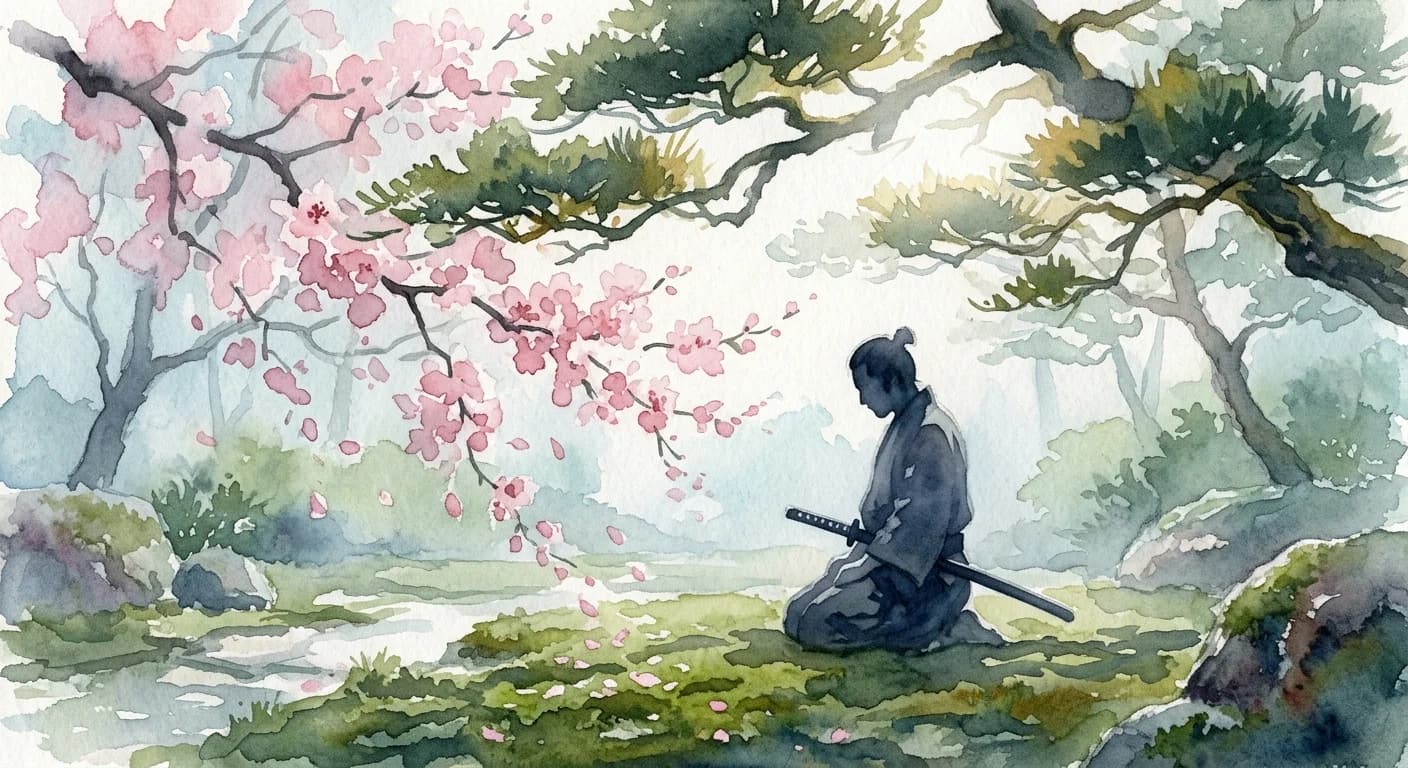
Bushidō
/BOO-shee-doh/
Meaning
Bushidō, or 'the Way of the Warrior,' is far more than a simple code of conduct; it is the spiritual bedrock upon which the samurai class built their lives. It encompasses a rigorous ethical framework demanding unwavering loyalty to one's lord, profound self-discipline, honor above all else, martial mastery, and a stoic acceptance of death. This profound philosophy permeated every facet of a samurai's existence, shaping their character, their duty, and their willingness to sacrifice everything for an ideal, fostering an unparalleled integrity deeply etched into Japan's historical and cultural identity.
Literal Translation
Way of the Warrior
The Story Behind the Word
Bushidō emerged over centuries, not as a static document, but as a dynamic synthesis of Zen Buddhism's stoicism, Shinto's loyalty and patriotism, and Confucianism's emphasis on duty and ethical governance. It provided a moral compass for a warrior class whose very existence was defined by violence, offering a path to live and die with dignity amidst constant conflict. This code helped to rationalize their societal role, imbuing their martial prowess with spiritual and ethical significance. It reveals a culture that valued order, sacrifice, and the subjugation of individual desires for the collective good, particularly for one's feudal lord and, ultimately, the nation. The enduring legacy of Bushidō continues to influence Japanese concepts of discipline, respect, and duty, even in modern society, manifesting in everything from corporate culture to sportsmanship.
Experience It
Unyielding Loyalty
A samurai, despite knowing his lord's cause is lost and facing certain death, stands his ground against overwhelming forces. His unwavering commitment, even in defeat, embodies the Bushidō principle of loyalty unto the very end, prioritizing honor over survival.
Seppuku for Honor
After a grave mistake that brings shame upon his clan, a samurai chooses to perform seppuku (ritual suicide). This act, though brutal, is not an act of despair but a final, ultimate demonstration of responsibility and the preservation of his and his family's honor, a core tenet of Bushidō.
The Deeper Meaning
Bushidō reveals a worldview where life's value is not measured by its length, but by the integrity and purpose with which it is lived. It posits that true freedom comes from mastering oneself and transcending the fear of death, allowing one to act with pure intent and unwavering duty. This philosophy emphasizes the ephemeral nature of existence while demanding an eternal commitment to one's principles, illustrating a profound acceptance of impermanence balanced with rigorous ethical adherence.
Did You Know?
While often romanticized, the term 'Bushidō' itself wasn't widely codified or popularized until the late 19th and early 20th centuries, as Japan sought to define its national identity during modernization.
How It's Used
The term Bushidō is used to refer to the historical code of the samurai and its underlying principles. It is often invoked when discussing Japanese history, philosophy, martial arts, or cultural ethics, particularly concerning concepts of honor, duty, and self-sacrifice.