U.
HomeRegionsLanguagesEmotionsCollections
Find Your Word

“The limits of my language mean the limits of my world.”

— Ludwig Wittgenstein, Philosopher

Untranslatable

A curated collection of the world's most beautiful expressions—words that remind us language is humanity's greatest invention.

  • Home
  • Collections
  • Regions
  • Countries
  • Emotions
  • Tags
  • Contexts
  • Finder
  • Europe
  • Asia
  • Americas
  • Africa
  • Middle East
  • About
  • Contact
  • Privacy Policy
  • Terms of Service

2026 © Untranslatable. All rights reserved.

    /
    /
    1. Home
    2. /
    3. Asia
    4. /
    5. Chakra
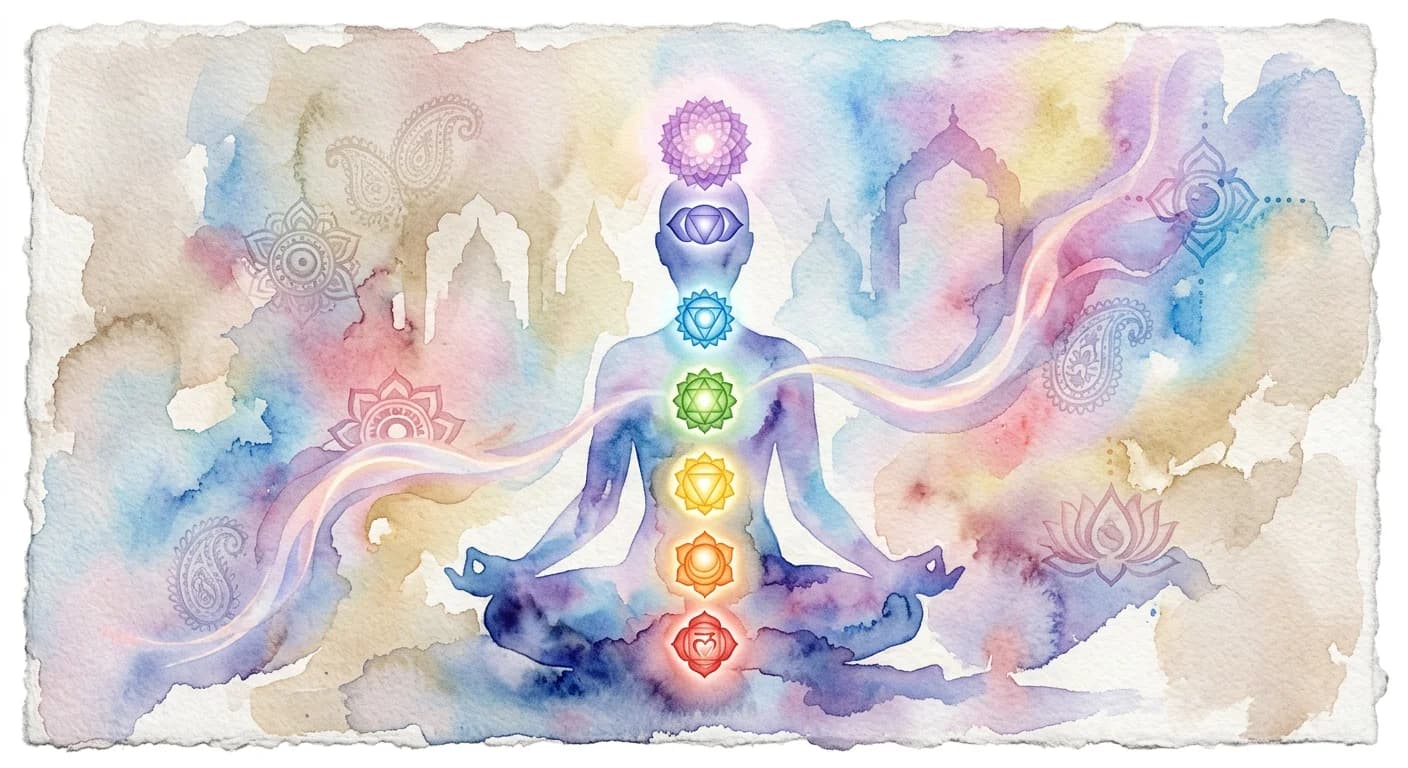
    Artistic representation of Chakra
    Sanskrit•
    🇮🇳India

    Chakra

    /CHUK-ruh/

    Meaning

    In Hindu and yogic traditions, a Chakra is a dynamic vortex of subtle energy, often envisioned as a spinning lotus or wheel, situated at specific points along the central axis of the human body. These seven primary centers act as conduits and transformers for prana (life force), each governing distinct psychological states, physical functions, and spiritual aspects. Their balanced flow is considered vital for holistic well-being, influencing everything from basic survival instincts to higher consciousness and enlightenment, central to practices like meditation and yoga.

    Literal Translation

    wheel, circle

    The Story Behind the Word

    The concept of Chakra emerges from ancient Indian spiritual texts, particularly the Tantric traditions and early Upanishads, dating back thousands of years. It reflects a profound understanding of the human being not merely as a physical entity but as an intricate system of interconnected energy pathways (nadis) and vital energy centers. This worldview posits that the universe's cosmic energy is mirrored within the individual, and by understanding and harmonizing these internal energy wheels, one can achieve physical health, emotional stability, and spiritual liberation. The existence of Chakras underscores a holistic philosophy where the mind, body, and spirit are inseparable, and spiritual practice is fundamentally about aligning these internal energies to resonate with universal consciousness. It reveals a culture deeply invested in introspective exploration and the pursuit of inner mastery.

    Experience It

    Balancing the Root Chakra

    During a grounding meditation, Anya focused on her Muladhara Chakra at the base of her spine. She visualized a vibrant red light, feeling a deep connection to the earth and a sense of security, aiming to alleviate her recent anxieties about job stability.

    Opening the Heart Chakra

    After a period of emotional strain, David attended a yoga class specifically designed to open the Anahata Chakra. As he moved through heart-opening poses, he felt a release of pent-up sorrow and a renewed capacity for compassion towards himself and others.

    The Deeper Meaning

    The Chakra system embodies a profound philosophical insight: that the human experience is a spectrum, from the material and instinctual to the spiritual and transcendent. It suggests that consciousness is not monolithic but rather unfolds through distinct energetic stages, each with its own lessons and challenges. This framework provides a map for self-discovery and spiritual evolution, positing that true well-being comes from integrating all aspects of one's being, from the primal to the divine.

    Did You Know?

    The word 'chakra' literally means 'wheel' or 'disk' and was originally used in ancient India to refer to the sun's disk, a potter's wheel, or even a king's chariot wheel, symbolizing power and motion.

    How It's Used

    Used in spiritual, yogic, and meditation contexts to refer to the energy centers in the body.

    Emotions
    peace,serenity,wonder
    Contexts
    meditation,relaxation,work
    🇮🇳India

    by Anya Petrova·Written Mar 14, 2026·Updated Apr 3, 2026

    Related Words

    Explore more
    Dolce far nienteItalian

    Dolce far niente captures the profound joy and effortless pleasure derived from simply existing without obligation or purpose. It's the art of savoring moments of pure, unadulterated idleness – lying in the sun, watching the clouds drift, or enjoying a leisurely coffee – not as a break from work, but as a valuable state in itself. This 'sweetness of doing nothing' is a conscious embrace of stillness and contentment, allowing the soul to breathe and the senses to fully engage with the present.

    Wabi-sabiJapanese

    Wabi-sabi is the profound appreciation for the ephemeral, the imperfect, and the incomplete aspects of existence. It is about discovering beauty in the subtle textures of age, the unique character of flaws, and the gentle decay that marks the passage of time. This philosophy encourages a quiet acceptance of impermanence and a mindful connection to the natural world, finding elegance in simplicity and authenticity.

    IkigaiJapanese

    Ikigai is more than just a reason to get out of bed; it's a deeply personal and evolving sense of purpose that brings genuine fulfillment and joy to one's life. It represents the sweet spot where your passions, talents, needs of the world, and what you can be paid for beautifully converge. Discovering your ikigai often leads to a life lived with intentionality, resilience, and a profound connection to one's contributions. It's the intrinsic motivation that fuels a meaningful existence, regardless of external circumstances.

    NunchiKorean

    Nunchi is the sophisticated, almost telepathic, ability to instantly grasp the unspoken dynamics of any social situation, anticipating others' thoughts and feelings, and then responding with impeccable grace and timing. It's an acute form of social intuition, allowing one to navigate complex interpersonal landscapes by reading subtle cues like body language, tone, and context. Possessing good nunchi means effortlessly understanding the underlying emotional currents and adjusting one's behavior to maintain harmony and effectiveness, often without a single word exchanged.